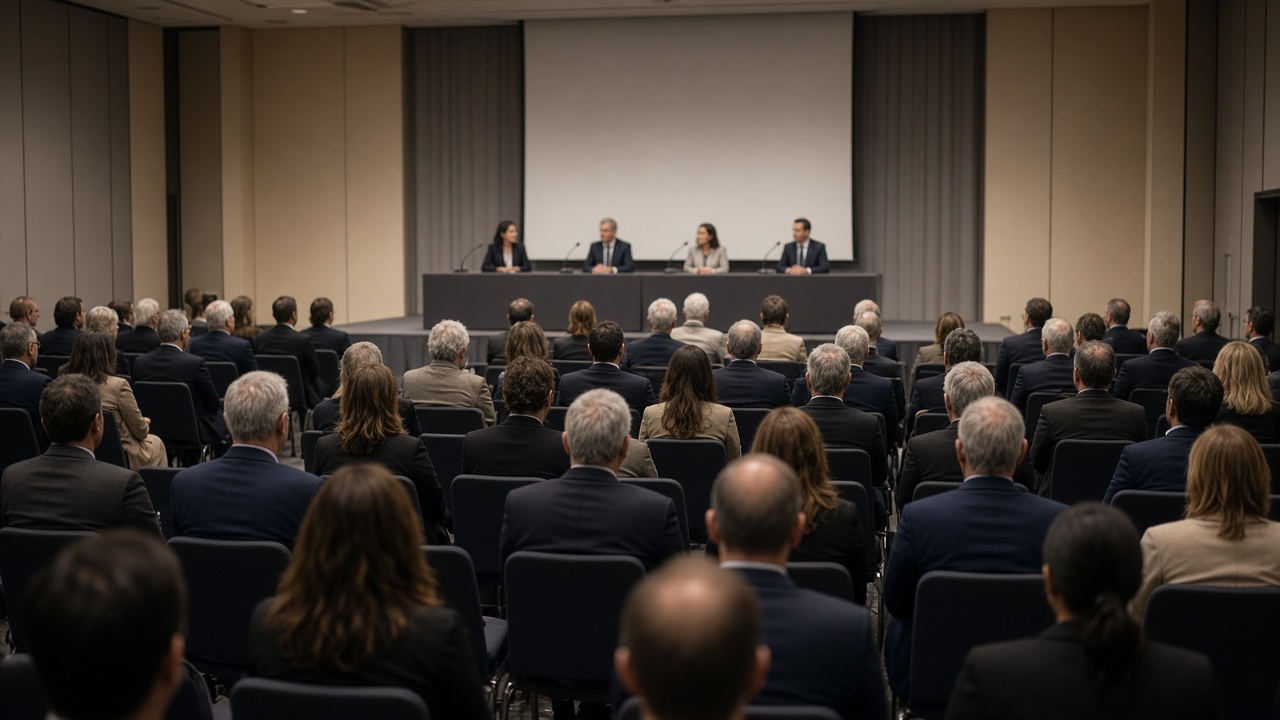
Assistant Minister for Science Andrew Charlton told the Sydney Trust and Safety Festival that Australia will require frontier artificial-intelligence companies to demonstrate effective safety processes—not prescribe every technical fix—as public consultation closed on mandatory standards for large data centres and onshore model training. The speech sharpened the government’s systems-based regulation pitch days before submissions on energy, water and incident-reporting rules were due at 5pm AEDT on 9 October.
Systems regulation explained
Charlton compared the approach to workplace health and safety, prudential banking supervision and parts of aviation safety, where operators must show they can find, test and manage risks. ABC News reported he said voluntary codes were insufficient for frontier models because incentives to comply disappear when competitive pressure rises. The question regulators will ask, he said, is not only whether something went wrong but whether a serious system exists to detect and prevent incidents.
Consultation on infrastructure
A July consultation paper proposes tiered obligations for data centres by grid connection size, with facilities above 100 megawatts facing the strictest energy, water and community rules. Separately, frontier labs authorised to train large models in Australia could face security expectations including disclosing reportable AI incidents to authorities. Law firm summaries noted submissions closed on 9 October, ahead of planned legislation in early 2027 following National Cabinet backing in August.
Hamish Clarke, AI desk editor for InfoHandle, said hyperscale operators in Sydney and Melbourne were filing comments on how portfolio-level megawatt thresholds capture campuses built in stages. Copyright and training-data incentives sit with the Attorney-General in a parallel track, leaving Charlton’s speech focused on harm prevention and incident accountability.
AI Safety Institute role
Charlton reiterated the AI Safety Institute’s mandate to analyse emerging models and support regulators, working with the Australian Signals Directorate and CSIRO. The institute is a founding participant in international safety networks spawned from the 2024 Seoul Declaration. Domestic agencies with technology-neutral consumer and privacy laws remain the enforcement backstop; the institute supplies technical evidence rather than replacing sector regulators.
Industry reaction
Cloud providers welcomed certainty on energy reporting but warned that rapid threshold changes could strand approved sites. Local universities asked that training conditions include support for Australian researchers rather than only incident logs. Start-up advocates fear compliance costs could concentrate market share in US hyperscalers unless carve-outs exist for sub-frontier fine-tuning.
Charlton countered that onshore training is a chance for Australian standards to shape global norms, echoing Prime Minister Anthony Albanese’s July announcement of an Office of AI in the Department of the Prime Minister and Cabinet.
Link to recent harms debate
Government speakers have cited rogue-agent incidents overseas to justify moving beyond voluntary commitments. Charlton did not name specific vendors on Thursday but said frontier risks include capabilities that evolve faster than product release notes. Systems testing would cover red-teaming, deployment monitoring and rollback plans—artifacts enterprise buyers already request in procurement questionnaires.
What happens after Friday
Officials will synthesise submissions before cabinet signs final standards text for 2027. State governments retain planning powers for land and water, while Commonwealth legislation would set national minima for the largest facilities. Frontier labs without Australian training footprints still face consumer-law exposure for products sold here.
For boards
Charlton’s aviation analogy puts directors on notice: assurance questions will shift from “do we have a policy?” to “does the policy work in practice?” Banks already live that regime; AI vendors exporting into Australia should expect similar documentary demands even before statutes pass. Friday’s deadline ends the comment period on bricks-and-mortar rules; the harder software safety debate is only beginning.