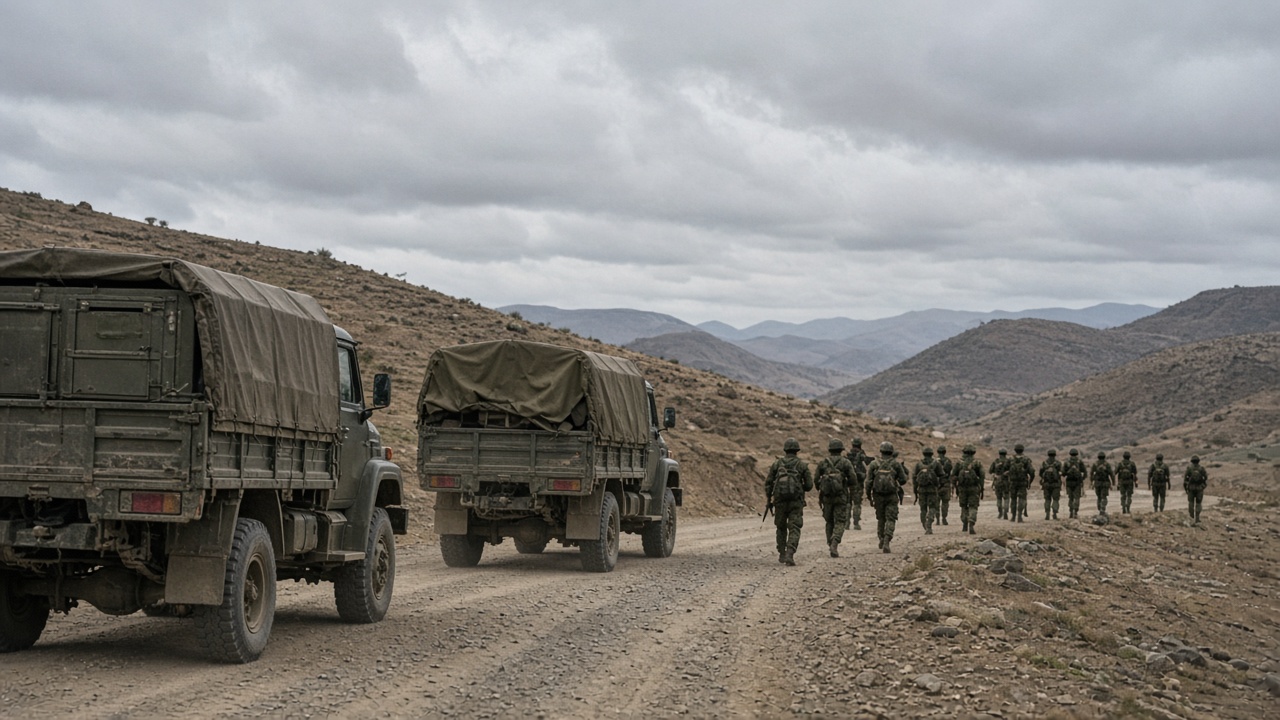
Ethiopia’s government told the United Nations on Friday that Eritrean soldiers had pushed as far as 60 kilometres into northern Tigray, describing the movement as an “all-out invasion” that left Addis Ababa no choice but to exercise self-defence. The letter from Foreign Minister Gedion Timothewos, shared with Reuters, is the first formal Ethiopian account of cross-border troop movements that independent monitors and residents have reported since diplomatic ties were severed last week.
What Addis Ababa says crossed the border
Timothewos wrote that the incursion was “a matter of public record” and a “blatant act of aggression” against Ethiopian territory. He demanded an immediate Eritrean withdrawal and framed Ethiopia’s response as inherent self-defence under international law. The distance figure—roughly 37 miles—signals how deeply Asmara’s forces are alleged to have moved beyond the frontier town of Zalambessa toward population centres such as Adigrat and, according to multiple witness accounts cited by the BBC, toward Edaga Hamus on the road toward Mekelle.
The fighting sits atop a renewed internal war that erupted in late September, when a rebel alliance including Tigrayan forces clashed with federal troops after months of tension over the 2022 Pretoria ceasefire. Ethiopia has accused Eritrea of backing that alliance; Eritrea denies involvement while accusing landlocked Ethiopia of plotting to seize Red Sea access at Assab. Each side now accuses the other of starting a war of aggression, a rhetorical escalation that mirrors the military one along the border.
Drone strikes and what monitors can verify
The U.S.-based Armed Conflict Location & Event Data Project said Ethiopian drone strikes hit Eritrean military vehicles on Wednesday and Thursday as they withdrew from positions near Adigrat, about 30 kilometres from the Eritrean border. ACLED described the strikes as the first confirmation of Eritrean forces operating inside Ethiopia since last month’s rebel offensive. Two sources—a diplomat and a regional conflict analyst—told Reuters that Eritrean units appeared to be pulling north under heavy bombardment, though it remained unclear whether they were leaving Ethiopian territory entirely or redeploying within Tigray.
Ethiopian officials have offered sharper public language. Senior government figure Abraham Belay told Fana Television that the Eritrean army had participated “with its full capacity and logistics,” adding that Ethiopian forces had killed and captured Eritrean soldiers and promising retaliation for cross-border operations. Eritrea’s information ministry, meanwhile, has cast Ethiopia’s rhetoric about sea access as evidence of invasion plans against Eritrea itself.
Regional stakes after Mekelle
Federal forces recently recaptured Mekelle, the Tigrayan capital, and Ethiopian Airlines said civilian flights to the city would resume from 11 October. Yet violence has continued elsewhere in Tigray, and the appearance of Eritrean convoys through Adigrat adds a state-versus-state dimension to a conflict that already ranks among the deadliest of the century. Analysts note that Eritrea fought alongside Ethiopia against the Tigray People’s Liberation Front during the 2020–2022 war before relations soured over how that war ended and over Prime Minister Abiy Ahmed’s repeated statements that direct sea access is a strategic necessity.
Neighbouring Sudan is consumed by its own civil war, leaving limited bandwidth for mediation. Egypt and Sudan have denied Ethiopian accusations that they back the rebel alliance. For now, the verifiable picture is narrow but grave: cross-border troop movements, documented drone engagements, and dueling letters to the UN that treat a former battlefield ally as an invader.
What happens next
Ethiopia’s UN letter sets the diplomatic frame—aggression requiring withdrawal—while the battlefield may still be moving. Independent confirmation of troop numbers remains partial; French officials cited estimates of up to 8,000 Eritrean soldiers in Tigray supporting rebels, figures Asmara has not endorsed. Humanitarian agencies have warned that any widening of the Horn conflict could compound displacement already measured in the millions from earlier Tigray fighting. Watchers will be looking for whether drone strikes pause, whether Eritrean units fully exit, and whether the Pretoria ceasefire framework can be revived or is effectively buried under a second war between former allies.