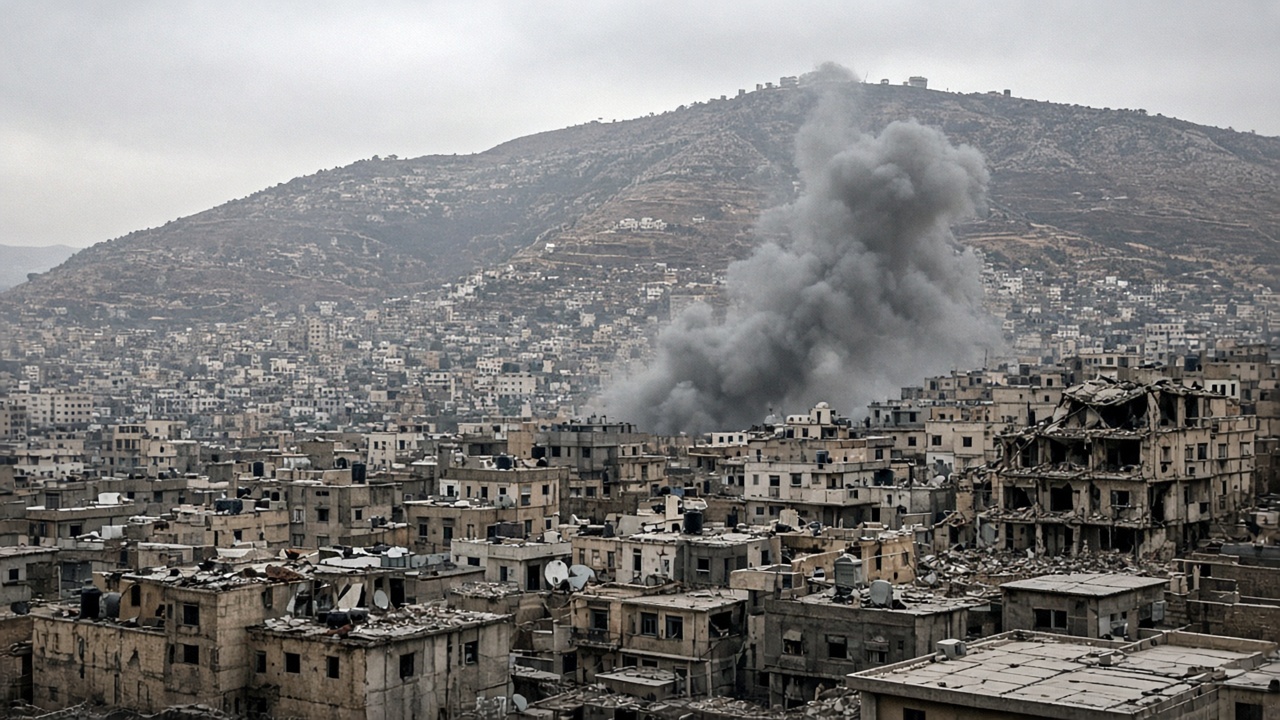
United Nations Yemen envoy Hans Grundberg warned on Friday that the country has returned to “full-scale war,” with hostilities spreading across several fronts at the same time Saudi Arabia reported a wave of coalition strikes and renewed ground fighting around the Bab al-Mandab strait.
Addressing the Security Council, Grundberg said violence had intensified in recent weeks and condemned Houthi attacks on civilian and energy infrastructure in Saudi Arabia. He argued that instability in the wider Middle East was feeding Yemen’s crisis while developments inside Yemen were sending shock waves back across the region.
Coalition claims 136 targets hit
Late Friday, the Saudi-led coalition said it had destroyed 136 military targets in Houthi-controlled areas as part of what spokesman Maj. Gen. Turki Al-Malki described as a large-scale operation. In posts on X, the coalition said it was providing round-the-clock air support to Yemeni government forces and working to dismantle the group’s ballistic-missile network.
Al-Malki shared video that the coalition said showed strikes on underground missile storage inside mountain tunnels in Sanaa. Houthi-run al-Masirah television, meanwhile, reported that two airport employees were killed and two others wounded in an afternoon strike on Sanaa International Airport, and that overnight raids had sparked fires at several civilian facilities in the capital.
Fighting near a vital shipping choke point
On the ground, Yemeni government forces backed by the coalition renewed an offensive near Bab al-Mandab, the narrow waterway linking the Red Sea to the Gulf of Aden, according to a government military official quoted by Xinhua. The official said government troops were trying to push deeper into Houthi-held areas overlooking the route and claimed dozens of Houthi fighters had been killed Friday.
Al-Masirah offered a conflicting account, saying Houthi forces had repelled government troops advancing from neighboring Lahj province. In the southern port city of Aden, residents reported a loud explosion near the international airport; a local security official told Xinhua that preliminary information pointed to an attack on a military base close to the airfield that officials were still attributing.
Regional spillover after Riyadh airport deaths
The UN briefing landed as Saudi authorities were still tallying the human cost of Thursday’s attacks on King Khalid International Airport in Riyadh. The General Authority of Civil Aviation said three Saudi citizens, including an airline pilot, were killed and people of several nationalities were wounded when strikes hit airport facilities and a Saudia aircraft on the ground.
European Union aviation regulators warned operators of an increased risk of misidentification of civil aircraft in Saudi airspace, citing missile and drone overflights and debris. Türkiye’s foreign ministry on Friday condemned the Houthi airport attacks and voiced solidarity with Riyadh.
What Grundberg wants next
Yemen has been split by war since late 2014, when Houthis seized Sanaa and much of the north. A Saudi-led military intervention in support of the internationally recognized government followed in 2015, and a UN-brokered truce in 2022 had largely frozen the heaviest fighting until this year’s escalation.
Grundberg urged diplomats to treat politics as urgent rather than optional. “Unless war is to become Yemen’s permanent reality, the time to consider political strategies is now,” he said. For shippers and neighboring capitals, the immediate question is whether the coalition’s latest strikes and the Bab al-Mandab ground push mark a temporary spike—or the opening phase of a wider campaign aimed at Sanaa itself.