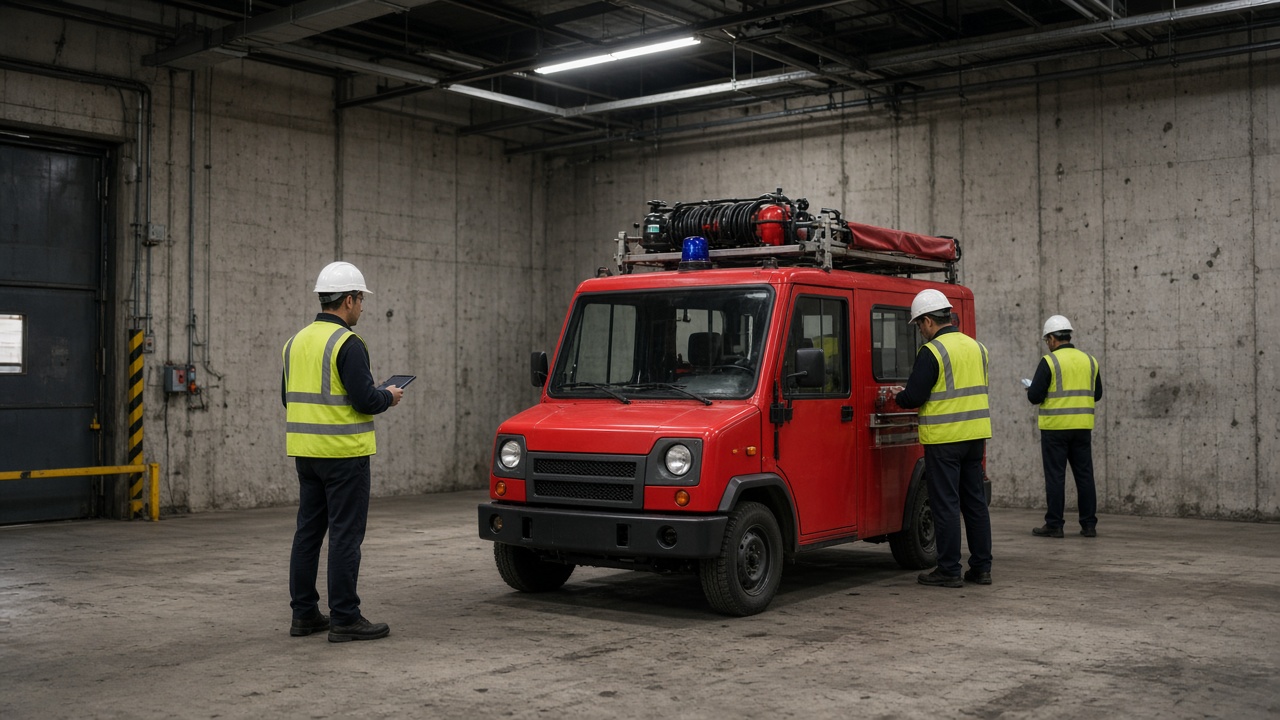
Singapore engineering firm HOPE Technik will deliver four Light Fire Attack Vehicles to Brunei’s Fire and Rescue Department on Friday as part of Prime Minister Lawrence Wong’s official visit, the Ministry of Foreign Affairs said.
The handover ties industrial policy to defence diplomacy: the same trip that marks 50 years of Singapore–Brunei military cooperation also showcases a local company exporting specialised hardware tailored to a neighbour’s civil emergency needs.
What the vehicles are built to do
Light Fire Attack Vehicles are smaller than main ladder trucks, meant for rapid response in tight urban or forest-interface roads. MFA said HOPE Technik customised the units for Brunei’s operational requirements, though it did not publish technical specifications in the public advisory.
For Singapore readers, the company name may ring familiar from robotics and mobility projects, including past collaborations with government agencies on unmanned systems. Fire appliances represent a more conventional revenue line but one that still demands certification, heat-resistant materials and after-sales maintenance networks.
Why export matters for the tech bench
Singapore’s manufacturing base increasingly competes on niche systems rather than mass commodities. Selling fire hardware to Brunei is not scale manufacturing like wafer fabs, but it keeps high-skill fabrication and systems integration jobs on the island.
Export success also supports the narrative Wong advanced at the Forbes Global CEO Conference—that Singapore must capture the current technology investment cycle before it corrects. Hardware deliveries are tangible outputs in a week dominated by AI rhetoric and bank-stock volatility.
Defence and civil overlap
Brunei’s Fire and Rescue Department sits under the Ministry of Home Affairs, separate from the joint military parade Wong will attend on Saturday. Yet both events underline interoperability: SAF trains in Brunei’s jungles while Singapore firms supply vehicles Brunei’s civil responders will drive daily.
HOPE Technik did not issue a separate media release in Singapore by Friday morning; MFA’s travel notice remains the primary on-record source for timing and context.
Supply chain and servicing
Specialised vehicles require spare parts pipelines. Exporters typically train local technicians or partner with Brunei workshops for maintenance. If the Light Fire Attack platform uses proprietary electronics, software updates may flow from Singapore servers—another hidden services export.
None of that detail was in the MFA statement, but buyers in the region usually negotiate multi-year support contracts alongside hardware price tags.
What to watch after the ceremony
Photos from the delivery may reveal sensor packages or water capacity clues. More importantly, the deal tests whether Singapore SMEs can win government-to-government contracts without a GLC badge—a question local startups ask when pitching overseas.
As Acting Prime Minister Gan Kim Yong manages domestic files, Wong’s Brunei agenda shows how technology desks cover both chip testers considering IPOs and fire trucks crossing the South China Sea.
Local innovation pipeline
HOPE Technik has spun projects from unmanned ground vehicles to patient transport beds. Fire appliances sit closer to regulated manufacturing, with homologation testing and field trials that can take years. Exporting four units is modest volume but validates design choices for larger regional tenders.
Singapore Civil Defence Force procurements often set reference specs ASEAN neighbours follow. A Brunei delivery can become a brochure case study when pitching other fire services.
Financing exports
Enterprise Singapore and trade agencies sometimes co-fund demonstration units, though MFA did not specify subsidies on this deal. Buyers may still access ASEAN infrastructure loans for fleet expansion once the platform proves reliable in Brunei’s humidity and hillside roads.