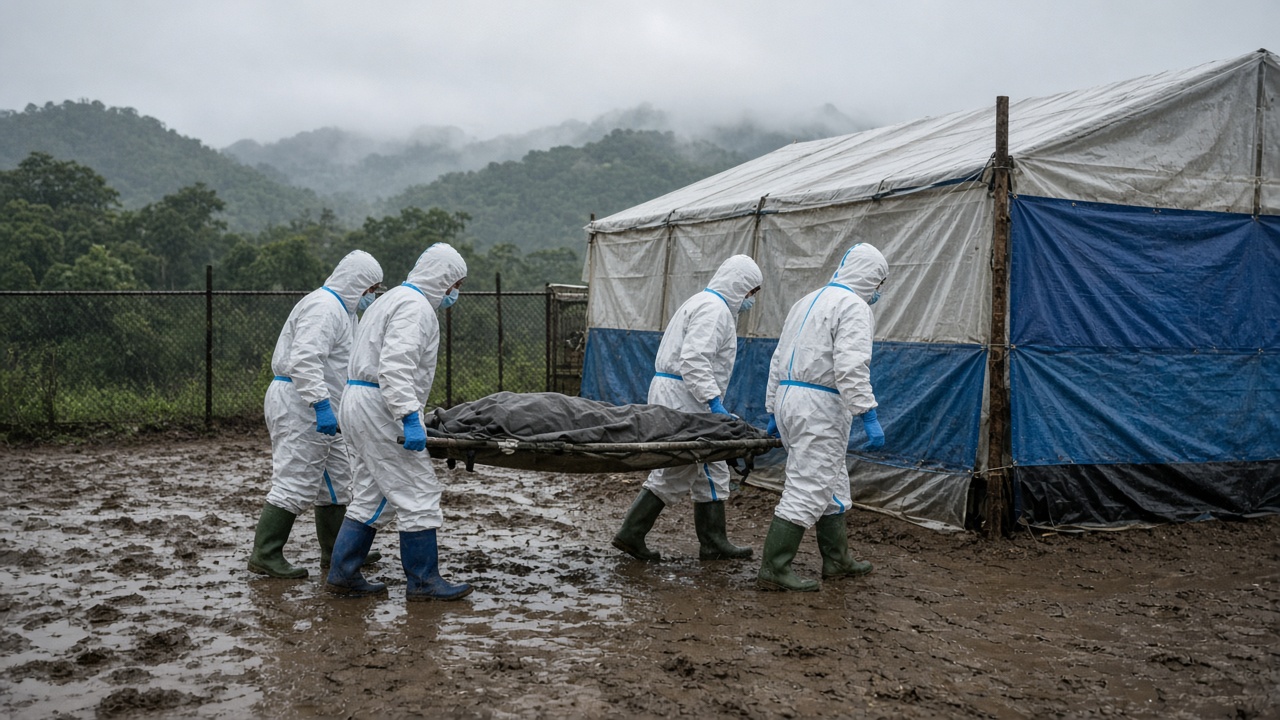
Doctors Without Borders says the Ebola response in eastern Democratic Republic of the Congo has turned chaotic in North Kivu, a province that now generates roughly four in ten newly confirmed Bundibugyo-virus cases even as the national outbreak passes 8,700 laboratory confirmations. The warning lands days after Kenya reported a fatal imported case linked to travel from the outbreak zone, underscoring how porous borders and uneven field coverage can export a disease that still kills nearly half of those it infects.
A shifting epicenter
When Congolese authorities declared the outbreak in May 2026, much of the burden sat in Ituri province, which still reports the highest cumulative totals. By early October, however, North Kivu had become the fastest-growing hotspot. Stephanie Hoffmann, an MSF project coordinator in the province, told the Associated Press that the on-the-ground response feels disorganized and thinly staffed. “There is a lack of coordination and organization, but there’s certainly a lack of actors present here,” she said.
The European Centre for Disease Prevention and Control, citing Congolese data through 6 October, recorded 8,728 confirmed cases and 4,205 deaths nationwide, with 63 new confirmations in a single reporting interval split between Ituri and North Kivu. North Kivu alone has logged 1,785 cases and 1,021 deaths across 17 health zones, giving it the highest case-fatality burden among the affected provinces.
Why responders struggle in Kivu
North Kivu combines active rebel violence, displaced populations and roads that flood during the rainy season. Treatment centres that function in calmer districts are hard to replicate where armed groups contest territory. MSF officials said patients in new hot spots often arrive with no nearby isolation beds, pushing care into improvised sites or sending the sick back into communities.
The World Health Organization noted in a 5 October disease outbreak update that 264 of 372 deaths reported in the prior interval occurred outside treatment facilities, a pattern that signals late detection and weak referral chains. Bundibugyo virus, unlike the Zaire strain that fueled West Africa’s 2014 crisis, has no approved vaccine or targeted antiviral on the shelf, which raises the stakes for early isolation and supportive care.
Regional spillover
While Congo’s numbers dominate the ledger, neighbouring states are on alert. Kenya’s health ministry confirmed an imported case in a citizen who had been living in Congo, traveled through Uganda and died in Nairobi on 5 October after testing positive at national reference laboratories. WHO said public health teams in Kenya and Uganda launched contact tracing and that more than 652,000 travelers had been screened at Kenyan points of entry since May.
France evacuated an infected health worker in early October, and the Netherlands reported a separate medical evacuation, reminders that the outbreak is not confined to rural Congolese health zones. WHO continues to advise against travel or trade restrictions based on current information, but aid groups argue that without a coherent surge in North Kivu, export cases will keep appearing.
What authorities say next
Congo’s health ministry has expanded the outbreak footprint to 64 health zones across seven provinces, including a newly affected zone in North Kivu. National officials say transmission is uneven—some areas show slowing growth while others accelerate—but the share of community deaths remains stubbornly high.
MSF is calling for additional partners, clearer civil-military coordination and faster deployment of isolation capacity along the roads refugees use. Without that, Hoffmann warned, North Kivu’s share of new cases could keep climbing even as global attention shifts to imported cases farther from the forest.