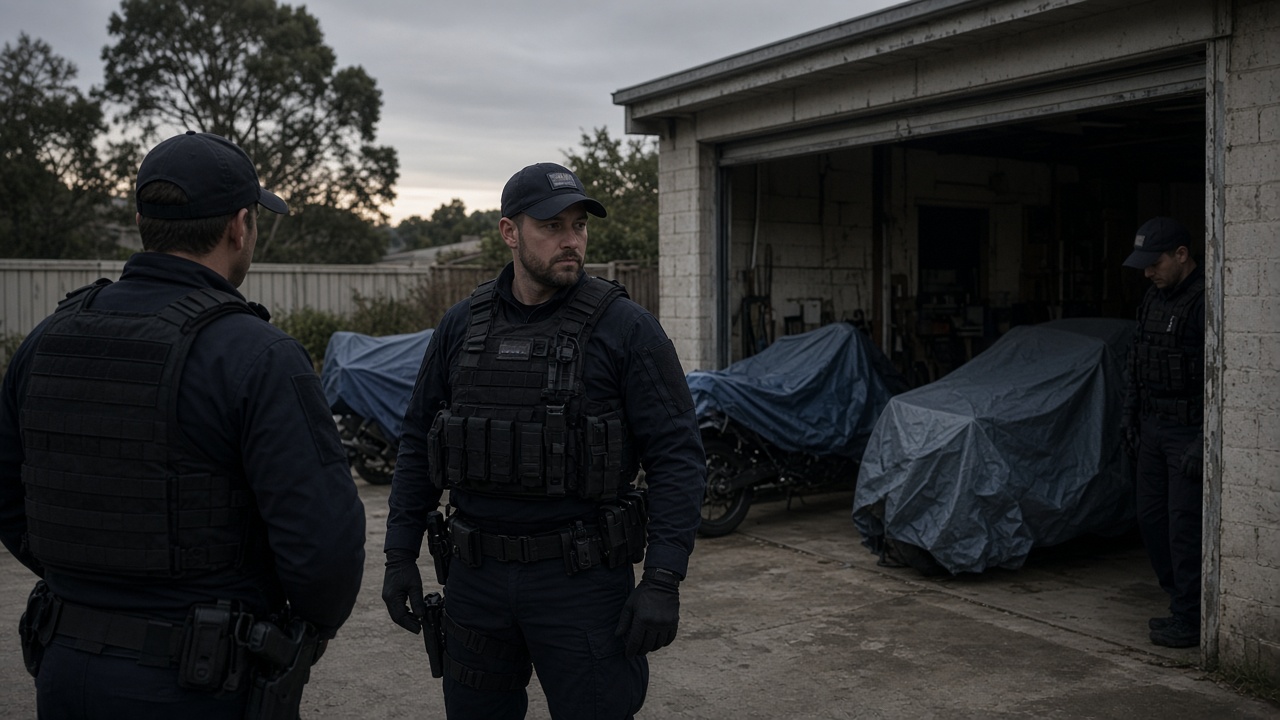
A coordinated strike against the Lone Wolf Outlaw Motorcycle Gang ended Thursday with 20 arrests and 69 charges across Australia and New Zealand, police said Friday, as a multi-agency task force targeted a network authorities describe as putting profits ahead of public safety. The national day of action by Taskforce Morpheus is the latest attempt to squeeze an OMCG assessed as posing a “very high” organised-crime threat because of alleged drug importation, money laundering and violence.
What Morpheus seized and where
Investigators executed 18 search warrants, conducted 10 firearms compliance checks, and seized cocaine, MDMA, illicit tobacco and vapes, according to the Australian Federal Police-led operation described by the ABC. The sweep spanned jurisdictions on both sides of the Tasman, reflecting intelligence sharing that police say is designed to deny outlaw groups sanctuary when pressure mounts in one state.
Australian Border Force Commander Graeme Campbell said illicit tobacco remains a major revenue stream for organised crime, with proven links between OMCGs and tobacco retail premises. Profits from those shops, he said, fund other serious criminal activity. NSW Police Raptor Squad acting commander Detective Superintendent Brad Abdy warned that gangs should expect scrutiny “wherever they operate,” citing combined intelligence and resources across states.
Why Lone Wolf is in the top tier
Police assessments place Lone Wolf among the most dangerous OMCGs in Australia because of the breadth of alleged offending—not a single drug line but importation, distribution, laundering and enforcement violence. Friday’s numbers—20 arrests, 69 charges—are the headline outcomes, but the operational detail matters for courts: which warrants produced which exhibits, and whether firearms compliance checks led to further charges.
New Zealand’s participation underscores that Australian OMCGs maintain cross-border associations. Authorities did not release every charge breakdown in the initial statement, but the scale of the warrant count suggests investigators were aiming at logistics and leadership nodes rather than street-level possession alone.
Enforcement context
The operation lands amid continued political focus on outlaw motorcycle gangs after high-profile shootings and public venue bans in several states. Taskforce Morpheus was established to merge federal and state capabilities against OMCGs; Thursday’s action is being framed as proof that intelligence-led policing can move faster than gang recruitment.
Defence lawyers for those arrested have not yet been identified in public reporting, and charges remain allegations until tested. What is confirmed is the police narrative: a trans-Tasman gang rated at the top of the threat matrix faced simultaneous pressure, with tobacco and drugs seized and dozens of charges laid in a single day.
What prosecutors and regulators will watch
Success will be measured in convictions, forfeitures and whether Lone Wolf’s alleged supply lines reconstitute. Border Force’s tobacco emphasis signals that investigators are tracing money, not just narcotics. For communities near clubhouses and affiliated businesses, the immediate question is whether violence risk drops after leadership arrests—or whether succession fights follow. Police say they will keep targeting groups that exploit legitimate businesses as cover; Friday’s tally is their latest receipt.