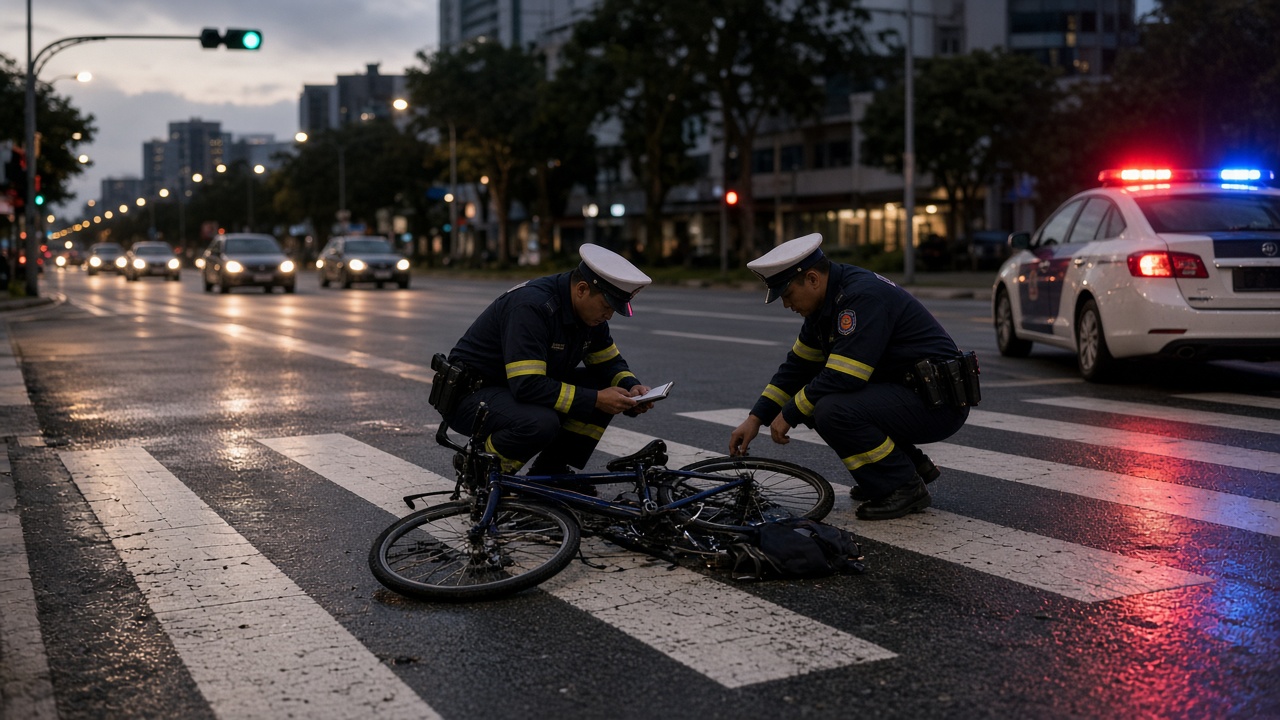
A 51-year-old cyclist died after a collision with a car at the junction of Boon Lay Way and Jurong West Street 64 on Friday morning, police and civil defence officials said. A 72-year-old driver was arrested for driving without due care and attention causing death, and investigations are continuing.
How the crash unfolded
The Singapore Police Force and Singapore Civil Defence Force said they were alerted at about 6:40 a.m. on Oct. 9 to the intersection in western Singapore, a busy corridor linking industrial estates and Housing Board towns. The cyclist was pronounced dead at the scene by an SCDF paramedic and was taken to Ng Teng Fong General Hospital, where death was formally recorded.
Police did not release the identities of either party, standard practice while next-of-kin notifications and witness interviews proceed. They also did not publish a diagram of impact points or say which direction each vehicle was traveling, noting that reconstruction specialists may still map skid marks and camera footage from nearby lamp posts.
Driver arrest and possible charges
The 72-year-old motorist was arrested at the scene for driving without due care and attention causing death, an offence that can lead to court proceedings with significant penalties if prosecutors elect to charge. He was not identified in public statements, and it was unclear whether he remained in police custody or was released on bail pending further inquiries.
Traffic Police frequently remind drivers to scan for cyclists and pedestrians at dawn, when light levels change quickly and commuters mix with heavy goods vehicles heading to Jurong Port facilities. The Boon Lay corridor has seen periodic enforcement blitzes targeting speeding and red-light running, though Friday’s crash was not linked to any announced operation.
Broader road-safety picture
The case landed amid a mixed national trend. Traffic Police reported in August that injury accidents rose in the first half of 2026 compared with the same period in 2025, even as fatalities fell. Accidents with injuries increased from 3,748 to 3,869, while deaths dropped from 79 to 61, a decline authorities attributed partly to fewer motorcyclist fatalities.
Cycling advocates have pressed for protected lanes and clearer right-of-way rules at large intersections, arguing that rising e-bike and personal mobility device traffic adds complexity that legacy road markings were not designed to handle. The Land Transport Authority has expanded off-road cycling networks, but many commuters still use arterial roads when connections are incomplete.
Community and workplace impact
Boon Lay Way serves factories, warehouses, and the Boon Lay MRT interchange, meaning the crash disrupted early-shift workers and school-bound traffic. SCDF dispatch logs for the area routinely include industrial accidents; a fatal cyclist collision nonetheless draws heightened attention because of the vulnerability of riders relative to passenger cars.
Employers in the logistics belt often provide shuttle buses, yet many staff still cycle short distances between dormitories and plants. Workplace safety rules cover on-site movement but not public-road commutes, leaving Traffic Police as the primary investigator once a crash moves beyond company gates.
What happens next
Investigators will likely pull dashcam video from passing vehicles, interview the driver under caution, and await any toxicology or mechanical inspection results if those tests are ordered. Families of deceased road users sometimes participate in coroners’ inquiries months later, where findings can recommend engineering changes even when no criminal conviction follows.
Police appealed for witnesses who were near Boon Lay Way and Jurong West Street 64 around 6:40 a.m. on Oct. 9 to contact them with photos or video. Until those accounts are assembled, authorities were withholding judgment on fault beyond the arrest for careless driving causing death.