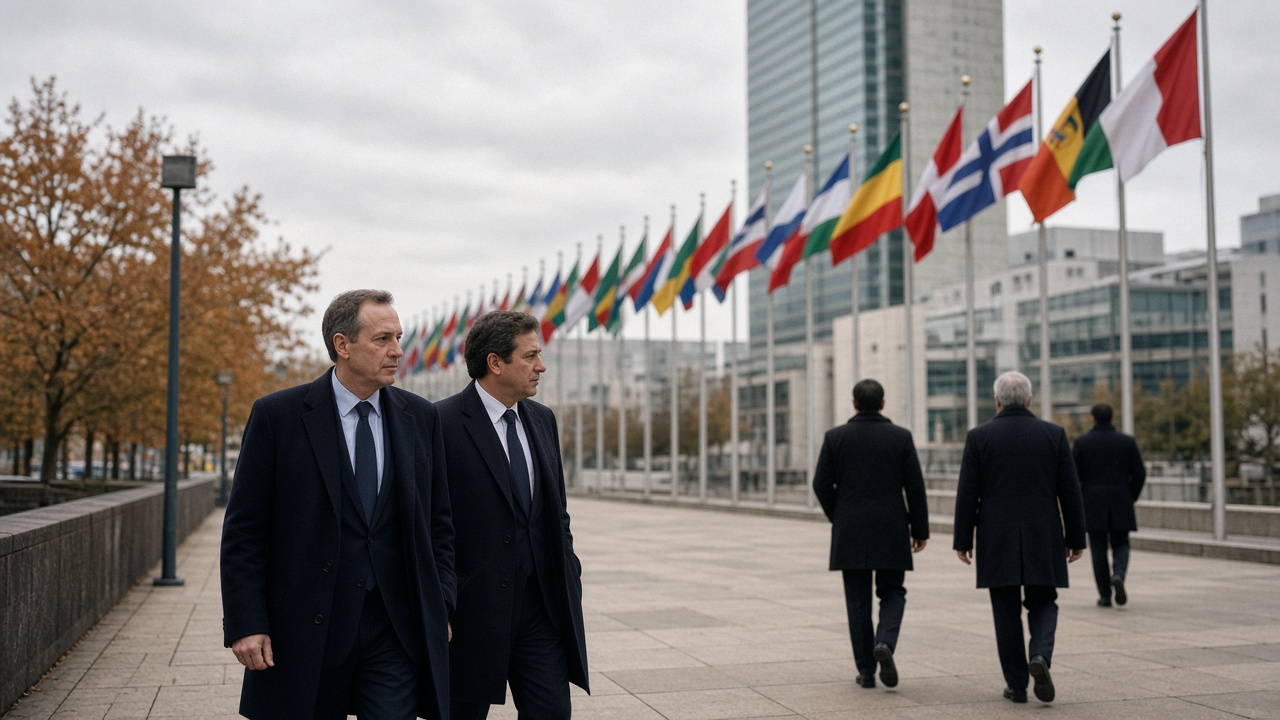
Ethiopian Foreign Minister Gedion Timothewos told the United Nations Security Council on Friday that his government is taking measures in self-defense against Eritrea, accusing Asmara of sending infantry and mechanized units across the border in recent weeks and backing armed groups inside Ethiopia.
In a letter dated Friday and obtained by news agencies, Gedion invoked Ethiopia’s right to self-defense under Article 51 of the U.N. Charter. He did not spell out specific military steps Ethiopia had taken, but the formal notification escalates a border crisis that analysts say could widen fighting already under way in Tigray.
What the letter alleges
Gedion’s letter accused Eritrea of deploying forces and of “supporting, financing, arming and directing insurgent groups,” according to an Associated Press account of the document. It did not identify occupied territory or attach evidence to the claims, the AP reported.
The dispute follows Ethiopia’s 2018 peace deal with Eritrea and years of fragile calm along a frontier that saw one of Africa’s bloodiest wars at the turn of the century. Renewed rhetoric about Red Sea access and troop movements has revived fears of a two-front conflict involving Ethiopia, Eritrea and factions in northern Ethiopia.
Eritrea pushes back
Eritrean Information Minister Yemane Gebremeskel did not directly confirm or deny reported crossings in a post on X on Friday, the AP said. He accused Ethiopia instead of pursuing aggression through demands for sovereign access to the Red Sea, a long-running grievance in Addis Ababa.
Prime Minister Abiy Ahmed reiterated on Monday that landlocked Ethiopia must secure sea access, while the foreign ministry said it remained committed to dialogue with neighbors. Those statements have sat uneasily alongside battlefield reporting from Tigray, where government-aligned forces describe offensive operations against regional authorities.
Fighting in Tigray
The Armed Conflict Location & Event Data Project, known as ACLED, said Eritrean troops crossed at Zelambesa on Wednesday and came under drone attack while moving toward Idaga Hamus, attributing the strikes to Ethiopia’s military. The AP said it could not independently verify either government’s accounts.
Tigray endured a devastating war from 2020 to 2022 that killed hundreds of thousands of people by many estimates and left the region dependent on aid. Any return to large-scale combat would stress humanitarian corridors already thin after funding cuts and access disputes.
Diplomatic calendar
Article 51 letters are a standard way for states to notify the Security Council when they claim to act in self-defense. They rarely stop fighting on their own, but they frame how other members debate ceasefire calls, sanctions and peacekeeping mandates.
African Union mediators and Western capitals have urged restraint, yet neither side has publicly embraced a new round of talks. Ethiopia’s decision to put its case in writing at the U.N. suggests Addis Ababa wants international cover if clashes intensify along the border or inside Tigray.
Security Council members have not scheduled an emergency session on the letter as of Saturday morning in Nairobi, but diplomats said the document would be circulated to all 15 members for review.