The Ministry of Defence has objected to Fred. Olsen Renewables’ plan for 23 turbines on moorland between Arkengarthdale and Teesdale, telling the national Planning Inspectorate that the Hope Moor scheme would cause “unacceptable interference” with air-defence and air-traffic radars used by the Royal Air Force.
In a submission reported on Saturday, the MOD said turbines more than 200 metres high would create false radar returns and could leave real aircraft undetected on screens monitoring UK airspace. The developer said it is working with the ministry and local residents to find “practical solutions,” but opponents called the warning decisive.
Where the radars sit
The MOD’s letter focuses on two sites. Remote Radar Head Brizlee Wood in Northumberland lies about 67 miles (108 km) from the proposed wind farm, yet the ministry argues rotor blades would still scramble its picture. Closer to the moors, RAF Leeming’s air-traffic control radar sits roughly 19 miles (30 km) away and would face similar distortion, according to the filing.
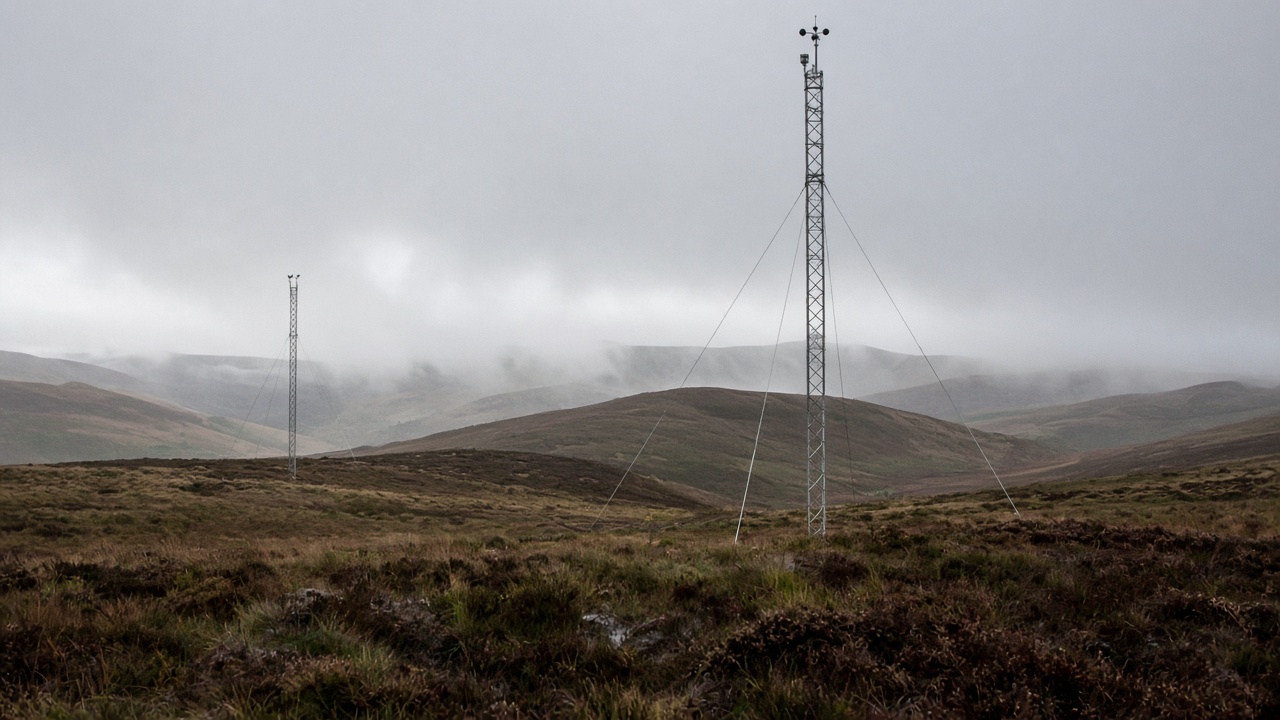
Officials also noted that Hope Moor sits inside an RAF low-flying training area, raising concerns about physical obstruction for jets that routinely practice over the Yorkshire Dales. Campaigners against the project have circulated the MOD language alongside photos of the open moor, calling the plan the “devastating industrialisation” of open moorland.
Developer’s case
Fred. Olsen Renewables markets Hope Moor as a Nationally Significant Infrastructure Project that could power about 135,000 homes and support Labour’s clean-power targets for 2030. Euan Hutchison, UK development director, said the scheme would cut reliance on imported energy and argued that “national security and energy security go hand in hand.”
The company encouraged residents and businesses to keep submitting comments while designs are refined, signalling it does not treat the MOD letter as fatal. Onshore wind was effectively blocked for years until the Department for Energy Security and Net Zero lifted restrictions after the 2024 election, pushing large arrays into centralised planning rather than local council votes alone.
Local politics
Councillor Angus Thompson, who helps lead the Hope Moor Wind Farm Action Group, said the MOD’s “stark warning is the nail in the coffin for this scheme.” He told the BBC that “monster turbines threaten national security and the lives of pilots,” urging ministers to abandon the project.
Richmondshire and County Durham councils have heard similar arguments for months, balancing climate commitments against tourism and farming livelihoods in the national park’s buffer zones. The MOD has lodged comparable objections to a separate East Yorkshire Wolds proposal, suggesting defence radar concerns are becoming a recurring hurdle as developers scout high-wind sites in northern England.
What happens next
Because Hope Moor is treated as nationally significant, the Planning Inspectorate will examine evidence and hold hearings before recommending approval or refusal to the Secretary of State for Energy. The MOD does not have a veto, but its statutory consultee status forces developers to model mitigation such as radar-absorbing coatings or turbine curtailment when military exercises run.
No timetable has been published for a final ministerial decision. For now, the dispute pits Whitehall’s net-zero ambitions against a defence establishment wary of anything that clouds Britain’s already crowded skies.