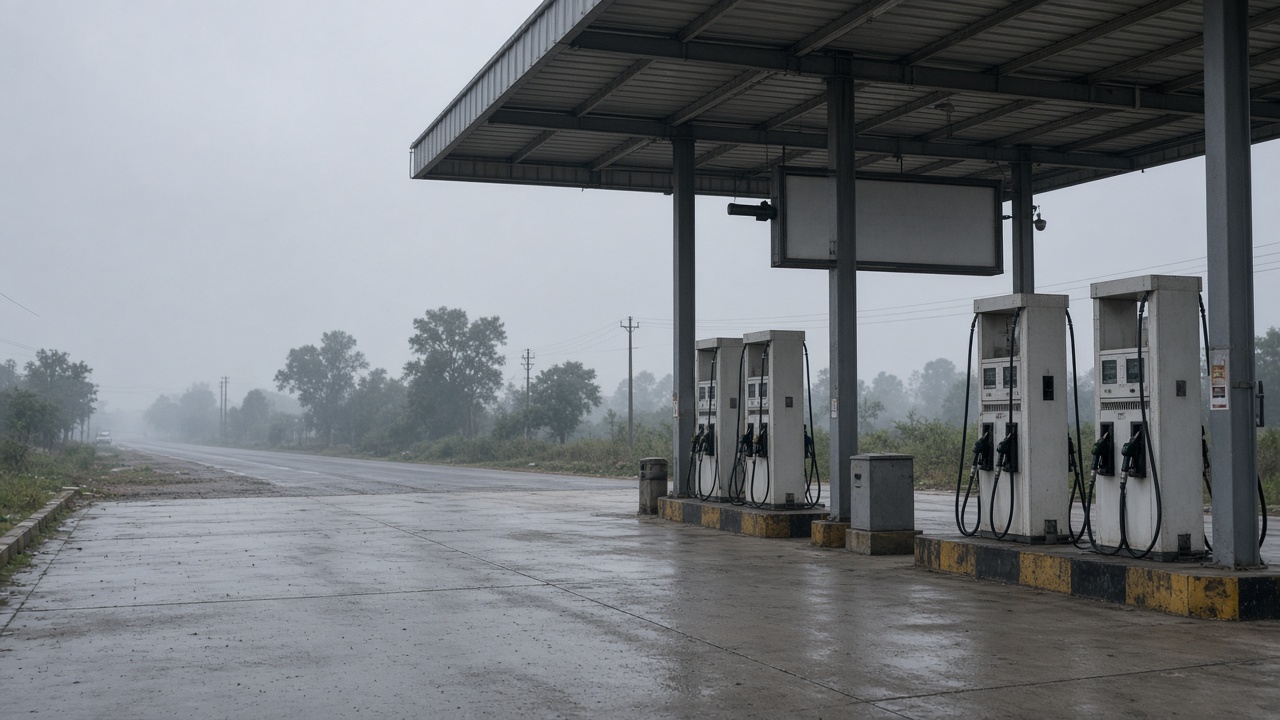
State-run oil marketing companies left petrol and diesel prices untouched nationwide on Saturday, 10 October 2026, extending an eight-day freeze that predates the Reserve Bank of India’s 25-basis-point repo increase to 5.50%. For dealers, the pause is only half the story: petroleum ministry officials and All India Petroleum Dealers Association representatives met again on Friday to revisit pump commission schedules and credit lines that have tightened since the Monetary Policy Committee shifted to calibrated tightening.
What stayed flat on Saturday
Indian Oil Corporation, Bharat Petroleum Corporation and Hindustan Petroleum Corporation—the trio that sets daily retail rates in most markets—did not issue upward revisions in their Saturday price sheets. Public sector undertakings typically align domestic rates with a fortnightly formula tied to international product benchmarks and the rupee, but political sensitivity around festival travel and the recent MPC action have kept headline pump prices stable even as landed crude costs remain volatile.
Dealers in Delhi and Mumbai said foot traffic rose ahead of the long Dussehra weekend, which makes any commission squeeze more visible at the till. Association leaders argue that working-capital interest on inventory has climbed in step with repo-linked bank spreads, while card-settlement fees and UPI merchant charges eat into thin per-litre margins on high-volume outlets.
Commission talks after the MPC move
The October 7 MPC decision lifted the policy repo to 5.50%, the standing deposit facility to 5.25% and the marginal standing facility to 5.75%. Governor Sanjay Malhotra’s statement framed the hike as a response to supply-side inflation risks and firm global energy prices. For petrol pump operators financed through rolling over inventory credit, that rate path matters immediately: several public-sector banks repriced repo-linked overdraft limits within 48 hours, dealers said, even though retail fuel prices did not move.
Ministry officials familiar with Friday’s discussions described the session as a “structured review” rather than an emergency bailout. Topics included whether commission on premium fuels could be delinked from volume targets, and whether rural outlets serving agricultural diesel demand could receive faster reimbursement cycles. No final order was published before Saturday’s price hold, but dealers were told to expect written guidance before the next fortnightly price window.
Why marketers can pause while crude swings
OMCs book inventory at import-parity costs that do not always pass through to the pump on a daily basis. When international product prices spike—as they did after Middle East supply scares earlier in the week—marketing companies can absorb losses temporarily using inventory gains from earlier months or by adjusting refining margins elsewhere in the group. That flexibility is finite: prolonged freezes widen under-recovery estimates that eventually show up in quarterly results or in requests for government compensation.
Private retailers Nayara Energy and Reliance Industries set prices independently in pockets where they compete directly with PSU pumps. Traders on Saturday reported only minor local promotions rather than broad cuts, suggesting the competitive field is still anchored to the PSU freeze.
Festival demand and logistics
Highway transporters booking diesel for pre-Dussehra freight said they were locking contracts at current pump rates rather than betting on a post-MPC cut. LPG cylinder prices, which follow a separate subsidy mechanism, were not part of Saturday’s revision cycle. Aviation turbine fuel adjustments, made monthly, remain a watch item for airlines adding leisure capacity on domestic routes.
Arjun Mehta’s business desk will track whether the commission review produces a circular before the next OMC price reset. Until then, consumers see stable numbers on the board while dealers count the rupee cost of carrying inventory into a tighter rate cycle.
Refining margin context
Analysts at state-owned refiners said gross marketing margins on diesel improved slightly as Singapore gasoil cracks eased late in the week, giving OMCs room to pause pump hikes without immediate subsidy calls. Export-oriented refineries continued to ship diesel to Europe on arbitrage, a revenue stream that does not show up at neighbourhood pumps but supports group cash flow.
Retail associations in Rajasthan and Punjab planned symbolic one-hour shutdowns on Sunday to press for commission indexation tied to inflation, a reminder that the price board is only the public face of a broader dealer economics fight.