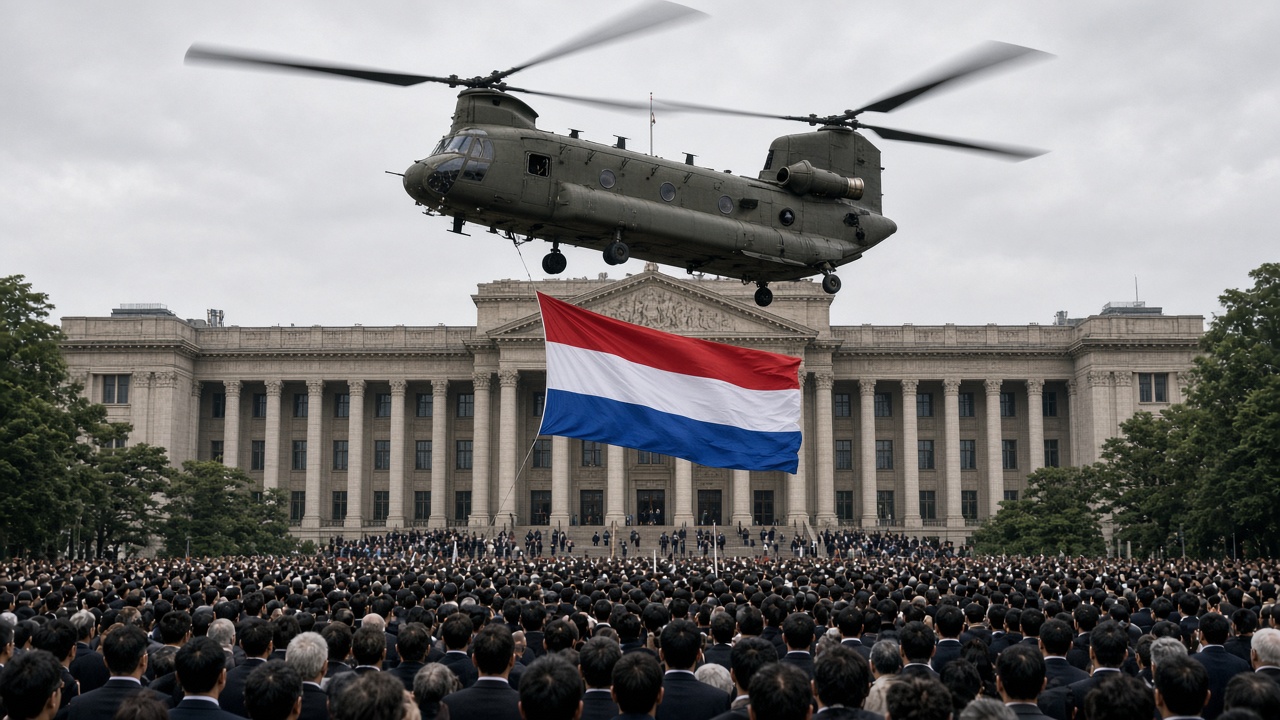
Taiwan celebrated the 115th National Day of the Republic of China on Saturday with a military parade, aerial flyovers and cultural performances in front of the Presidential Office in Taipei, capping a week of heightened attention on cross-strait security.
President Lai Ching-te told a crowd that included foreign delegations and diplomatic allies that Taiwan must become a “city upon a hill” built with courage and confidence, weaving together promises on wages and childcare with a defense message aimed at both domestic voters and capitals watching from afar.
Parade and flyovers in central Taipei
Focus Taiwan reported that Chinook helicopters carrying large Republic of China flags flew over the capital, escorted by Black Hawk helicopters, while honor guards and military bands marched along Ketagalan Boulevard. The ceremony also featured student performances and tributes to Taiwan’s athletes after strong results at the Asian Games in Aichi-Nagoya.
The display unfolded as Taiwan’s Ministry of National Defense said it tracked 21 Chinese military aircraft, seven naval vessels and two official ships around the island between 6 a.m. Friday and 6 a.m. Saturday, with 13 aircraft crossing the median line of the Taiwan Strait into northern, central and southwestern air defense zones. The ministry said it deployed aircraft, ships and coastal missile systems in response.
Lai’s domestic pitch
In a speech titled “Taiwan’s Future: A City upon a Hill, the Salt and Light of the World,” Lai highlighted economic data including a first-half growth rate the government puts at 14.15 percent and plans for expanded childcare subsidies, starting with NT$5,000 monthly allowances per child from birth through age 18 next year. He also outlined permanent government task-force work on telecommunications abuse, anti-drug measures, energy-transition goals and housing programs aimed at young families.
The address marked 30 years since Taiwan’s first direct presidential election, a milestone Lai used to argue that democracy and prosperity have reinforced each other despite missile threats at the polls in 1996.
Security and diplomacy lines
On external relations, Lai said Taiwan does not seek hegemony but will not tolerate encroachment that changes the status quo in the Taiwan Strait. He welcomed U.S.-China dialogue to manage competition while insisting that regional stability requires respect for Taiwan’s people and an accurate understanding of World War II history.
“Taiwan cherishes peace, but we will not give up our freedom,” he said in the official English translation released by the Presidential Office. “We are open to exchanges, but will not accept subordination.”
Lai reiterated plans to reform national defense, strengthen asymmetric capabilities and deepen whole-of-society resilience for energy, communications and other critical systems. He thanked service members, police, firefighters and civilians who participated in civil-defense exercises.
What comes after the ceremony
National Day events often set the tone for the final stretch of the year in Taipei, with local elections approaching and lawmakers debating the government’s budget and defense spending. For Washington and Beijing, the speech’s mix of welfare promises and firm security language offers a snapshot of how Lai intends to balance ballot-box politics with deterrence messaging while Taiwan’s military continues to log near-daily Chinese activity around the island.