President Donald Trump said on Saturday that the United States might join Saudi Arabia in military action against Iran-backed Houthi forces after a fresh missile strike on Riyadh’s main airport wounded multiple people and forced a full suspension of operations.
Speaking to reporters at the White House, Trump said his administration had only just learned details of the attack and would decide quickly. “We may,” he said when asked about backing Saudi retaliation. “We’re going to look at it. We just found out about the recent attack, so we’ll make a decision. We move very quickly.”
Domestic terminals hit
The strike targeted a complex housing Terminals 3 and 4, which handle domestic flights at King Khalid International Airport, according to regional officials who spoke to The Associated Press on condition of anonymity because they were not authorized to brief reporters. Ambulances rushed to the scene as civil aviation authorities assessed injuries and damage.
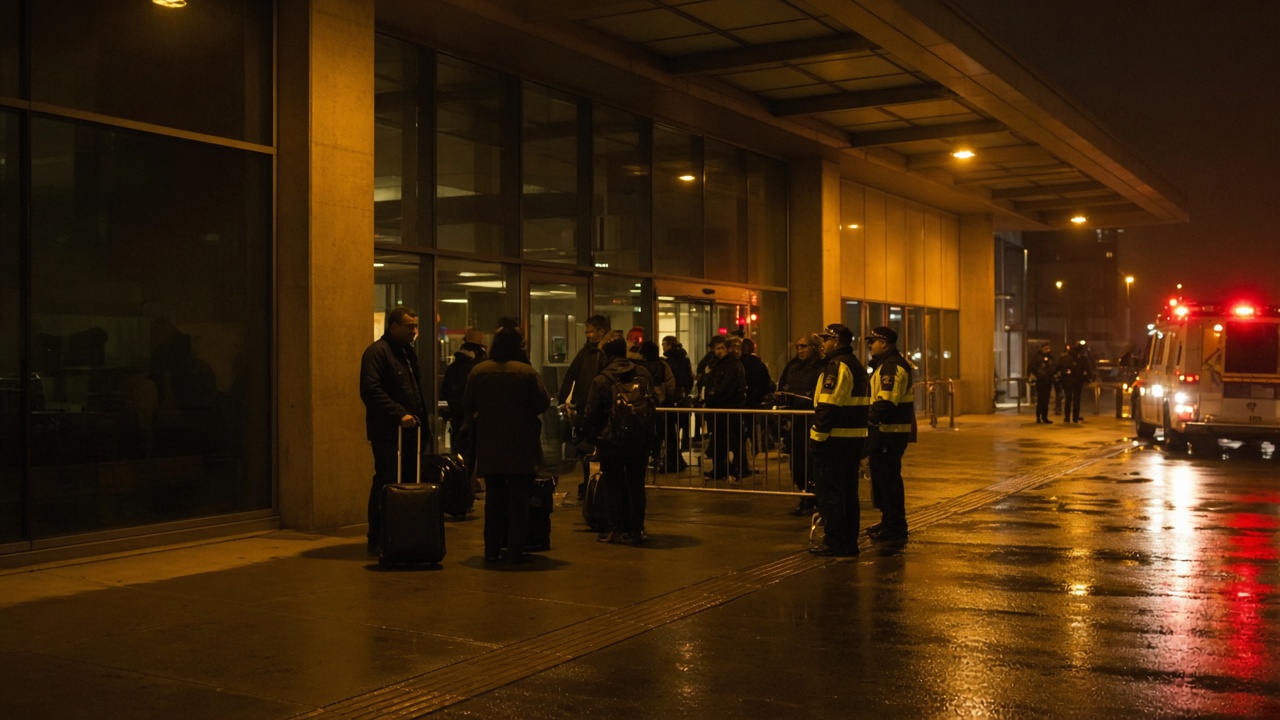
Saudi Arabia’s General Authority of Civil Aviation confirmed that operations at the airport were suspended while the number of wounded was still being tallied. Witnesses described a heavy police presence, blocked entrances and dimmed lighting around the terminal complex. The attack came days after a separate strike damaged a Saudia aircraft on the ground and killed three Saudi citizens, including a pilot, as the kingdom faces an intensifying Houthi campaign against airports, military sites and energy infrastructure.
Travel disruption and U.S. warning
Flight-tracking data highlighted the scale of the disruption. FlightAware logged at least 225 cancellations at the Riyadh airport in the preceding 24 hours, and carriers including Air India, FlyDubai, Lufthansa Group and Pakistan International Airlines have suspended or curtailed service to Saudi hubs in recent days.
The U.S. mission in Saudi Arabia urged American citizens to avoid King Khalid airport and surrounding areas, warning of possible airspace closures and further cancellations. U.S. government employees were told they needed special authorization to use the facility. The alert underscored how a strike on civilian aviation in the world’s largest oil exporter is rippling through diplomatic, military and commercial channels at once.
What comes next
Houthi leaders have claimed responsibility for a widening set of attacks inside Saudi territory, including Riyadh, as part of a broader regional confrontation tied to the Iran war. Markets and insurers have been on edge as strikes touch oil infrastructure and now repeatedly reach the capital’s passenger terminals.
Trump’s comment keeps open the possibility that U.S. forces could become more directly involved in defending Saudi Arabia or in offensive operations against Houthi launch sites, even as Washington is simultaneously managing other crises, including the war in Ukraine and domestic fuel politics. Saudi officials have not detailed their next military steps, but Saturday’s airport damage makes further coalition action likely.
For travelers and foreign missions in the kingdom, the immediate question is how long King Khalid remains closed and whether a second strike in a week signals a sustained campaign against civilian aviation rather than isolated harassment. Until Riyadh reopens terminals and publishes a casualty count, governments across the Gulf will be watching both the tarmac and the White House for the next signal.