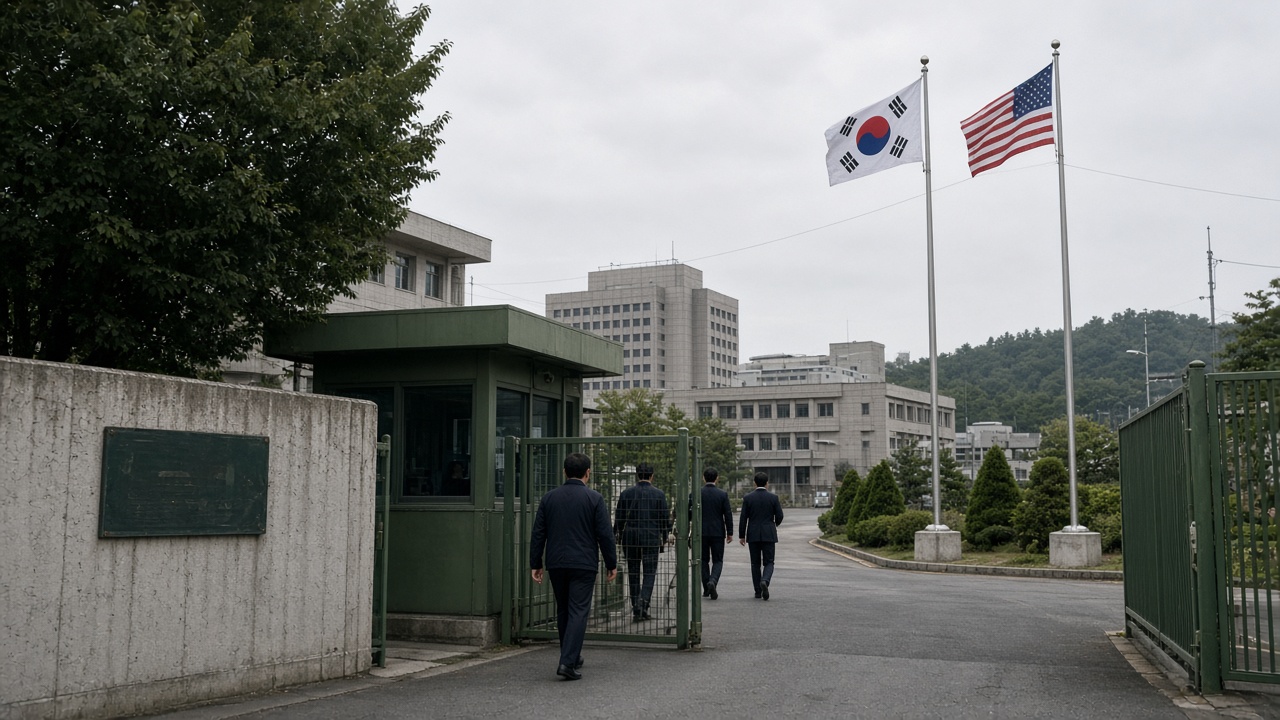
A senior U.S. administration official told Yonhap News Agency on Friday that Washington expects South Korea to “uphold the standards of our decadeslong alliance, in particular concerning matters of intelligence and counterintelligence.” The written statement, issued in response to Yonhap’s inquiry about bilateral intelligence cooperation, did not cite a specific violation or demand corrective steps, but it landed as South Korean lawmakers pressed military leaders on whether months-old limits on U.S. sharing have eroded readiness.
What Seoul’s top uniformed officer said
Joint Chiefs of Staff Chairman Gen. Jin Yong-sung told a National Assembly audit on Thursday that the United States has restricted some intelligence on North Korea but that the limits have not undermined South Korea’s overall readiness posture. Jin said information needed to respond to imminent nuclear and missile threats continues to flow, while other categories — understood to include some satellite-derived analysis — remain curtailed.
Opposition lawmakers challenged how the military can maintain full situational awareness while parts of the pipeline are closed. Jin replied that readiness management has tiers, and that sharing at the highest threat levels has not been cut off. He added that he is working to restore full cooperation as quickly as possible, without detailing diplomatic channels or a timeline.
Roots in a March disclosure dispute
The friction traces to March, when Unification Minister Chung Dong-young told lawmakers that North Korea operates uranium enrichment facilities at Yongbyon, Kangson and Kusong. Seoul insisted Chung relied on publicly available reporting, not classified U.S. briefings. U.S. officials nonetheless treated the episode as a breach of trust and moved to limit some North Korea-related intelligence, according to South Korean media and subsequent parliamentary testimony.
Separate reports said Washington also excluded South Korea’s National Intelligence Service from a June trilateral working-level meeting on North Korean cyber threats, fueling speculation that the alliance’s intelligence architecture — not just satellite products — is under strain. Jin said trilateral military coordination with the United States and Japan remains close, while declining to discuss the cyber meeting in detail.
What the U.S. statement signals in Seoul
Analysts in Seoul read the Yonhap statement as a public reminder rather than an escalation: the Trump administration is emphasizing counterintelligence discipline at a moment when North Korea is testing missiles and advancing its nuclear program. For President Lee Jae-myung’s government, the message adds pressure to keep sensitive allied material out of domestic political debates without appearing to concede that Chung’s remarks crossed a line.
Defense Ministry officials have not publicly confirmed the scope of restricted reporting, and the U.S. Embassy in Seoul referred questions to Washington. South Korea’s presidential office said alliance consultations continue through established military and diplomatic channels. With winter exercises approaching, lawmakers from both sides of the aisle said they will seek closed-door briefings on what categories of U.S. intelligence remain unavailable and how planners are compensating in contingency scenarios.