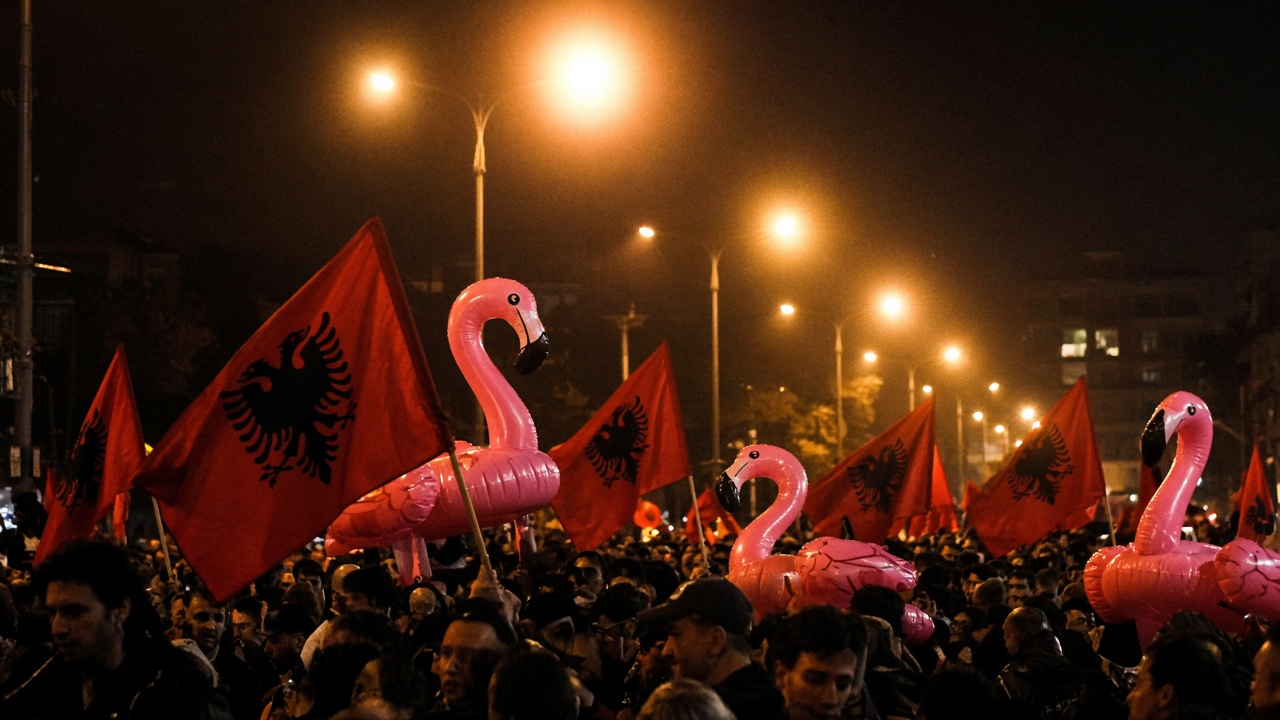
Albania’s “Flamingo Revolution” crossed one hundred days of nightly demonstrations this weekend, as crowds again filled Tirana’s boulevards to oppose a Kushner family–linked resort on one of the Mediterranean’s last largely wild coastlines. What began in May with a clash between activists and private security at a fenced beach near Vlorë has become a rolling challenge to Prime Minister Edi Rama’s government, EU accession politics, and a 2024 law that critics say opened national parks to five-star tourism.
From a beach fence to a national rhythm
Organisers trace the movement to 30 May, when guards confronted protesters at a protected stretch of shore they feared marked the start of construction tied to Affinity Partners, the investment firm led by Jared Kushner, son-in-law of U.S. President Donald Trump. Video of the scuffle spread quickly; by the next evening thousands gathered in the capital, and activists say they have not missed a night since. Civic monitors and local media put peak turnout in June above 250,000 people—figures that, if accurate, would dwarf any rally since the collapse of one-party rule in the early 1990s.
Demonstrators carry inflatable pink flamingos, a nod to endangered birds that nest in the Vjosa–Narta lagoon system. Chants of “Albania is not for sale” and banners referencing Ivanka Trump’s public promotion of the coastline have kept the Kushner name at the centre of the dispute even as demands widened to anti-graft cases, transparency in foreign investment, and Rama’s resignation.
What the project would change
Government officials describe the scheme as suspended pending a full environmental impact assessment and insist no final resort approval exists. Foreign Minister Ferit Hoxha told European journalists in recent weeks that Albania “does not have an approved project.” Kushner’s team unveiled plans for Sazan island and the coast north of Vlorë after parliament amended protected-area rules in February 2024 to allow high-end resorts inside designated zones. The investor received “strategic investor” status, fast-tracking permits critics say would have been impossible under the stricter 2017 framework environmental groups want restored.
Investigative outlet Balkan Insight reported this month that authorities granted additional hotel permits in protected areas in May and June 2025 while protests were already under way—evidence, activists say, that the Kushner footprint is part of a broader coastal build-out. SPAK, Albania’s special prosecution office, has opened an inquiry into the 2024 legal changes; neither Kushner nor partners have been charged.
Brussels and the birds
As an EU candidate, Albania must align environmental law with Chapter 27 accession requirements. EU Enlargement Commissioner Marta Kos said in July that Tirana had promised to repeal the 2024 amendment this year, though parliament has not yet done so. Conservation groups including PPNEA–BirdLife argue early earth-moving already scarred sensitive habitat even where machinery was later withdrawn.
Rama frames the dispute as overheated symbolism. Supporters of the resort pitch jobs and tourism revenue for one of Europe’s poorer economies. Protesters counter that strategic-investor status and opaque permits signal who really sets coastal policy. With presidential elections due in April 2026, opposition parties are amplifying the marches, and France’s parallel student unrest has drawn occasional comparisons in European commentary—though Albania’s movement remains narrowly tied to land, law, and the Adriatic shoreline.
What happens next
Organisers say they will keep nightly vigils until the protected-areas law is rolled back and the Kushner-linked concessions are cancelled outright, not merely paused. Rama’s government is betting that winter weather and procedural delays will drain momentum; activists are betting that EU scrutiny and SPAK’s inquiry will keep cameras on the lagoon. For now, the hundred-day milestone is less a finish line than proof that a confrontation over flamingos and fences has become the defining domestic story in Tirana.