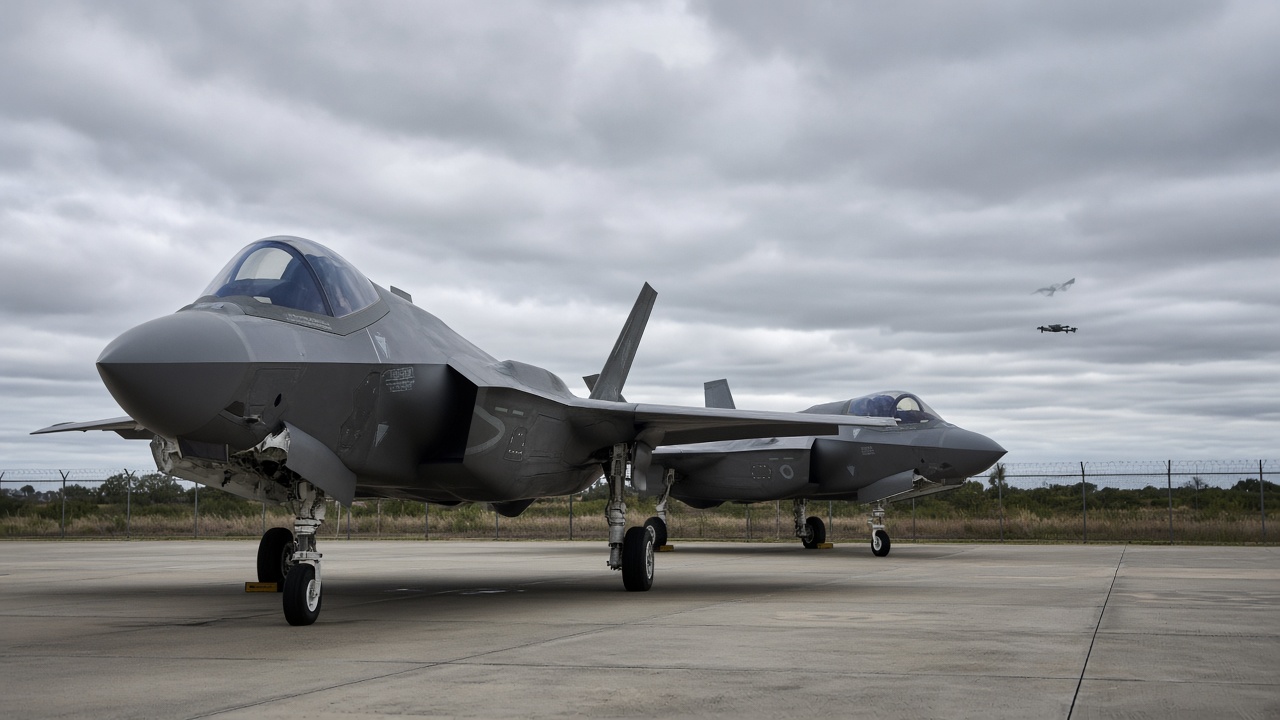
The federal government is preparing legislation that would explicitly empower the Australian Defence Force to destroy or disable hostile drones that enter restricted military airspace, a move officials frame as overdue after unidentified unmanned aircraft penetrated the Williamtown RAAF base near Newcastle twice in July and August.
Defence Ministerial staff told reporters on Sunday that the bill is being fast-tracked alongside industry briefings on counter-unmanned aerial systems, as Australian firms pitch detection and jamming kits for bases, ports, and mass gatherings. Williamtown hosts most of the Royal Australian Air Force’s F-35A fleet, making any repeated breach a direct test of how quickly Canberra can translate runway alerts into legal authority to shoot down a threat.
Why Williamtown became the trigger
The Australian Financial Review reported that the July and August incursions at Williamtown exposed gaps between base sensors and the rules governing when uniformed personnel may use lethal force against a civilian aircraft. Unlike some U.S. bases, Australian law has not clearly spelled out a “shoot-to-kill” threshold for small drones that can evade radar and loiter over flight lines.
Defence industry executives at a Sydney counter-drone showcase this weekend said demand spiked after the Williamtown episodes and after police agencies struggled to intercept drones hovering over stadiums during recent sporting finals. Several vendors demonstrated portable jammers and net guns, but military lawyers cautioned that without statutory cover, commanders risk criminal liability if they down a craft that later turns out to be a lost hobbyist platform.
What the bill is expected to change
Early briefings describe a tiered response: base commanders could order electronic disruption or kinetic destruction when a drone ignores warnings and enters a declared exclusion zone around designated defence sites, critical infrastructure, or major events on a federal watch list. Civil aviation regulators would retain oversight of commercial airspace, but the legislation would carve out narrow exceptions where Defence is the primary responder.
The opposition has not yet seen the full text, but shadow defence spokespeople have signaled conditional support if the bill includes judicial review pathways and mandatory reporting when force is used. Privacy advocates are already asking whether expanded jamming authorities could interfere with civilian GPS near airports or hospitals.
Industry and alliance context
Australian companies are partnering with U.S. and Israeli counter-UAS suppliers to localise manufacturing, hoping to export systems across the Indo-Pacific after Canberra elevates drone defence in the 2026 force structure review. NATO members have tightened similar rules since Ukraine demonstrated how cheap quadcopters can damage hardened airfields, and Australian planners say they do not want Williamtown to be the lesson that arrives too late.
Parliament is expected to debate the measure after the spring sitting resumes, with ministers aiming to pass it before the next federal budget locks in Olympic security spending. Until then, Williamtown commanders remain reliant on detection alerts and chase protocols that cannot always keep pace with a drone moving at highway speed across a runway threshold.