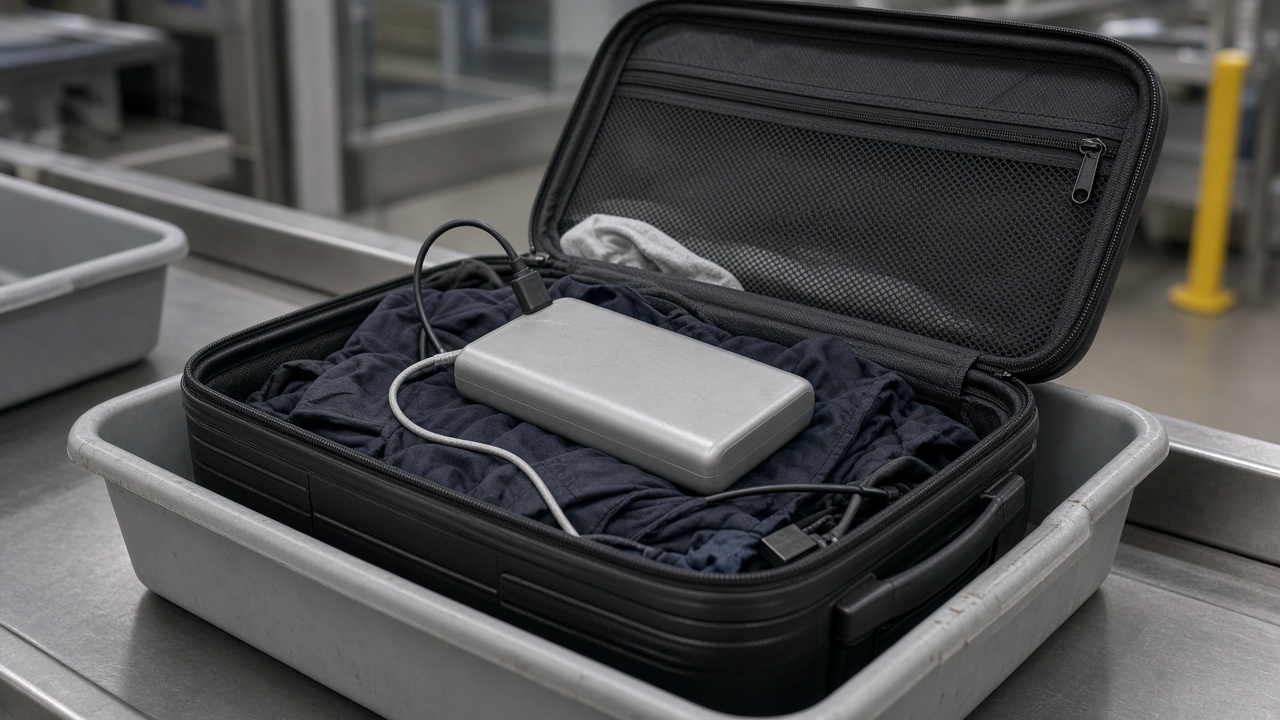
Holiday travelers packing high-capacity battery packs for laptops and cameras need to remember a hard FAA line: lithium-ion power banks above 160 watt-hours cannot fly on passenger aircraft, and every spare battery must stay in the cabin—not in checked luggage.
The Federal Aviation Administration’s PackSafe table, updated in August 2026, classifies consumer lithium cells by watt-hour rating. Power banks, spare batteries, and portable generators under 160 Wh are allowed only in carry-on baggage. Units between 160 Wh and 300 Wh require airline approval, and anything above 300 Wh is forbidden. Rating labels are usually printed on the back of the pack; if you cannot find the number, measure voltage times amp-hour capacity or leave the device at home.
Why the cabin rule exists
Lithium fires are difficult to extinguish in cargo holds where crew cannot reach them quickly. Keeping packs within arm’s reach lets flight attendants spot swelling or heat. TSA officers may ask you to remove large batteries for X-ray screening even when they are permitted, so build extra time into airport arrival—especially on Sunday afternoon peaks before Thanksgiving week.
Recalled packs are a separate ban
PackSafe also states that damaged or recalled batteries—and devices containing them—cannot fly until the battery is removed or the manufacturer declares the unit safe. That matters this fall as electronics makers issue recalls for portable generators and battery cases tied to overheating. Check the Consumer Product Safety Commission database before you fly if you bought a discount power station online.
Packing tips that survive security
Tape terminals on loose spare cells, keep each battery in its own plastic bag or retail case, and never pack a power bank in checked luggage to “save weight.” If you use a medical device with a lithium battery, tell officers before screening and carry manufacturer documentation; insulin pumps and similar gear follow TSA medical procedures but still cannot be checked if the battery is installed and non-removable without tools.
Airlines may have stricter policies than the FAA minimum, particularly on international segments where foreign regulators enforce lower limits. When in doubt, call the carrier with your exact model number. A $45 TSA ConfirmID fee is not the worst airport surprise this season—a confiscated battery at the gate is.
After you land
If security removes a battery, most airlines will not mail it to you; plan to buy a compliant replacement at your destination or ship the device through a ground hazmat carrier. Document the serial number before you travel so warranty claims stay intact if an officer confiscates a recalled unit.