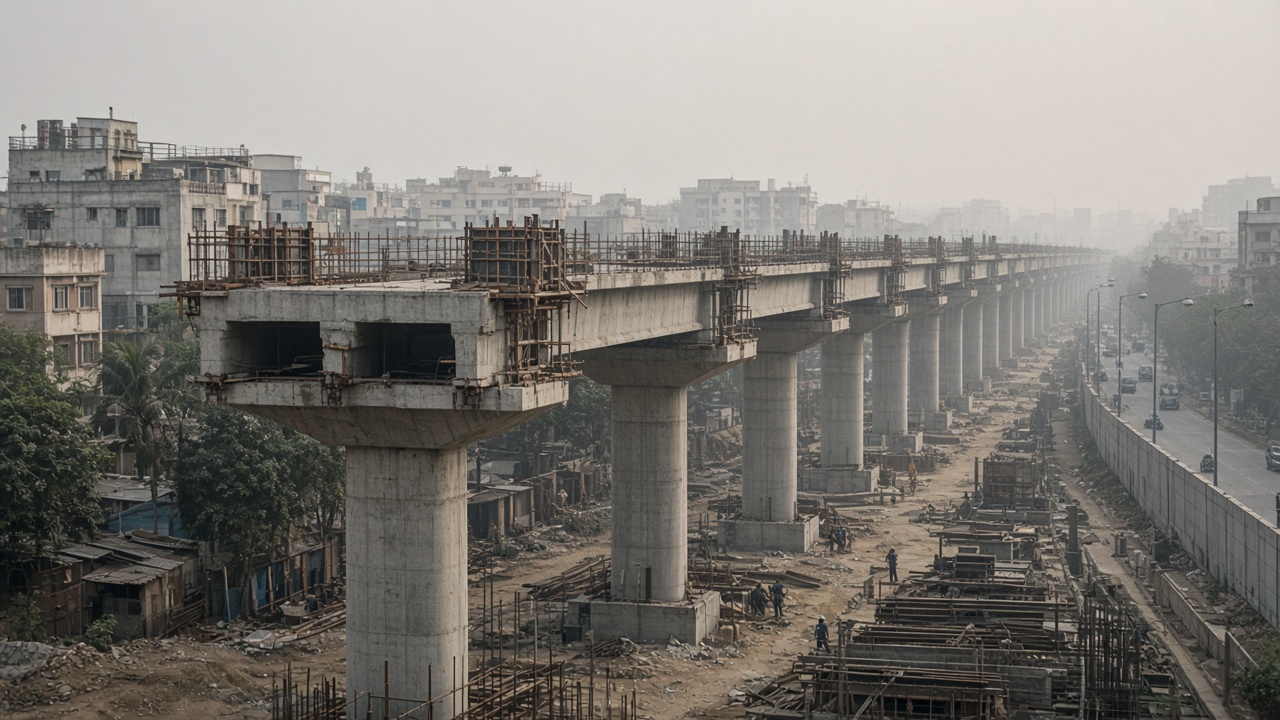
Karnataka’s cabinet approved a land-pooling framework for the Bengaluru Metro Pink Line on Saturday, racing to register parcels along the 21.3-kilometre corridor before the Election Commission’s model code tightens new administrative approvals ahead of urban local body polls. The decision lets Bangalore Metro Rail Corporation bundle private plots with government land instead of acquiring each holding through lengthy arbitration.
What land pooling changes
Under the framework, owners along the Kalena Agrahara–Hebbal alignment can surrender plots in exchange for a share of developed floor space near stations plus a cash component tied to guidance values. BMRCL said pooling cuts acquisition timelines from an average of thirty months to roughly fourteen by avoiding case-by-case litigation. Developers along Outer Ring Road have lobbied for higher fungible floor-area ratios near Nagawara and Hebbal interchanges, where office leases recovered after the pandemic slump.
Opposition legislators argued Saturday’s rush leaves little time for ward-level hearings. The law and parliamentary affairs minister said public consultations ran through September and that cabinet action merely authorizes BMRCL to sign pooling agreements, not begin civil works without environmental clearances.
Election clock
State election officials expect notification for Bengaluru’s civic polls within weeks. Once the model code kicks in, fresh land notifications and tariff announcements typically freeze, though ongoing projects may continue. Metro officials want pooling registrations notarized before that window to avoid a repeat of the 2022 delay on the Yellow Line extension, where half-built stations sat idle for eleven months during poll season.
Commuter stakes
The Pink Line is designed to link southern residential corridors with Manyata Tech Park and the airport road without forcing transfers at crowded Kempegowda interchanges. Traffic police data cited in BMRCL presentations show peak-hour speeds on Ballari Road falling below 18 kilometres per hour; metro capacity would not remove cars entirely but could stabilize travel times for shift workers at tech campuses. Until pooling closes, tunnelling contracts for the underground section near Cantonment remain unsigned.
Next steps
BMRCL will open a landowner help desk at its Vidhana Soudha liaison office on Monday and publish parcel maps online. Owners who opt out retain the right to conventional acquisition at twice the guidance value, but officials expect more than 70 percent uptake where station boxes are confirmed. Federal finance ministry clearance for Japan International Cooperation Agency co-financing is still pending; state ministers said Saturday’s cabinet note does not assume foreign loan disbursement dates.
Neighbourhood impact
Residents near proposed ventilation shafts asked for noise caps during night tunnelling; BMRCL promised monthly decibel readings at three monitoring stations. Property brokers along the alignment reported a 6–8 percent asking-price premium within 500 metres of confirmed station boxes, though transactions remain thin until pooling deeds are signed.