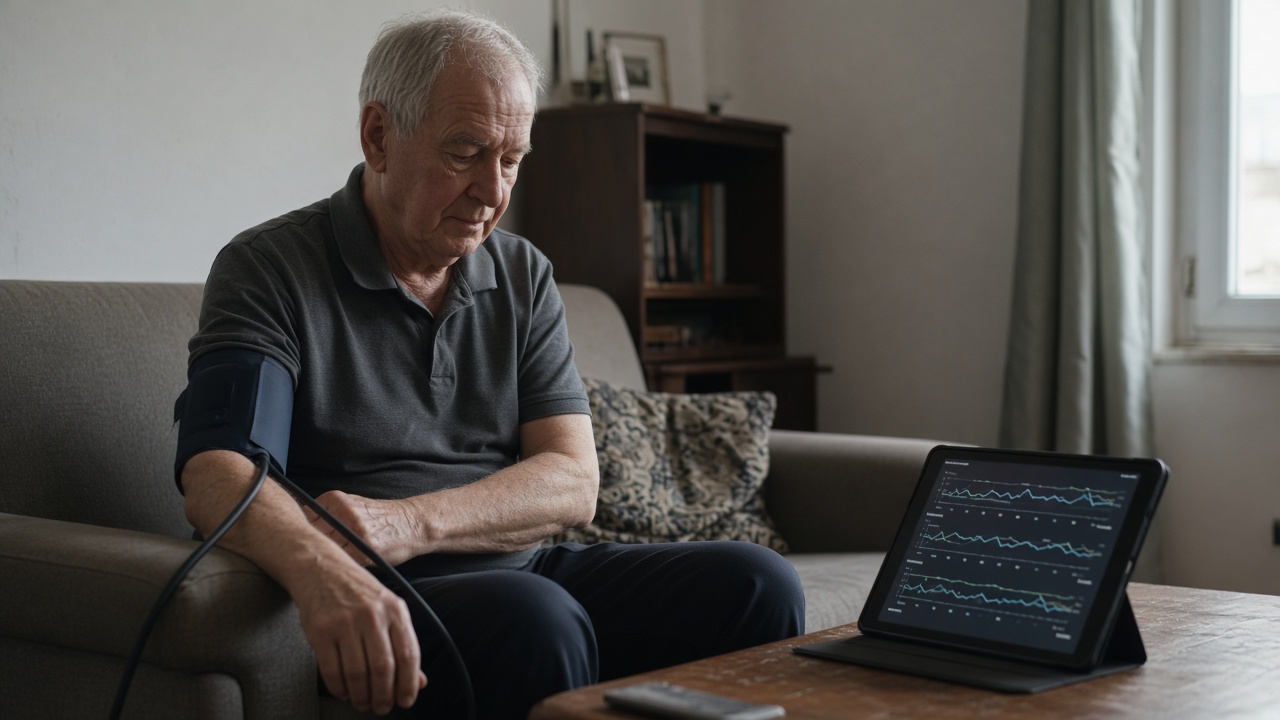
Three London NHS trusts began issuing Bluetooth blood-pressure cuffs, pulse oximeters and weight scales to heart-failure patients this month after virtual-ward pilots showed fewer emergency readmissions when nurses could see vital trends from living rooms instead of waiting for scheduled clinics. The rollout pairs consumer-grade peripherals with tablet dashboards that flag dangerous swings to cardiology teams, extending a model NHS England has promoted to free acute beds without building new wards.
How the kit works
Patients on the caseload take morning and evening readings; data flows to a nurse-led hub that operates like a hospital bay without walls. Alerts route to on-call consultants when systolic pressure spikes or weight jumps signal fluid retention. Technicians train households on cuff placement and when to call 999 rather than waiting for a callback.
Trust informatics teams integrated the devices with existing electronic patient record APIs, a step that slowed earlier pilots when each manufacturer used proprietary clouds. The current contract standardises on one middleware vendor so community nurses see the same tiles as hospital registrars.
Pilot evidence
Internal slides from one trust cited a double-digit percentage drop in 30-day readmissions among enrolled patients compared with a matched cohort on standard outpatient follow-up. Clinicians caution the sample is modest and skewed toward patients with smartphones and stable housing; they are measuring whether gains hold through winter flu season.
Cardiologists said the technology does not replace echocardiograms or in-person exams but catches decompensation earlier, when diuretic tweaks can prevent ambulance trips.
Procurement and privacy
Trusts bought devices through NHS Supply Chain frameworks that require UKCA-marked kits and cyber assessments for cloud connectors. Data protection officers signed data-sharing agreements specifying retention periods; patients can opt out and return to fortnightly face-to-face reviews.
Device makers hope successful London deployments will unlock bulk orders from integrated care boards elsewhere, though rural connectivity remains a hurdle.
Limits and equity
Virtual wards cannot serve everyone: patients without reliable broadband or those needing daily physical exams stay on traditional pathways. Advocates want trusts to loan 4G routers where fibre is weak and to provide large-button tablets for older users.
For the NHS finance desk, the pitch is bed-days avoided; for technology teams, it is proof that consumer wearables can meet clinical governance when paired with clear escalation playbooks.
Staffing model
Hub nurses work in shifts mirroring hospital wards, with cardiologists on backup call. Training modules cover cultural competence for patients who distrust remote monitoring after pandemic telehealth fatigue. Trade unions want clarity on safe caseload ratios before hubs expand beyond the initial three trusts.
Integration with GPs
Primary care networks receive automated summaries so GPs are not blindsided when diuretic doses change. Some practices asked for FHIR-standard exports into their systems rather than portal logins; informatics leads said that upgrade is scheduled for spring.
Winter readiness
Trust executives plan to enrol an additional 2,000 patients before December if flu admissions spike. They are stockpiling cuffs and tablets while negotiating with manufacturers on battery life for pulse oximeters used overnight.