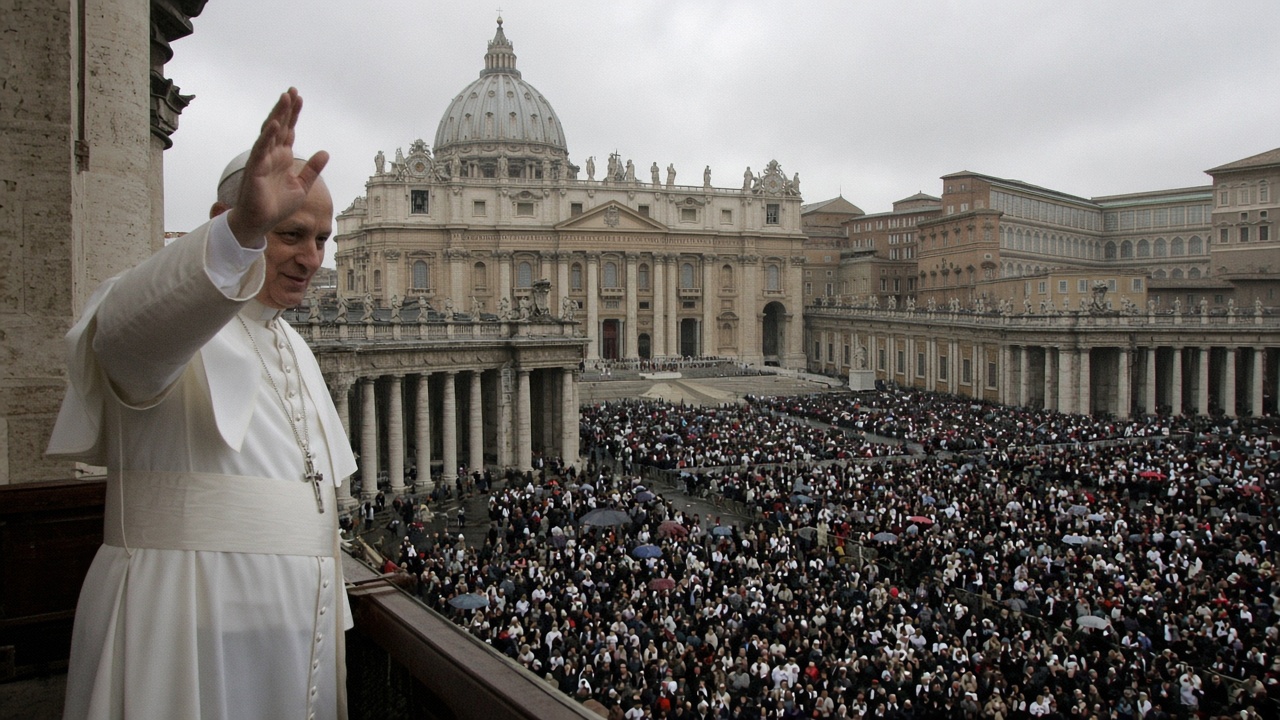
Pope Leo XIV said Sunday he will undergo surgery in Rome to remove a localized nodule on his lung that doctors detected during recent medical checks, disclosing the procedure publicly from St. Peter’s Square rather than waiting for the Vatican press office to announce it alone.
Speaking after the Angelus on October 11, the 71-year-old pontiff said the growth was found at a “very early stage” and is “well localized.” He said his physicians recommended an operation and that he would follow their advice, with the surgery set for the first days of the week at Gemelli Hospital, the Roman facility that has treated popes for decades.
What the Vatican confirmed
Holy See spokesman Matteo Bruni told journalists the procedure is planned for the opening days of the week and that Leo is expected to remain in hospital for roughly one week afterward. Bruni did not release the nodule’s precise size or pathology, and the Vatican has not said whether a biopsy has already been performed.
Leo, the first American pope, has not previously disclosed major health problems in his short pontificate. Associates have described him as physically active, including regular tennis and swimming at the papal summer residence at Castel Gandolfo. Sunday’s announcement nonetheless marks the first time he has told the public he faces a significant surgical intervention.
How lung nodules are usually handled
Clinicians often discover lung nodules on CT imaging ordered for unrelated reasons. Many nodules are benign, but doctors frequently recommend removal or close monitoring when a lesion appears solid, grows, or carries higher-risk features. The American Cancer Society describes a pulmonary nodule as an abnormal spot no larger than about three centimeters; larger masses are classified differently.
Leo did not characterize the finding as cancerous. His emphasis on early detection and containment mirrors language patients often hear when surgeons believe an operation can address a lesion before it spreads. Gemelli’s thoracic teams have handled high-profile cases under intense security and media scrutiny, including care for Leo’s predecessor during hospital stays that sidelined public appearances for days at a time.
What comes next for the papacy
The Vatican did not immediately cancel Leo’s public schedule beyond the surgery window. He is due to celebrate a closing Mass for the synod on October 14, and Bruni has not said whether that appearance will proceed. Major diplomatic appointments and the late-autumn South American trip loom as tests of how quickly Leo can return to extended travel.
Leo asked worshippers for prayers and thanked them for “spiritual closeness.” Stock markets and governments rarely react to papal health news, but the disclosure will be watched in Catholic communities worldwide and among diplomats who rely on the Vatican as a mediator in conflicts from Ukraine to the Middle East.
For now, the factual record is narrow: a nodule, a date range, a hospital, and an estimated week of recovery. Anything beyond that—final diagnosis, complications, or changes to the November voyage—will depend on what Gemelli’s surgeons report after the operation.