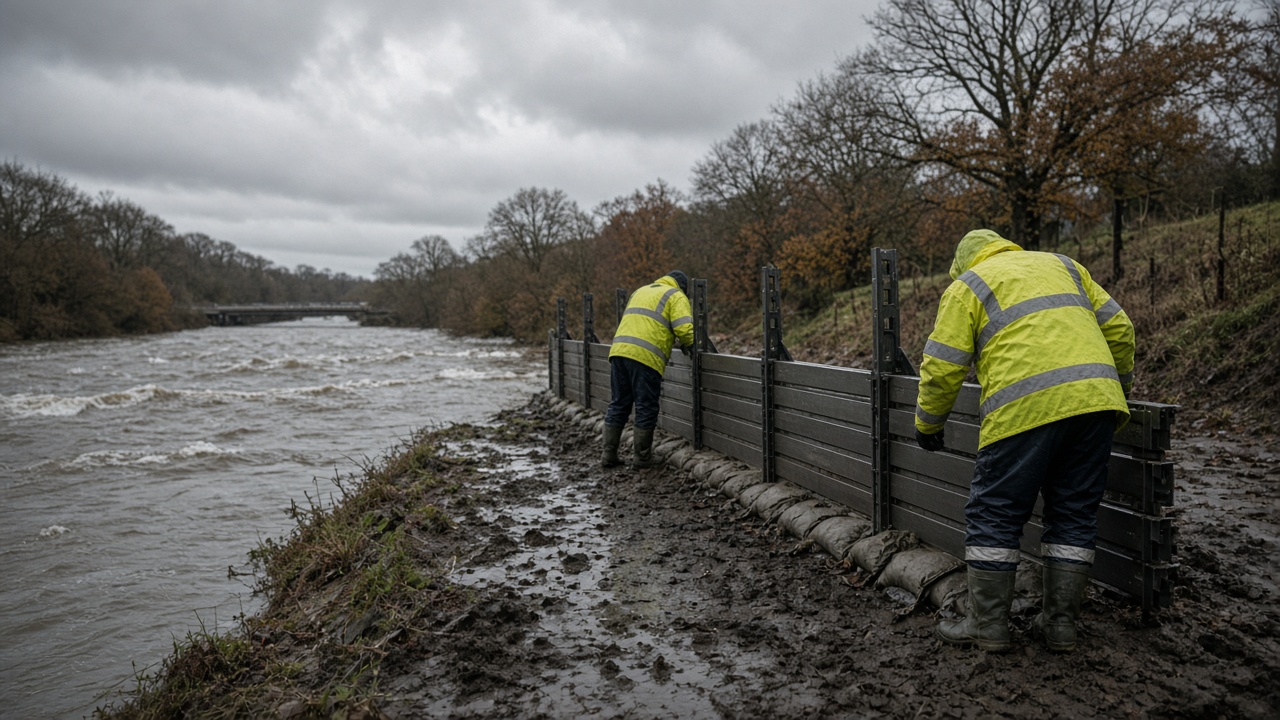
The British government has stood up a new flood taskforce to coordinate extreme-weather planning ahead of winter, with the first meeting scheduled this week as ministers warn that flood and drought risks are arriving back-to-back after the country’s hottest summer on record.
Department for Environment, Food and Rural Affairs Minister Emma Hardy said the group would put communities and businesses “at the heart” of preparations. The taskforce brings together the Met Office, the Environment Agency, mayoral authorities and representatives from farming, water and insurance—sectors that bore the brunt of last winter’s named storms and saturated catchments.
Why officials are moving now
The launch follows a Met Office seasonal outlook that flags a heightened potential for wet, windy and stormy conditions through autumn. Scientists tied part of that signal to El Niño, the Pacific temperature pattern that can shift storm tracks toward the UK. This year’s event is forecast to be among the strongest on record, with the peak not expected until late December—meaning the risk window may widen rather than narrow as leaves fall.
Hardy’s statement acknowledged the intertwined threats: “We’re facing extreme weather, with flood and drought intertwined but the government is taking decisive action.” The rhetoric matches a practical worry inside the Environment Agency, which has urged households to check flood risk maps, sign up for alerts and draft household plans even though flooding is never guaranteed in any single season.
What last winter already proved
England’s most recent winter brought four named storms—Bram, Goretti, Ingrid and Chandra—and several significant flooding episodes. The Met Office reported that England received 42 percent more rainfall than its long-term winter average, leaving rivers high and soils saturated when spring arrived.
Against that baseline, agency leaders say the odds of repeated storms, prolonged rain and overwhelmed drainage are higher than average this year. That does not mean a repeat of any one 2025 event, but it does mean local resilience plans and insurance renewals are moving up the calendar for councils from Cornwall to Cumbria.
Money and infrastructure on the table
Ministers pointed to at least £10.5 billion committed through 2036 to protect homes, businesses and critical infrastructure from worsening flood risk. The taskforce’s job in the near term is less about announcing new capital and more about sequencing maintenance, temporary barriers and communication when multiple regions flood at once—a scenario that strained emergency rooms and rail operators last year.
Insurance industry participation matters because rising premiums already shape where buyers can afford mortgages. Farmers, meanwhile, need clarity on slurry storage and field runoff rules if autumn rain arrives during harvest recovery from the summer heat.
What households are being told to do
Public messaging this weekend centers on personal readiness: know your flood zone, keep grab bags for documents and medicines, and identify higher ground routes before water rises. Councils with recent scars from riverine flooding are expected to test siren networks and volunteer flood wardens earlier than usual.
The political test for Hardy and the Environment Agency will be whether the taskforce produces visible coordination when the first Atlantic low pressure systems stack up—or whether it becomes another calendar entry until a storm name is already trending on social media. For now, the government is betting that convening every major player in one room before the rains arrive is cheaper than explaining afterward why warnings were not joined up.