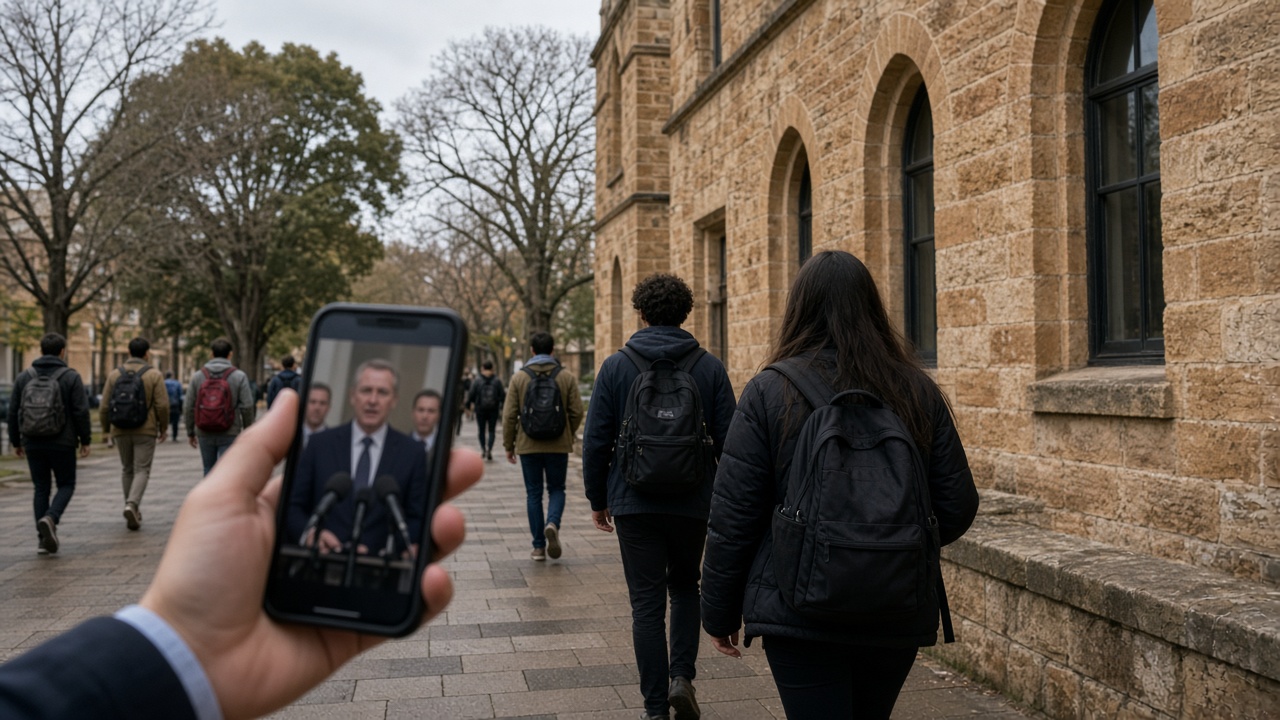
Western Australia’s government is pressing ahead with a controversial plan to combine Curtin University, Murdoch University and the University of Western Australia into a single institution, announcing on Sunday that it will commission a formal business case and appoint a steering committee to report by mid-2027. Premier Roger Cook said the merger could be funded by the universities themselves, but all three campuses have pushed back, warning of job losses, diluted identities and weak financial logic.
Cook’s Labor government has spent three years studying the state’s higher-education sector, releasing two reviews that argued Perth’s trio of research universities overlap in courses, administration and international marketing. The premier framed Sunday’s decision as a response to global competition for students and research grants, not a sudden political impulse. “We need a university system that can stand shoulder to shoulder with the best in the world,” he told reporters in Perth.
What the business case must answer
The business case will examine merger costs, governance structures and whether savings could be reinvested in teaching and research. Cook said the steering committee would include government officials and sector experts, with universities invited to participate. He did not commit state taxpayers to footing the bill, suggesting instead that balance-sheet capacity within the institutions might cover transition expenses.
That financing assumption is already drawing fire. Curtin vice-chancellor Harlene Hayne said the university would “vigorously oppose” amalgamation. In a statement, she argued a three-way merger would create one of only a dozen or so mega-universities worldwide and would sacrifice distinct strengths built over decades. Murdoch and UWA issued more cautious responses, saying they would engage in talks only if a “sound business rationale” delivered clear benefits to students and Western Australian communities.
Political and campus stakes
State opposition parties have used the announcement to attack Cook’s management of portfolios ranging from health to housing. Education critics say forcing mergers from Perth’s executive offices risks repeating failed consolidations in other countries, where promised efficiencies evaporated while rebranding costs mounted. Union representatives at Curtin and Murdoch have signaled they will campaign against job cuts if a merger proceeds.
International education is a major export earner for Western Australia, and vice-chancellors worry that prolonged uncertainty will unsettle prospective students in India, Southeast Asia and China. Domestic school-leavers may also hesitate if course closures follow consolidation. The government counters that a larger, better-resourced university could negotiate stronger industry partnerships in mining, energy transition and defence projects tied to the state’s economy.
Timeline and next decisions
The steering committee’s mid-2027 deadline means any legislation or formal restructuring would likely fall after the next state election cycle, giving critics time to mobilize. Cook emphasized that no decision is final until the business case lands, but his language on Sunday left little doubt that he wants a merged system rather than incremental collaboration agreements.
For students starting degrees in 2026 and 2027, the immediate impact is messaging rather than timetable changes. For staff, the announcement triggers months of contingency planning about redundancies, campus closures and research center mergers. Western Australia has now moved from policy papers to a concrete merger process; the fight shifts to whether the numbers—and the campuses—will agree.