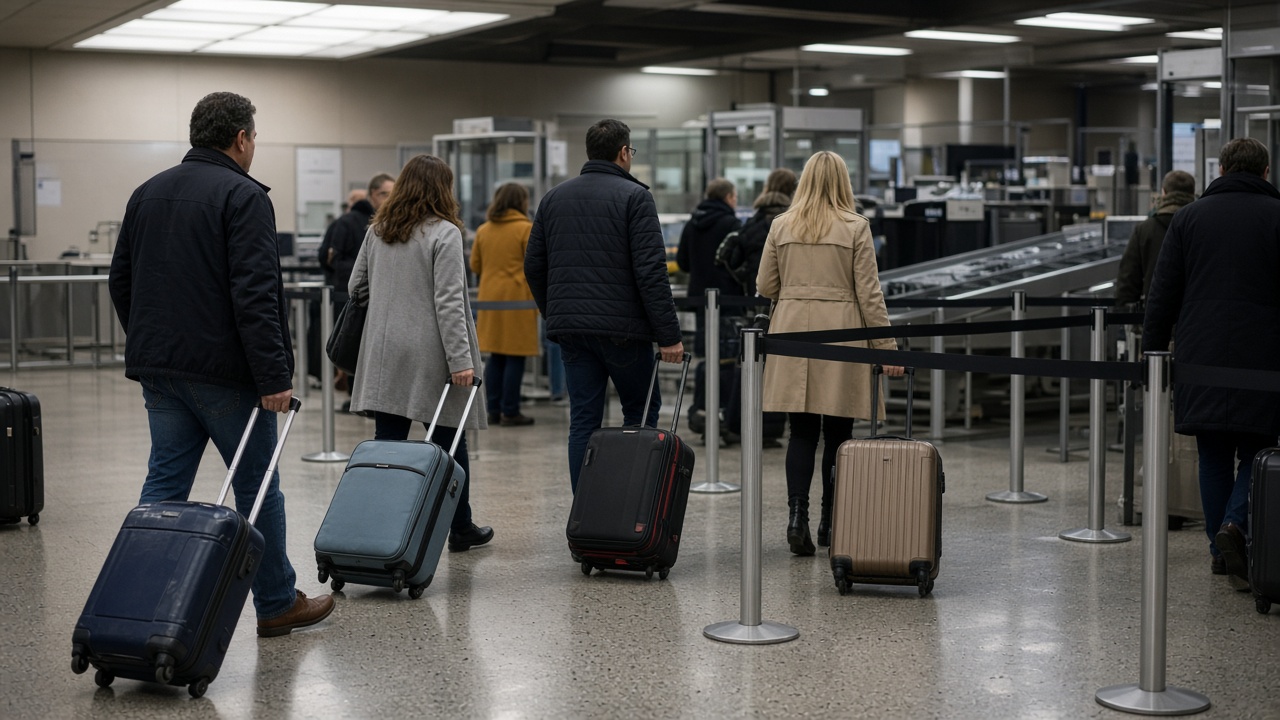
Airlines for America told member carriers to staff Monday checkpoints for about 2.7 million passengers nationwide, a figure anchored to the Transportation Security Administration’s Columbus Day screening total from 2024 rather than a new survey released this weekend. Antonio Rizzo reports the holiday is lighter than Thanksgiving but still packs leisure traffic into a day when many federal workers are off and bond markets are closed while stocks trade normally.
What is open and what is not
Columbus Day is a federal holiday, so many bank branches stay dark and the Securities Industry and Financial Markets Association recommends closing U.S. dollar fixed-income trading. The New York Stock Exchange and Nasdaq nevertheless run a standard session, which matters for crews deadheading on repositioning flights tied to corporate travel Tuesday.
Airports themselves do not close; TSA officers work federal schedules with holiday pay. Customs and Border Protection staffing at international gateways follows the usual roster, so inbound passengers still clear immigration on Monday evening red-eyes.
Real ID at the checkpoint
Full enforcement of the REAL ID Act means adult travelers 18 and older need a compliant driver’s license, state ID, passport, or other acceptable document at the TSA document checker. Enhanced licenses from participating states still work, but standard licenses from non-compliant states do not.
If your license is not REAL ID–marked, bring a passport or passport card even on domestic itineraries. TSA will not accept a mobile boarding pass alone to fix a document problem; you will be sent to the ticket counter, and holiday loads make rebooking expensive.
Where the 2.6 million estimate comes from
A4A’s public communications team bases Monday holiday staffing on TSA’s daily throughput tables, which showed 2,753,893 screenings on Monday, Oct. 14, 2024—the Columbus Day date that year. The trade group rounds that to roughly 2.7 million for 2026 planning calls with airline operations chiefs, then adjusts up or down if the Friday before the holiday was unusually heavy.
This is not the same as A4A’s spring break forecast, which projected 171 million passengers across March and April. Columbus Day is a single-day pulse, dominated by long-weekend leisure and some government employees flying back Sunday night or Monday afternoon.
Practical tips for Monday flyers
Arrive early at medium hubs; Monday morning bank closures do not slow airport ATMs, but rental-car returns can queue when returning travelers stack 11 a.m. flights. Download your airline’s app for gate changes—thunderstorms in the Southeast can ripple even on fair-weather Mondays.
Checked-bag fees still apply on most economy tickets. If you bought a basic economy fare, confirm whether a carry-on is included before you reach the TSA belt; gate-checking a roller bag on a full holiday flight costs more than the upgrade would have at booking.
Indigenous Peoples’ Day observances
Several cities and states recognize Indigenous Peoples’ Day on the same calendar date as Columbus Day. Airport names and flight schedules do not change, but local transit to downtown hotels may follow city-hall holiday calendars. Ride-share surges hit when parades close streets in major metros; pad ground-transport time if your meeting is near a civic event.
By Tuesday, bond trading resumes and bank branches reopen, which can unblock wire transfers for corporate travel accounts paying vendor invoices. For Monday leisure passengers, the operational headline is simple: expect a full security line, carry a REAL ID–compliant document, and treat 2.7 million fellow travelers as the planning number TSA and airlines already are.