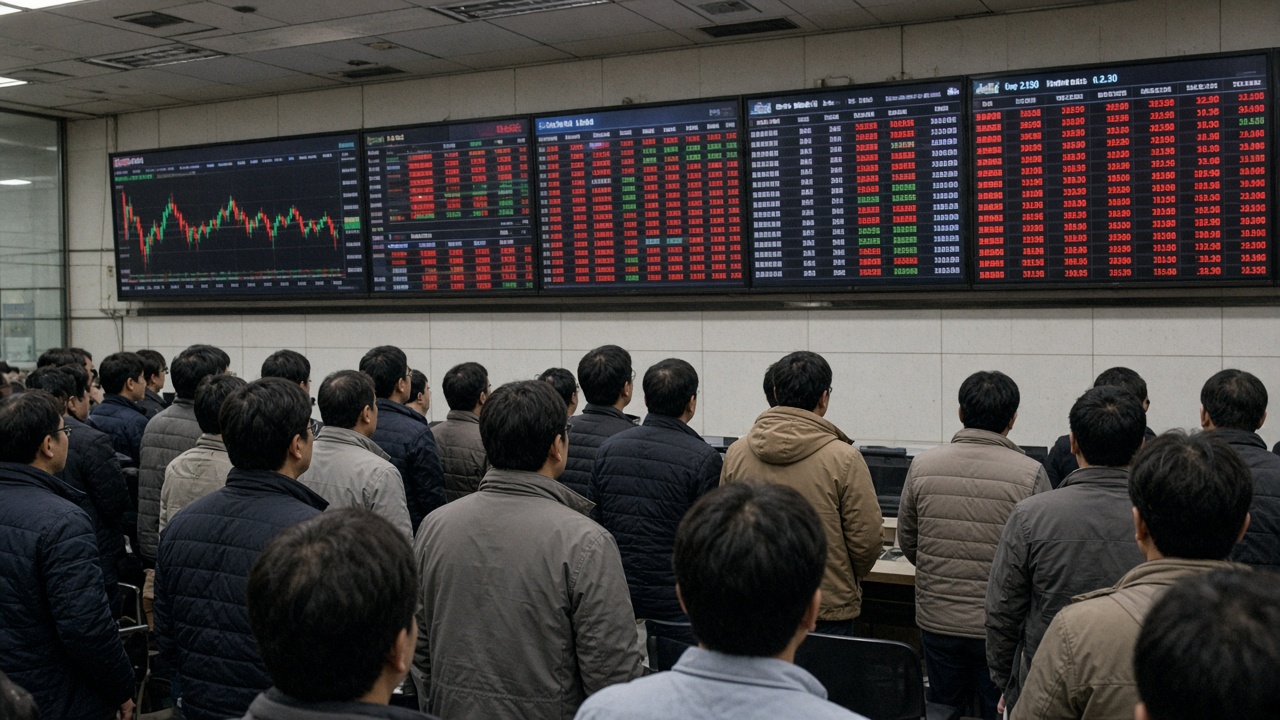
Asian semiconductor shares sold off sharply on Tuesday as traders weighed fresh reports that China’s ChangXin Memory Technologies had advanced next-generation DRAM density, a development that could loosen the tight supply that has underpinned two years of memory profits. Seoul’s Kospi fell more than six percent in morning trade, with memory giants SK hynix and Samsung Electronics among the heaviest drags, while Japan’s Nikkei 225 slid nearly three percent as Kioxia dropped more than twelve percent and equipment names Tokyo Electron and Advantest fell more than six percent.
What moved the tape
Investors had entered the week already on edge. Overnight explosions in Riyadh, following days of Houthi strikes on Saudi airports, kept oil and geopolitical risk on traders’ dashboards across Tokyo, Taipei and Sydney. Against that backdrop, regional chipmakers that had led the artificial-intelligence hardware boom faced a second shock: market chatter that CXMT had made progress on technology rivals have been racing to perfect.
The fear is not that a single lab result ends the AI build-out overnight. It is that additional Chinese supply could arrive sooner than bulls had modeled, pressuring contract prices for DRAM and NAND just as capital spending plans for 2027 are being locked in boardrooms from Hsinchu to Hwaseong.
Winners, losers and the read-through
Taiwan Semiconductor Manufacturing Company, the foundry that fabricates chips for Nvidia and Apple, fell about 1.8 percent, helping pull Taipei’s benchmark down more than two percent. Losses spread to Hong Kong, Shanghai, Sydney, Wellington and Manila as a broad “AI trade” unwind met thin liquidity ahead of U.S. earnings season.
Analysts cautioned that verified production yields and customer qualifications still matter. South Korean and Japanese suppliers have spent heavily on high-bandwidth memory and advanced packaging precisely because Chinese entrants have struggled to match reliability at scale. Yet Tuesday’s move showed how quickly sentiment can flip when investors price in even a plausible competitor timeline.
What investors watch next
Currency markets added pressure: the won and yen weakened as risk appetite faded, making dollar-denominated equipment imports more expensive for fabs already facing higher energy bills linked to the Middle East conflict. Traders said they would scrutinize U.S. tech earnings and any formal statements from CXMT or Chinese regulators before revisiting memory price forecasts.
For now, the message from Asia’s session was blunt. A sector that had treated memory scarcity as semi-permanent discovered how fast oversupply narratives can return—and how tightly those narratives remain bound to both geopolitics and the next headline out of Beijing’s semiconductor push.