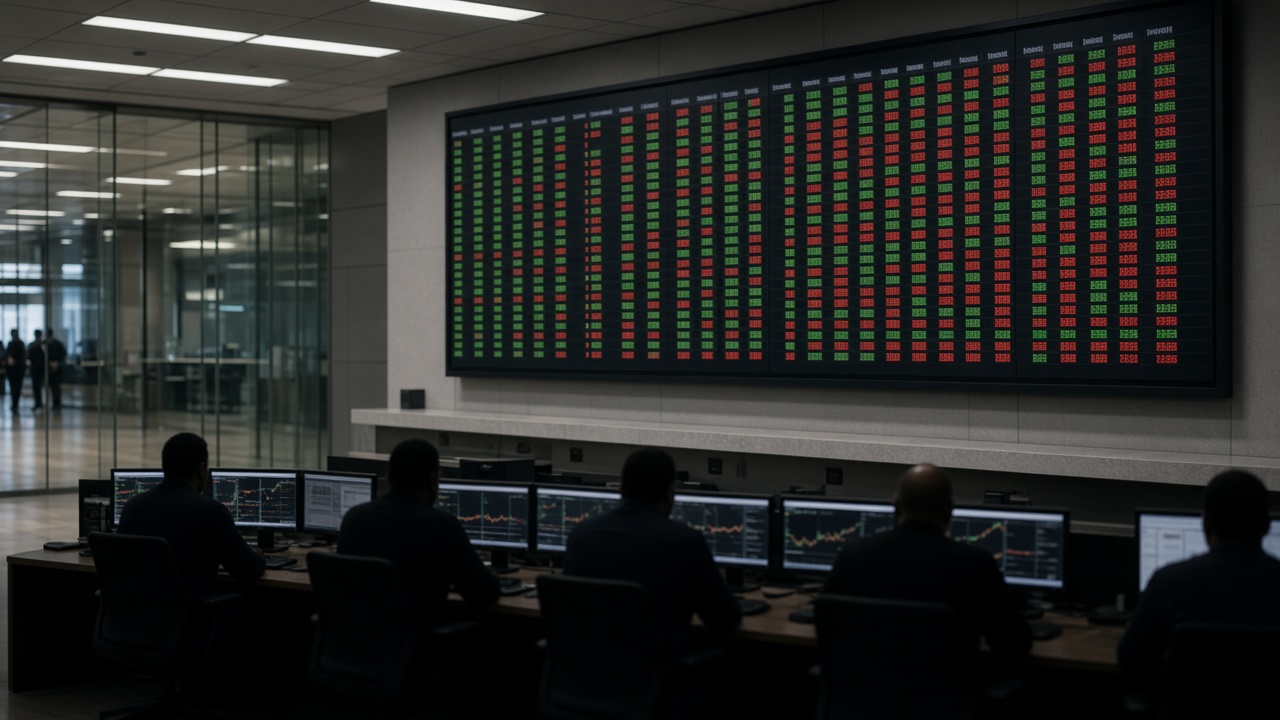
Australia’s S&P/ASX 200 shed 75.5 points, or 0.9 per cent, to 8,892.8 on Monday as renewed U.S.–China trade threats dragged banks and technology stocks lower, while gold and rare-earth producers offered the only broad gains. ANZ Group jumped 3.3 per cent after chief executive Nuno Matos detailed cost cuts and a pivot toward wealthy expatriate customers, even as the lender shelved a $600 million buyback to fund the revamp.
What drove the sell-off
Wall Street’s Friday slump spilled into Sydney after President Donald Trump threatened additional tariffs on China and software export controls, retaliation for Beijing’s curbs on rare-earth shipments. Futures had pointed to a softer open, but losses accelerated through the morning as major lenders tracked falling U.S. equity indices. Commonwealth Bank and Westpac each gave up more than a percentage point, while WiseTech Global slid after a freight-platform outage snarled customs brokers.
Iron ore held firmer on Chinese port restocking, which helped BHP finish only 0.8 per cent weaker and left Rio Tinto flat. That split—bulk miners resilient, financials pressured—defined the day’s narrative for superannuation members checking balanced funds at lunch.
Winners in materials and gold
Lynas Rare Earths closed 2.7 per cent higher after media reports that Canberra is weighing minimum prices for critical minerals in tandem with U.S. stockpile talks. Iluka Resources added 2.3 per cent on zircon and rare-earth by-product optimism. Northern Star Resources rose with spot gold trading above US$4,000 an ounce as investors sought havens.
Matos told investors that ANZ would trim layers of management and redeploy capital into digital onboarding for globally mobile clients. The strategy cheered shareholders who had punished the stock on sluggish returns, but analysts noted that pausing buybacks removes a cushion if tariff headlines persist through October.
Sector breadth
Calendar ahead
Traders now pivot to Tuesday’s release of Reserve Bank board minutes and a run of quarterly production reports from Rio Tinto, Santos and AMP. Bond yields drifted lower as funds sought safety, with the 10-year Australian government yield hovering near 4.36 per cent. The Australian dollar slipped toward US64.7¢, magnifying offshore earnings for miners while raising import costs for retailers.
Desk strategists said the pullback could prove shallow if Beijing signals flexibility on rare-earth licences before the November tariff deadline. Until then, expect choppy sessions where a handful of critical-minerals names trade like geopolitical insurance while the rest of the market prices slower global growth.
Flows and FX
Exchange-traded fund issuers reported modest net outflows from broad Australian equity products, while gold-backed ETPs saw their largest weekly inflow since March. Currency strategists at two majors said the Aussie’s slide toward US64.7¢ reflected both risk-off positioning and narrowing interest-rate differentials after the Federal Reserve held steady.
Importers of consumer electronics flagged the dual hit of a weaker dollar and potential rare-earth bottlenecks, warning that handset promotions planned for Black Friday may shrink if component costs rise. Retailers said they would not absorb margin pressure for a third consecutive quarter without revisiting discount calendars.
Superannuation lens
Industry funds with heavy domestic equity allocations said members should expect volatility in balanced options this week, while lifecycle products for younger cohorts may treat the dip as a rebalancing opportunity. Advisers cautioned against shifting entirely to cash after a single session, noting that missing a rebound in materials could drag long-run returns.
Corporate actions calendars remain busy: several miners launch buyback extensions, and a handful of REITs review dividend policies as bond yields creep higher. None of those announcements moved the index Monday, but they set the tone for earnings season narratives.