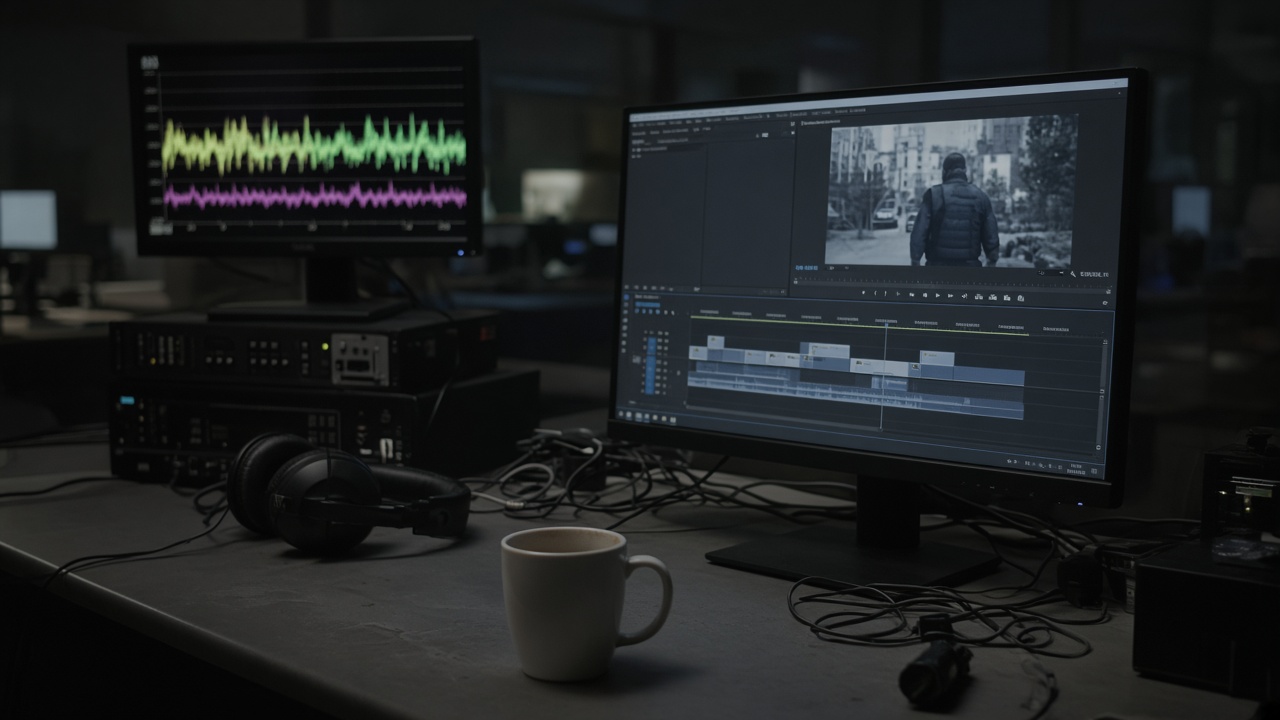
CSIRO has begun a six-week pilot with three Australian newsrooms to test an open-source watermarking toolkit that flags synthetic audio and video before clips air on social feeds. The trial, announced Monday, targets editors who lack in-house forensic labs but face mounting pressure to verify user-generated content during local and state election campaigns.
What the toolkit does
The software embeds imperceptible markers at capture time on compliant cameras and microphones, then verifies those markers on upload to content-management systems. When markers are absent or stripped, the dashboard scores manipulation risk using spectral cues trained on Australian accents and lighting conditions. CSIRO stressed the system does not determine truth—it only signals whether media likely left a trusted device chain.
Participating outlets, which CSIRO declined to name citing security, route evening bulletin packages through the verifier. False positive rates in lab tests stayed below 4 per cent on compressed 720p video, according to briefing documents seen by InfoHandle Network.
Policy context
The pilot lands as the eSafety Commissioner publishes age-assurance metrics and political parties stockpile short-form ads. Federal parliament is also debating obligations on platforms to label AI-altered political material. Watermarking alone cannot stop bad actors, but broadcasters hope it gives them a defensible line when rejecting anonymous clips.
Privacy advocates want clarity on whether metadata collected during verification could be subpoenaed. CSIRO said participating newsrooms control logs locally and that the toolkit can run air-gapped.
Limits and next steps
Open-source release is planned for early 2027 if field tests succeed. Until then, outlets without compatible cameras will still rely on manual provenance checks. Deepfake creators can re-record audio separately from video, defeating naive watermark schemes.
For news consumers, the practical effect may be subtle: on-screen labels reading “verified capture chain” during state election debates. For the AI desk, the pilot shows Canberra investing in detection tooling rather than outright model bans—a middle path between Silicon Valley optimism and European-style licensing.
Newsroom workflow
Producers in the pilot described a colour-coded queue: green for verified capture chains, amber for unknown provenance requiring manual calls, red for failed checks blocked from air. Social teams said the extra step added roughly twelve minutes to deadline workflows but reduced frantic retractions after hoax clips trended.
Academic partners at two universities will publish reproducibility benchmarks so rival vendors cannot claim CSIRO’s false-positive rate without sharing training data. That transparency push aligns with federal grants requiring open publication when public money funds detection tooling.
Standards bodies
Standards Australia is reviewing whether broadcast metadata should reference watermark verification codes, a step that could embed trust signals in DVB-T transmissions. Commercial networks asked for a grace period so legacy cameras can cycle out of news kits.