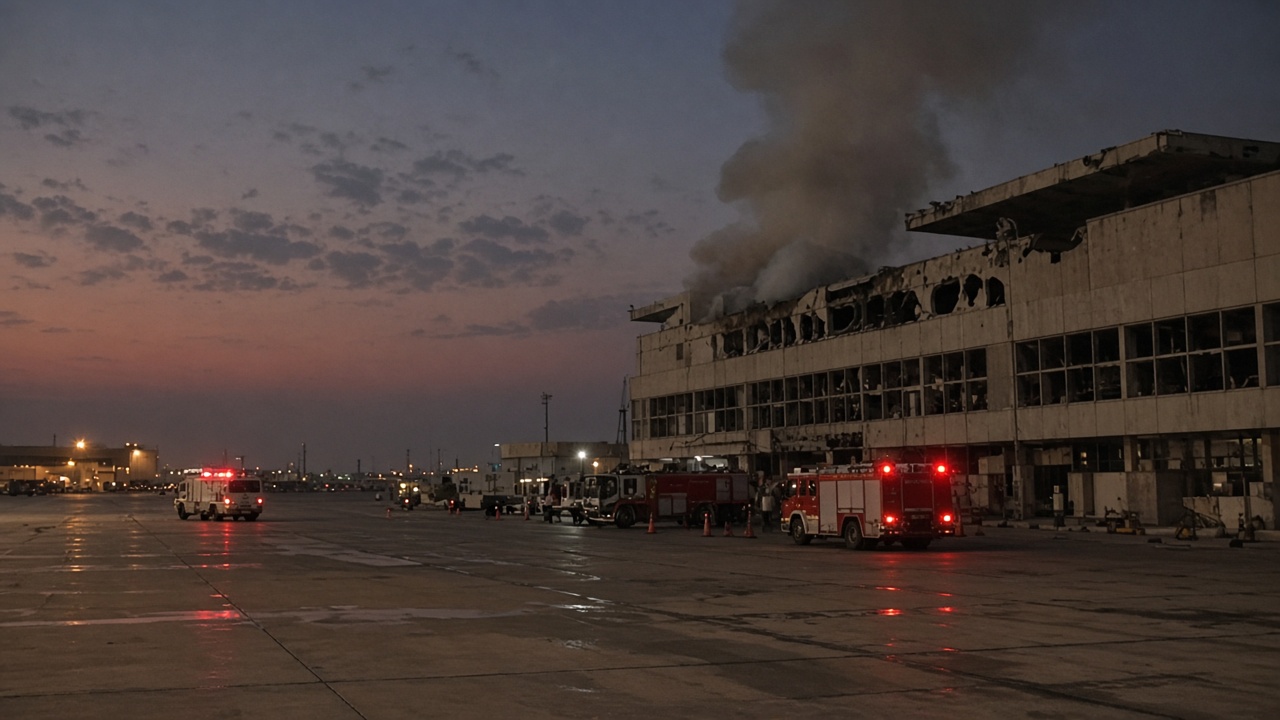
A projectile hit Terminal 4 at King Khalid International Airport in Riyadh on Sunday, killing one person and wounding 11 others, Saudi Arabia’s civil aviation authority said — one day after a Houthi-claimed assault on the same complex killed 13 people and injured more than 300 in the deadliest strike on Saudi soil in more than a decade.
The General Authority of Civil Aviation identified the fatality as a Pakistani resident. Saudi-led coalition forces said an unidentified projectile sparked a fire at the domestic terminal complex. Authorities extended the airport’s closure as safety inspections continued, leaving thousands of travellers stranded and forcing carriers to divert flights across the kingdom.
Escalation After Saturday’s Mass Casualty Strike
Houthi military spokesperson Yahya Saree claimed responsibility in a televised address for Saturday’s attack and said the group had also targeted Dammam’s airport in the Eastern Province and two Saudi Aramco facilities. The coalition called Saturday’s strike a grave violation of international humanitarian norms and vowed a decisive response.
Saudi officials said Saturday’s dead included four Saudi citizens and foreign nationals from Bangladesh, the United States, Egypt, Jordan, Syria, Sudan and the Palestinian territories. India’s embassy in Riyadh said one of its citizens wounded in the attack died on Sunday, adding to the toll. State television footage from Saturday showed pilgrims near a departure gate fleeing an orange flash as sections of the roof appeared to collapse.
Sunday’s follow-on strike brought the reported death toll from attacks on the Riyadh airport alone to 18 for the week, after earlier hits damaged a parked commercial aircraft and killed crew and passengers in separate incidents. Tracking services showed a sharp drop in traffic at King Khalid as the facility remained offline.
Missile Activity and Retaliatory Air Campaign
Early Monday, the coalition said air defences intercepted and destroyed a ballistic missile launched toward Khamis Mushait in southern Saudi Arabia. Houthi-run media said Saudi aircraft carried out dozens of strikes in Yemen, including areas around Sanaa, and a spokesman for the Houthi health ministry said one civilian was killed and five wounded.
The Houthis have intensified attacks on Saudi aviation and energy infrastructure during the past week, including repeated strikes on the Red Sea shipping lanes that complement the wider regional tension that followed the Iran war. Riyadh has long backed the internationally recognised Yemeni government against the Iran-aligned group, but the latest barrage has exposed pressure on Saudi air defences and raised questions about whether the kingdom can keep commercial hubs open without deeper external support.
Washington’s Calculus
For the United States, the sequence is politically fraught. President Donald Trump’s administration has sought to limit new military entanglements in the Middle East even as it maintains close security ties with Riyadh. Analysts said the scale of civilian casualties at a flagship airport — and the risk of further strikes on Aramco sites or eastern aviation hubs — could push the White House toward additional intelligence sharing, defensive deployments or explicit threats against Houthi leadership.
Congressional aides noted that any expanded U.S. role would collide with public fatigue over decades of Gulf deployments and with parallel demands to resource Ukraine and Indo-Pacific priorities. Gulf diplomats, meanwhile, are pressing for faster interceptors and clearer commitments after Saturday’s death toll surpassed anything the kingdom had absorbed from Houthi fire in years.
Commercial insurers and airlines were watching the closure timeline closely. Extended shutdowns at King Khalid ripple through Hajj and Umrah travel planning, cargo flows and business aviation across the Gulf. Saudi authorities have not said when full operations will resume.
What Comes Next
The Houthis warned that “worse is yet to come” unless Saudi Arabia halts its air campaign in Yemen. The coalition has promised retaliation but has not detailed its next steps. European and Asian governments with citizens among the wounded were issuing travel advisories and consular support as investigators combed blast sites at Terminal 4.
Until Riyadh reopens its main international gateway and demonstrates that repeat strikes can be prevented, the crisis is likely to dominate Gulf security conversations — and keep Washington’s policy choices in the spotlight.