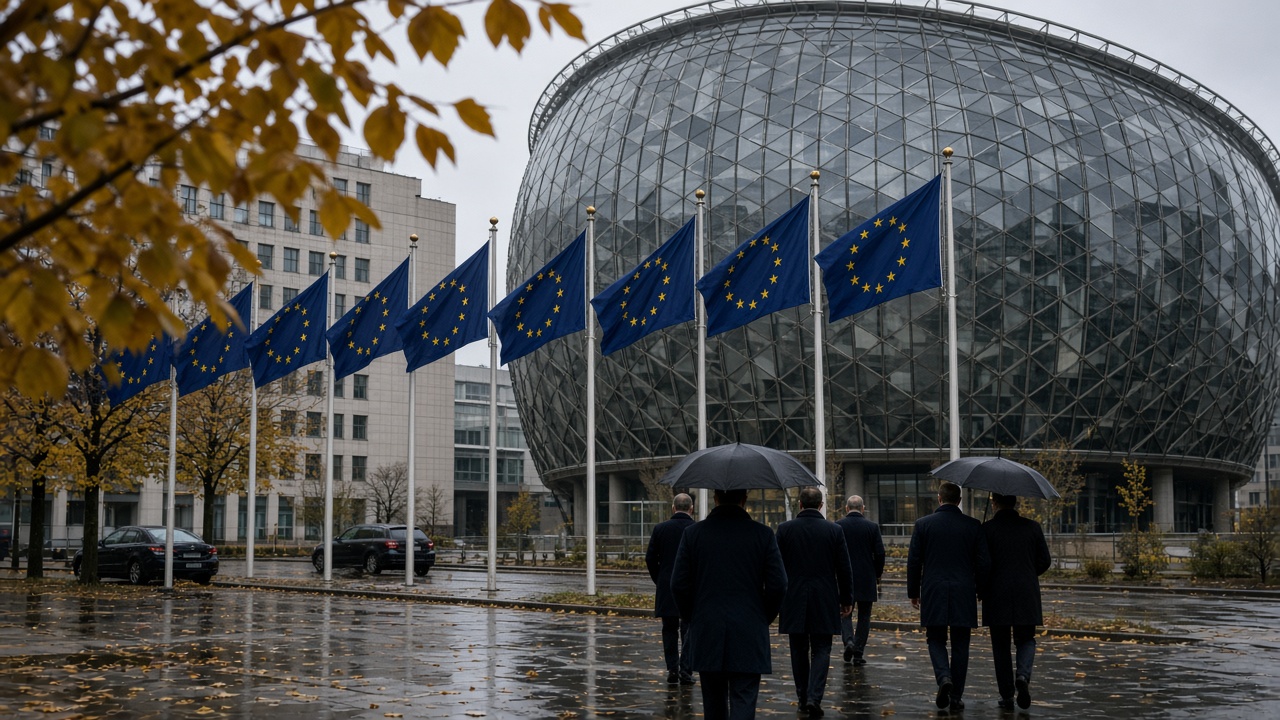
European Union foreign ministers on Monday formally adopted 1,569 new sanctions listings aimed at Russia’s military-industrial complex, the bloc’s largest single expansion since Moscow’s full-scale invasion of Ukraine. The package names 826 Russian companies and 743 individuals, most of them chief executives of designated firms, and brings the EU’s Russia-related sanctions total to nearly 4,600 entries.
What the Council targeted
The Council of the EU said the measures respond to Russia’s “continued and escalating aggression,” including recent strikes on Ukrainian civilian infrastructure. More than half of the new listings are connected to the production chain for ballistic missiles, according to EU foreign policy chief Kaja Kallas, who chaired the Foreign Affairs Council meeting in Luxembourg.
Officials said the designations sweep in drone and electronics suppliers, radar and satellite firms, ammunition makers, shipyards, and aerospace companies across Russia. Press materials cited shipbuilders in St Petersburg, defence enterprises linked to the Black Sea Fleet in occupied Crimea, and Kazan-based arms manufacturers in Tatarstan. Listed entities face asset freezes and a ban on EU funding; listed individuals are also subject to travel bans.
Timing and political context
Monday’s vote was largely a formality after EU capitals agreed on the list in earlier talks, but the scale still marks a deliberate signal. Kallas said on social media that bombing Kyiv’s bridges, attacking grain ships, and striking Ukraine’s National Academy of Sciences “are not the actions of a country seeking peace,” adding that this is “not the time to ease pressure on Moscow but to increase it.”
The package lands as U.S. President Donald Trump claimed an “energy ceasefire” between Russia and Ukraine, a declaration Kyiv says Moscow has already broken with strikes on power plants. European leaders have welcomed any pause on energy targets while insisting that sanctions enforcement must continue in parallel.
Separate listings on occupied Ukraine
Associated Press reporting noted that the EU also targeted 77 people accused of organizing or running in what Brussels described as “sham elections” in Russian-occupied parts of Ukraine. Those listings sit alongside the industrial designations rather than replacing them.
The Kyiv Independent, which reported elements of the industrial list in September, said many additions were drawn from firms entitled to Russian government subsidies and formally designated as part of the military-industrial complex. Ukrainian officials have long pressed the EU to choke off component flows that keep missile and drone assembly lines running despite earlier rounds of restrictions.
What happens next
The Council published implementing decisions on Monday updating the EU’s consolidated sanctions list. Member states must now enforce asset freezes through national authorities and banks. The industrial listings are set to last three years before renewal is required, according to EU officials quoted in European media.
Kallas said the bloc is “making it significantly harder, slower and more expensive for Russia to produce the weapons it uses to kill Ukrainians.” Whether the new names close practical gaps in dual-use component trade will depend on enforcement in third countries as well as inside the EU—an issue Ukrainian diplomats are expected to raise in upcoming Brussels meetings.