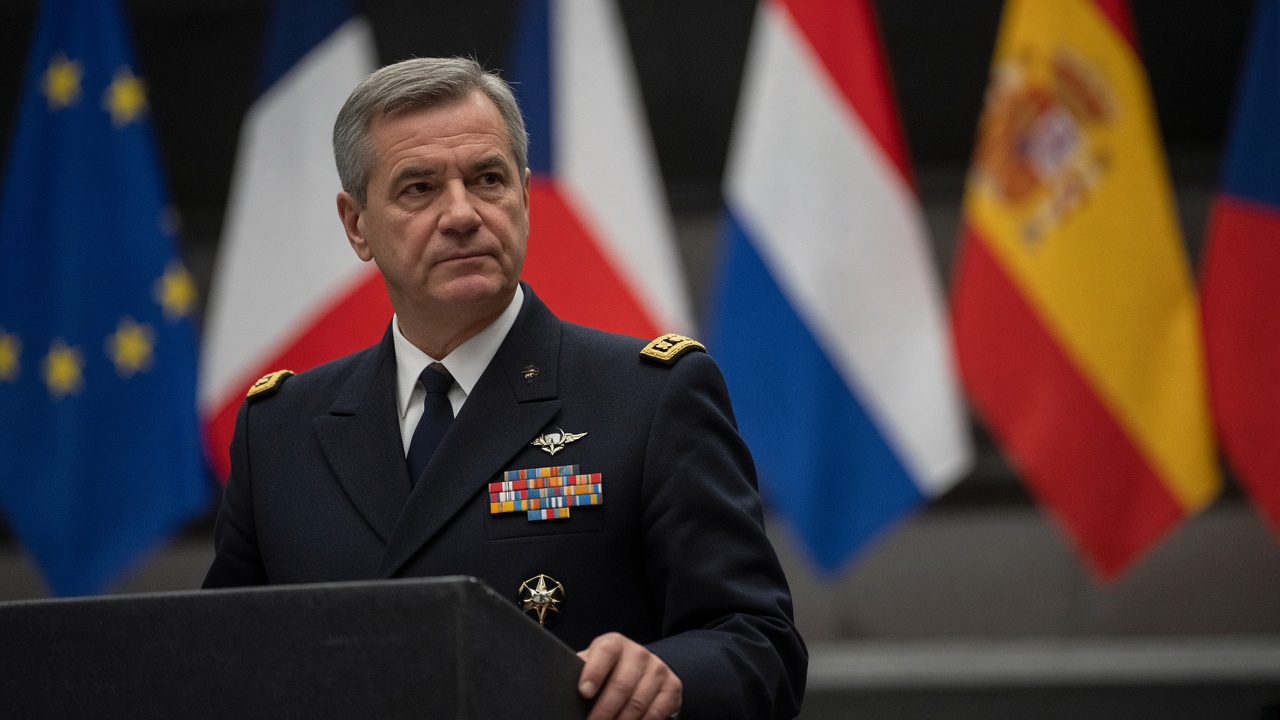
Gen. Alexus Grynkewich, NATO’s supreme allied commander in Europe, said Monday that the alliance would destroy “anything and everything” that enables an attack on allied territory, outlining a doctrine of blocking, blunting and breaking enemy forces if Moscow or any other adversary pressed an assault.
Speaking on the opening day of the Warsaw Security Forum in Poland, Grynkewich told a panel on deterrence against Russia that NATO would not limit its response to the units firing the first shot. “This includes not just the attacking force itself, but anything and everything that supports, sustains, and controls that force,” he said, according to remarks reported from the stage.
‘Block, blunt and break’
Grynkewich cast the message as a theory of victory rather than a change in NATO’s defensive charter. If an adversary attacked, he said, allied forces would first block the initial thrust, blunt any follow-on advance, and — if necessary — break the broader operational system arrayed against them.
“Should the adversary choose to press the attack or commit his reserves, we will break the warfighting system engaged against us,” he said. He added that NATO’s 32 members were “stronger than ever” on the alliance’s eastern flank, citing exercises, higher readiness levels and new capabilities rolled out since Russia’s full-scale invasion of Ukraine.
The general did not name Russia in the public portion of his address, but the panel title explicitly focused on military success against Russia in deterrence and defence, and allied planning documents continue to treat Moscow as the most direct threat to European security.
Hybrid pressure and eastern sentry
Grynkewich’s warning landed as European capitals attribute a string of drone incursions, sabotage and cyber incidents to Russian intelligence services. Poland intercepted Russian drones during a large-scale strike on Ukraine in 2025, prompting NATO to launch Operation Eastern Sentry to reinforce defences along the eastern border.
Romania has reported similar airspace violations, and Estonia has accused Russian military aircraft of crossing into its territory without clearance. Grynkewich said he was willing to discuss suspected hybrid attacks more openly if individual governments asked him to do so on their behalf.
Ukraine strikes and nuclear rhetoric
The forum convened after a weekend in which diplomatic talk of an energy ceasefire in Ukraine collided with fresh Russian strikes on power infrastructure. Ukrainian officials said attacks continued even as Washington promoted a deal to ease sanctions on Russian diesel exports.
Separately, Moscow has sent NATO a diplomatic note warning that attempts to isolate the Kaliningrad exclave could meet a response using Russia’s full arsenal, including nuclear weapons — language NATO Secretary-General Mark Rutte dismissed in late September as intimidation that would not alter the alliance’s defensive posture.
What allies hear on spending
Grynkewich sought to reassure European audiences that Washington remains committed to collective defence, pointing to positive comments President Donald Trump made about NATO at the 2025 summit in The Hague. Trump has nonetheless pressed allies to spend more on their own militaries and has questioned whether laggards should expect American protection.
“If attacked, we are ready to fight tonight, but we are not complacent,” Grynkewich said. He told the forum’s audience of defence ministers, generals and analysts that NATO’s job was to ensure any strike on an ally “proves utterly futile” — a line that will be parsed in chancelleries from Warsaw to Washington as the war in Ukraine grinds on and hybrid incidents multiply.