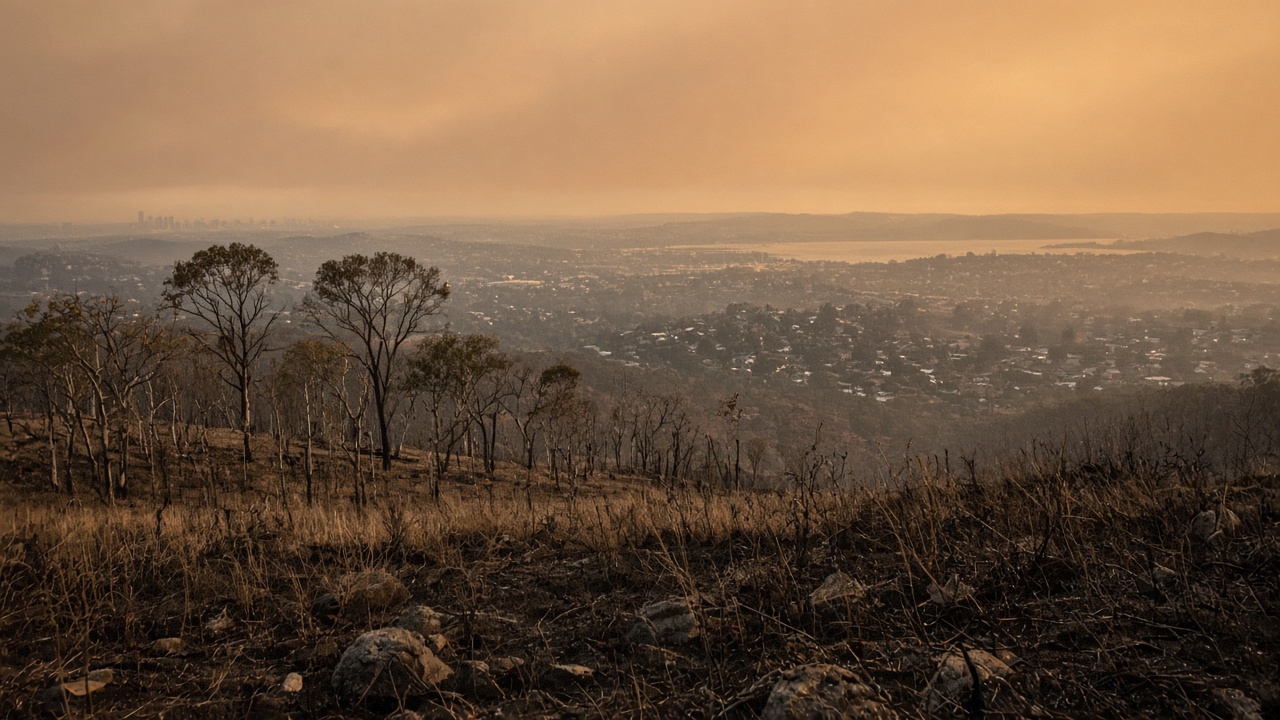
New South Wales authorities declared a total fire ban across greater Sydney and the greater Hunter on Monday as a hot, dry air mass pushed western suburbs toward 37 degrees Celsius and forecasters warned that thunderstorms could spark blazes with little rain.
The Rural Fire Service said the ban prohibits outdoor fires, solid-fuel barbecues, and activities such as grinding or welding that can throw sparks. The Bureau of Meteorology rated fire danger as extreme for the Sydney basin, citing heat, low humidity, and the chance of “dry lightning” strikes that ignite grass and bush without accompanying downpours.
Where the heat is concentrated
Coastal Sydney was expected to remain slightly cooler, but centres including Mount Druitt in the west were forecast to reach about 37C by mid-afternoon. The Hunter, north of the city, faces similar conditions, with firefighters already managing several smaller incidents after weeks of below-average rainfall across eastern NSW.
RFS Commissioner Rob Rogers told media the combination of heat and lightning risk meant “fire danger is going to be right up today,” urging residents to postpone mowing, avoid using machinery on dry grass, and report smoke immediately. Total fire bans are distinct from fire weather warnings: they carry legal penalties for lighting fires in the open.
What residents should expect
National parks and council reserves may close high-risk trails. Electric barbecues on residential property are often still permitted where bans allow, but campers should check the RFS “Fires Near Me” app because rules differ by council. Power utilities sometimes pre-emptively monitor lines in high-wind corridors, though no widespread outages were announced by Monday morning.
Schools and outdoor sport organisers typically shift training indoors when fire danger reaches extreme levels. The NSW Department of Education did not issue a statewide closure, but principals can cancel outdoor activities under local emergency plans.
Broader fire season context
Australia’s eastern seaboard has entered the spring build-up with soil moisture deficits in parts of the Blue Mountains and Central Coast. Climate outlooks from the bureau show no sustained rain relief through the week, keeping grasslands cured enough to carry fast-moving grass fires.
Unlike the catastrophic Black Summer fires of 2019–20, Monday’s event is a single-day convergence of heat and lightning risk rather than a multi-week heatwave. Still, firefighters treat dry lightning days as among the hardest to manage because new ignitions can appear far from existing crews.
The ban will be reviewed daily. If thunderstorms produce rain and humidity rises, restrictions may ease; if lightning starts multiple fires, the RFS can escalate to section 44 emergency declarations that bring in interstate crews. For Sydney and Hunter households, the immediate instruction is simple: no open flames outdoors, stay informed, and have a bushfire survival plan ready if you live near bushland interfaces.