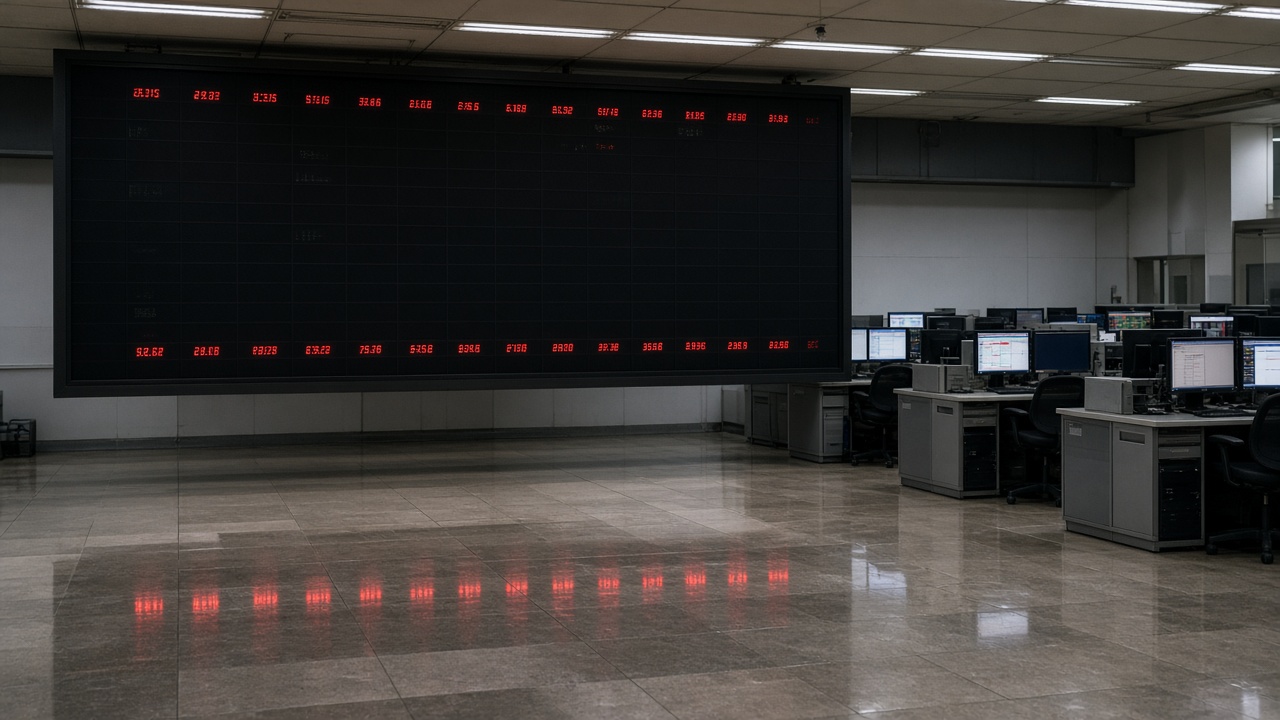
Taiwan’s benchmark index looked set to open lower Monday after U.S. power-management and analog chip receipts dropped 6.4 percent on Friday, reversing part of the post–Double Ten rally that had lifted the TAIEX to 27,302 points at the local close.
Electronic trading screens pointed to a gap-down start of 180–240 points, brokers said, with supply-chain names that track U.S. smartphone and server builds leading the drag. The move followed a Philadelphia semiconductor index decline and weaker-than-expected U.S. consumer-electronics channel checks tied to battery and charging components.
Why PMIC names matter here
Taiwanese integrated-device manufacturers ship a large share of global PMIC and battery-management silicon. When U.S. receipts fall sharply, local investors often trim holdings in design houses and foundry customers that feed those vendors. Several large-cap names were marked down 2–3 percent in pre-open indications, while pure-play defense contractors that rallied last week on a presidential industrial-policy speech held steadier.
The National Stabilization Fund committee did not announce an intervention before the open, but two state-backed funds told reporters they were monitoring liquidity and would follow existing rules if swings exceeded internal thresholds. The Financial Supervisory Commission repeated that short-selling curbs remain unchanged.
Flows and hedging
Currency desks noted mild Taiwan dollar softness against the U.S. dollar in early interbank trade, a combination that sometimes encourages offshore funds to delay buy orders. Options markets priced higher implied volatility for one-week contracts, reflecting uncertainty ahead of U.S. inflation data and local third-quarter earnings preannouncements.
Retail sentiment surveys published Sunday showed bullish readings cooling from last week’s holiday peak, though margin financing balances were still near September highs. Desk strategists said a shallow gap that holds above 26,900 would signal buyers are treating the PMIC slide as a single-session U.S. event rather than a demand reset.
What to watch this week
Investors will parse export orders for September, due midweek, and comments from two U.S. megacap earnings calls that touch AI server power budgets. Locally, several Apple supply-chain names host investor meetings in Hsinchu and Taichung, where executives may field questions on PMIC content per device.
If the opening drop extends beyond 1 percent, analysts expect rotation into financials and domestic infrastructure names that benefited from recent government procurement guidance. A quick rebound, by contrast, would reinforce the narrative that Taiwan’s index remains tied to AI capital spending more than to handset unit volumes.
Corporate buybacks
At least four large-cap boards authorized share buybacks after the close on Friday, a signal that management views the PMIC-linked slide as sentiment-driven. Treasury desks said they would execute purchases only if the index breaches internal bands, avoiding the perception of fighting every overnight U.S. move.
Credit analysts noted that Taiwan corporate balance sheets remain flush with cash, which could support dividends even if third-quarter PMIC shipments soften.
Sector rotation scenarios
Desk notes from two foreign brokers listed three support zones: 27,000, 26,650, and 26,200, corresponding to moving averages traders watch on weekly charts. Insurance and telecom names, which sold off during the holiday rally, were highlighted as potential defensive bids if PMIC suppliers extend losses into a second session.
Retail margin data showed concentrated long positions in two Apple supply-chain names; a sharper gap could trigger automatic liquidation alerts on some online brokerage apps, amplifying volatility without fundamental news.