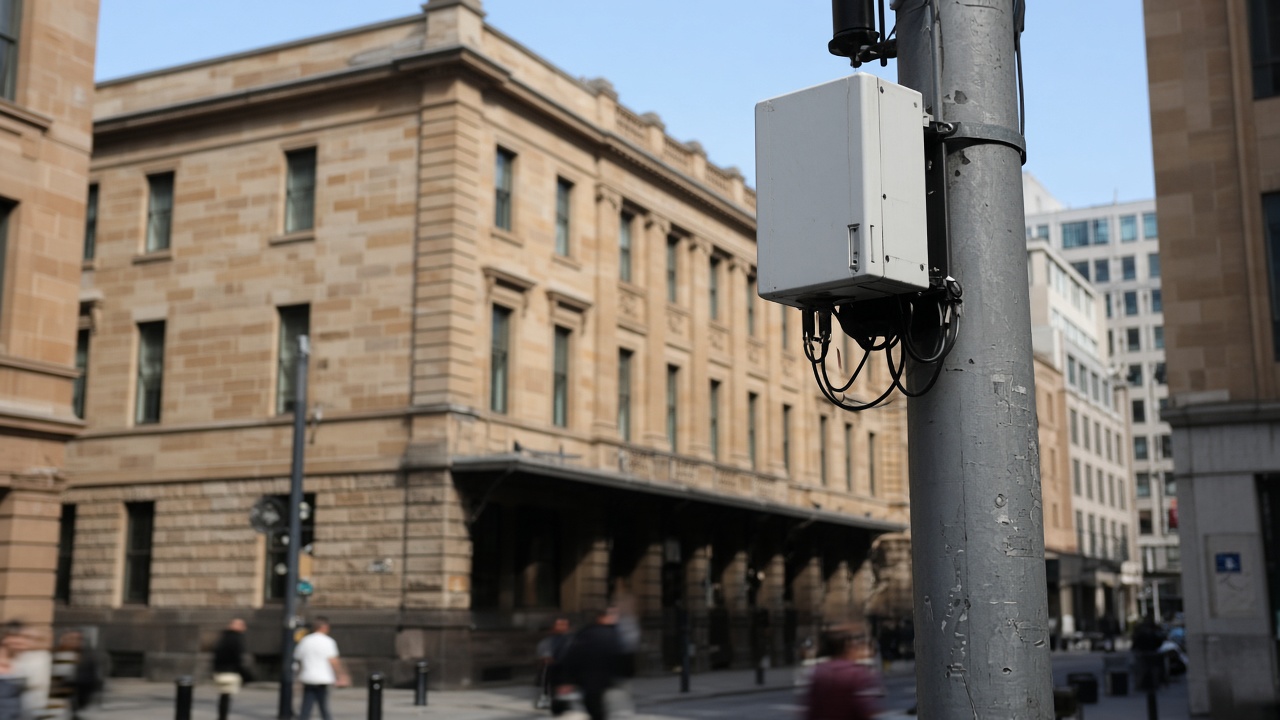
Telstra has activated millimetre-wave 5G on a cluster of street-mounted small cells through the Perth central business district, adding a high-capacity layer atop existing mid-band sites before summer festivals and cricket fixtures push crowds back into the city core. The carrier said the rollout focuses on Hay and Murray streets, the Elizabeth Quay foreshore and the Perth Stadium transport spine, where photo uploads and mobile payments spike during events.
Why mmWave in the west
Millimetre-wave spectrum carries data at gigabit-class speeds but over short distances, making it suited to dense foot traffic rather than suburban commute corridors. Telstra engineers said they paired new radios with existing fibre backhaul to avoid the latency spikes users sometimes see when traffic is offloaded to older 4G layers. Compatible handsets—mostly recent flagships sold in the past two years—will display a mmWave indicator when attached; older devices stay on sub-6 GHz 5G or LTE without service interruption.
Optus and TPG Telecom have deployed similar hotspots around Sydney and Melbourne arenas; Perth’s CBD lagged partly because council permitting for pole attachments on heritage streets moved slowly. Telstra declined to publish exact cell counts but said “dozens” of nodes are live with more subject to Western Power pole agreements.
User experience and limits
Early drive tests by independent bloggers showed peak downloads above 1.5 Gbps near King Street but sharp fall-off inside older masonry buildings, a limitation mmWave cannot overcome without indoor repeaters. Telstra is pitching the upgrade to business customers who run pop-up retail during Fringe World and to venues that want redundant connectivity for point-of-sale terminals.
Regulators at the Australian Communications and Media Authority have emphasised that high-band 5G must coexist with existing microwave links used by broadcasters; Telstra said it coordinated frequency plans with local media tenants before switch-on. For consumers, the practical test will be whether upload queues clear faster when 60,000 fans leave Optus Stadium after a day-night match—exactly the scenario the Perth layer was timed to address.
Enterprise contracts
Resources companies with Perth headquarters are piloting fixed-wireless backup links using the new small cells, according to two systems integrators who requested anonymity because contracts are unsigned. The use case is not consumer streaming but keeping trading floors online when fibre cuts occur during construction season.
City of Perth planners said they want a public map of active mmWave zones so festival organisers can place RFID wristband scanners where bandwidth is deepest. Telstra agreed to share coverage polygons under a memorandum that keeps exact radio models confidential for security reasons.
Handset upgrade cycles remain the bottleneck: enterprise IT departments told Telstra they will not refresh fleets until 2027 budgets unless Apple and Samsung mid-tier devices gain mmWave modems at sub-$1,200 retail prices.