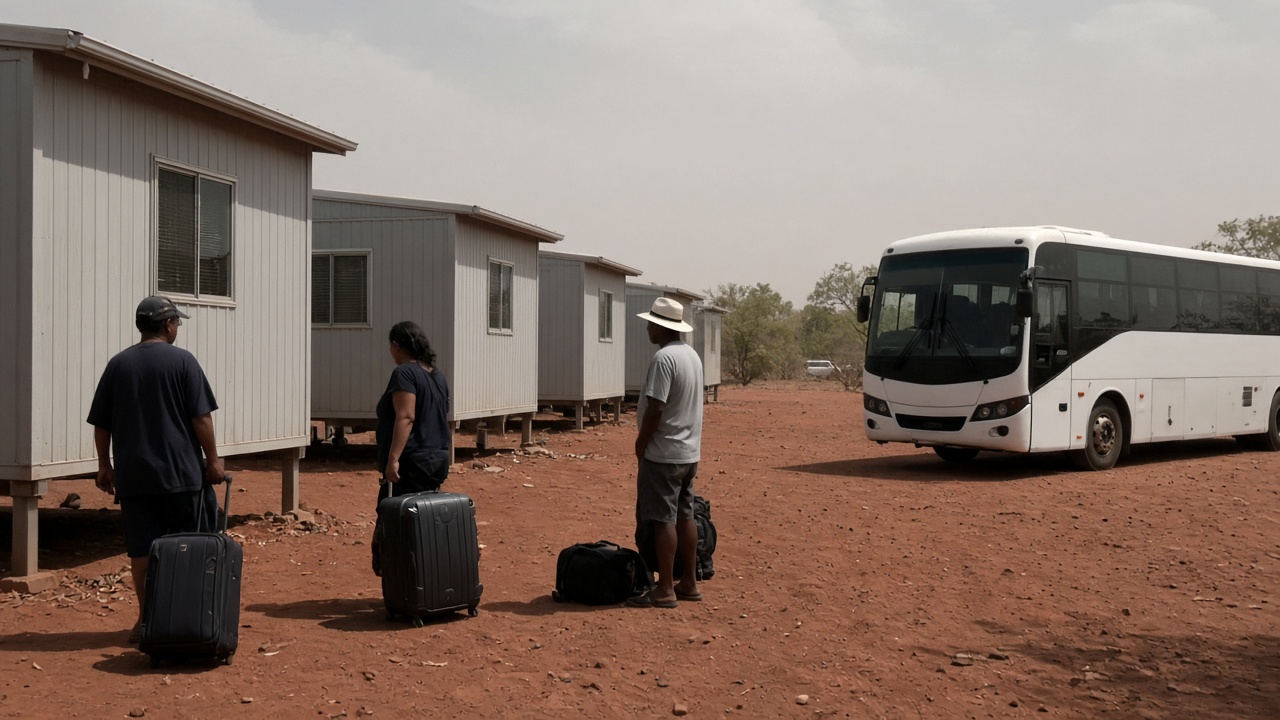
The Northern Territory’s YiSSA short-stay accommodation facility in Darwin closed on Monday, ending months of dispute over where hundreds of residents would go next and whether a replacement camp 100 kilometres south at Batchelor was ready to receive them.
Residents were told to find their own housing or accept transfers to the Batchelor site. A spokeswoman for people still living at YiSSA said several residents with significant medical conditions — including herself — were being moved to Batchelor despite earlier assurances that the most vulnerable would not be sent to the remote location.
Closure Day at YiSSA
YiSSA opened as a large temporary shelter during a period of acute housing pressure in Darwin. The 400-bed centre became a flashpoint between the Country Liberal Party government, which argued the city needed the land back for other uses, and advocates who said dismantling the site without guaranteed alternatives would deepen homelessness.
On Monday morning, buses and support workers coordinated departures as the final residents packed belongings. Some households secured private rentals or stayed with family; others had no option but the Batchelor transfer. Community legal services said they fielded last-minute calls from residents unsure whether they could refuse relocation without losing income support arrangements tied to the program.
Questions Over Batchelor Readiness
Deputy Chief Minister Gerard Maley told reporters the government was ensuring people moving to Batchelor “had somewhere safe to stay.” He said the Batchelor facility was in its “final stage of commissioning” and that residents would move out over the coming days.
Opposition Leader Selena Uibo said the transition had been “botched.” She cited visits to the Batchelor site where gravel had only recently been laid under demountable buildings, raising accessibility concerns for residents who use wheelchairs or walkers.
“We have seen with our own eyes that the Batchelor facility … is not ready and fit for purpose to receive residents as of today,” Uibo said. “How are they going to live with dignity in accessing that site?”
Health and Distance Pressures
Medical advocates warned that shifting clinically fragile residents away from Darwin’s hospitals and specialist clinics could complicate dialysis schedules, mental-health follow-ups and emergency care. The spokeswoman for YiSSA residents said people with chronic conditions had been told Batchelor staff would coordinate transport for appointments, but that the distance and limited local services remained a worry.
Housing groups said the broader Northern Territory rental market was still tight, with high bond requirements and few vacant units near employment centres. Closing YiSSA without a one-for-one replacement in Darwin, they argued, simply moved the visibility of the crisis from the city to a highway town with fewer support organisations.
Political Fallout
The government has framed YiSSA’s closure as part of a plan to transition people into longer-term housing solutions rather than indefinite mass shelter. Ministers pointed to case-management teams and funding for transitional packages, but opposition MPs demanded a parliamentary inquiry into procurement and construction timelines at Batchelor.
For residents boarding buses on Monday, the politics were secondary to immediate logistics: whether their medications would arrive on time, whether pets could be accommodated, and whether Batchelor’s power, sewage and kitchen facilities would function on day one.
Advocates said they would monitor conditions at the new site daily and pursue legal options if standards fell below minimum habitation rules. Until independent inspectors sign off and vulnerable residents are either safely housed in Darwin or adequately supported at Batchelor, the closure is likely to remain one of the territory’s most contested social-policy fights.