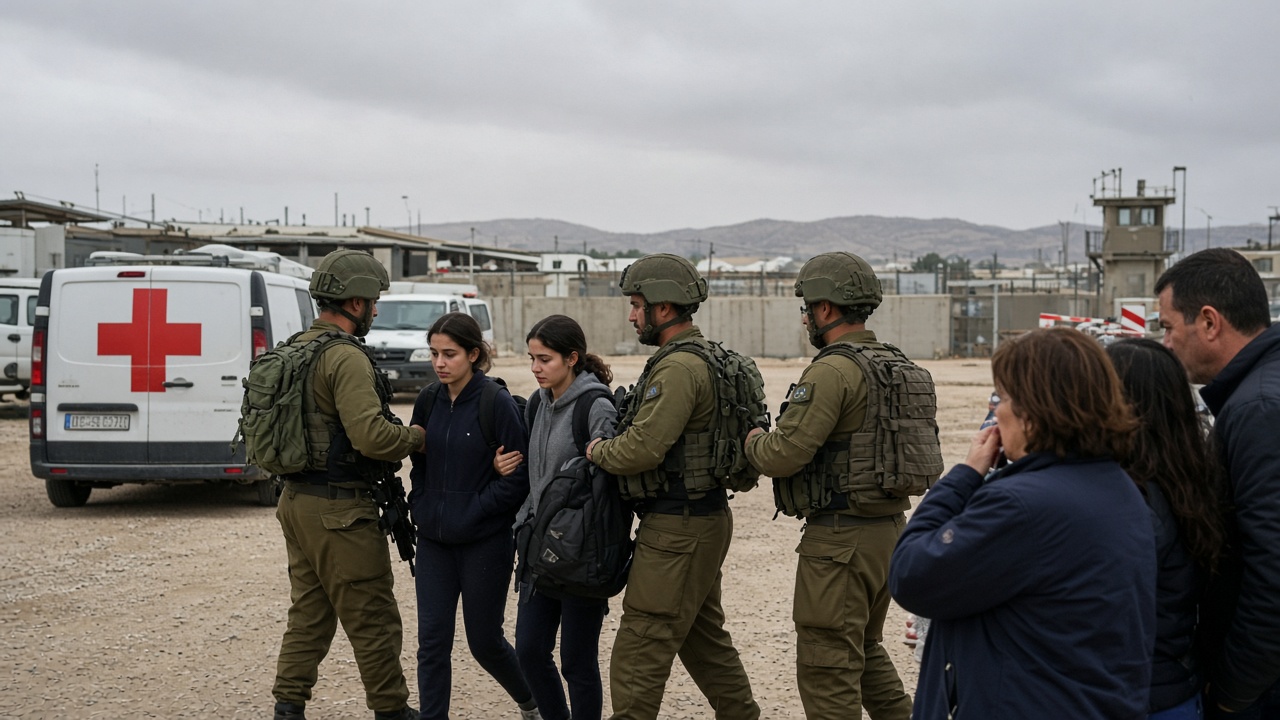
Hamas released every living Israeli hostage it still held in Gaza on Monday, completing the most visible step in the opening phase of a ceasefire that has paused two years of war. The Palestinian group transferred 20 captives to the International Committee of the Red Cross in two groups; Israel’s military confirmed the final 13 had crossed into Israeli territory by mid-morning local time after the first seven arrived roughly two hours earlier.
Prisoner convoys and the politics of the exchange
In parallel, Israel freed close to 2,000 Palestinian prisoners and detainees under the same agreement. Israeli officials said the releases included about 1,700 people held without charge, alongside roughly 250 prisoners serving long sentences. Many were bused to the occupied West Bank; others were deported or sent to East Jerusalem, according to accounts from family members and aid groups monitoring the transfers.
The swap followed a ceasefire that took effect on Friday and a weekend push to move more humanitarian aid into Gaza, where the fighting has left large parts of the territory in ruins. Monday’s exchanges were timed to a high-profile visit by U.S. President Donald Trump, whose administration helped broker the framework now being tested on the ground.
Trump’s day from Jerusalem to Sharm el-Sheikh
Trump landed in Israel as the first hostages were reuniting with relatives, then addressed the Knesset—the first such speech by a sitting U.S. president since 2008. He described what he called a “historic dawn” for the region and was greeted with sustained applause in a chamber that has been deeply divided over the conduct and cost of the war.
After meetings with Prime Minister Benjamin Netanyahu and families of captives, Trump traveled to Sharm el-Sheikh, Egypt, for a summit billed as a formal endorsement of the truce. Egyptian President Abdel Fattah el-Sisi hosted leaders from more than 20 countries, including European allies and several Arab and Muslim states. Egypt, Qatar, Turkey and the United States signed a declaration positioning themselves as guarantors of the deal, even as officials acknowledged that harder questions—troop withdrawals, reconstruction and Gaza’s future governance—remain unsettled.
What the first phase does not settle
Completing the hostage and prisoner transfers removes the most urgent humanitarian pressure point in the short term, but it does not resolve the structural disputes that stalled earlier negotiations. Hamas remains an armed actor inside Gaza; Israel has not spelled out a full military drawdown; and Palestinian factions disagree on who would administer the territory if a longer peace holds.
Humanitarian agencies welcomed the pause in fighting and the increased aid corridors opened over the weekend, yet they warn that food, fuel and medical supplies still fall far short of needs after months of siege conditions. Families on both sides celebrated reunions on Monday while mourning relatives who did not survive captivity or detention.
For Washington, the day was both a diplomatic showcase and a gamble: Trump tied his personal credibility to a ceasefire that could unravel if either side treats Monday’s exchanges as the finish line rather than the first checkpoint. The next tests will be whether aid flows at scale, whether sporadic violence stays contained, and whether negotiators can move from prisoner lists to the political arrangements that prior rounds failed to secure.