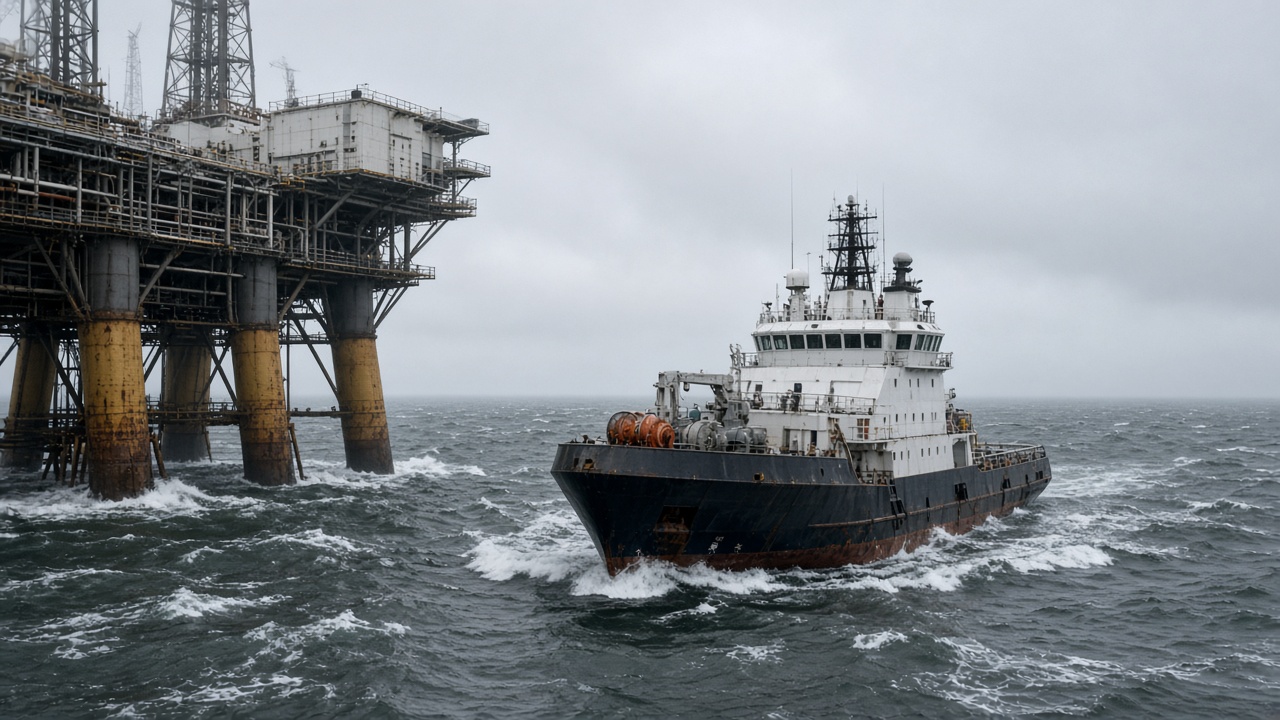
Argentina has opened a new front in its long-running dispute with Britain over the Falkland Islands, asking a United Nations tribunal in Hamburg to block oil exploration that London and the islands’ government insist is lawful.
Foreign Minister Pablo Quirno said Tuesday that Buenos Aires filed proceedings with the International Tribunal for the Law of the Sea to stop activity it argues the United Kingdom authorised “unilaterally and illegally” in waters north of the self-governing British territory, known in Argentina as Las Malvinas. The move intensifies a row that flared again after President Javier Milei demanded the scrapping of the Sea Lion field — a project led by Britain’s Rockhopper Exploration and Israel’s Navitas Petroleum that the companies say could start production in 2028.
Sea Lion and the shelf fight
Sea Lion sits roughly 130 miles north of the Falklands. Rockhopper estimates the field holds about 1.7 billion barrels of recoverable oil. The Falkland Islands government renewed exploration licences last month; under the islands’ constitution, those permits require sign-off from the UK foreign secretary.
Argentina maintains the work infringes on its continental shelf and marine environment protections under the UN Convention on the Law of the Sea. Quirno said on social media that the application seeks orders halting new exploration permits and preserving what Buenos Aires calls its sovereign rights offshore.
London rejects that framing. Foreign Office minister Uma Kumaran told the House of Commons on Tuesday that the tribunal filing “does not invalidate licenses issued by the Falkland Islands government, alter the islands’ regulatory authority, or require lawful hydrocarbon development activities to cease.” She accused Milei’s government of an “escalating campaign” of economic coercion against islanders and the firms working there.
Shielding firms from extra-territorial pressure
Alongside the diplomatic pushback, UK officials said they would deploy the Protection of Trading Interests Act — legislation that can block the domestic enforcement of foreign penalties — to insulate companies from Argentine sanctions Milei threatened last month against anyone exploiting oil near the islands.
Foreign Secretary Ed Miliband said attempts to intimidate businesses engaged in lawful commerce were unacceptable. “Companies should be free to make lawful commercial decisions without the threat of political coercion,” he said in a statement carried by the BBC.
Kumaran pledged that ministers would “do whatever it takes to support” the roughly 3,500 residents who stand to gain revenue if Sea Lion proceeds. FCDO officials told reporters the UK would engage with the tribunal while defending what they consider legitimate economic activity, aiming to reassure investors without seeking a wider escalation.
Politics on both sides of the Atlantic
The legal step follows Milei’s combative address to the UN General Assembly in September, when he called the organisation “useless” for failing to back Argentina’s sovereignty claim — rhetoric Kumaran described Tuesday as inflammatory. British officials privately view the timing as tied to Argentine elections next year, when nationalist pressure on the Malvinas question traditionally hardens.
Argentina has never dropped its claim since the 1982 war, when a UK task force expelled occupying forces. Successive governments have oscillated between diplomacy and confrontation; Milei’s administration has leaned toward public threats against energy investors.
What the tribunal can — and cannot — do quickly
ITLOS is an independent court that adjudicates disputes under the Law of the Sea treaty. Rulings on provisional measures can come faster than full merits decisions, but neither side expects an overnight halt to all activity. Rockhopper and Navitas have publicly stood by their licences, and island leaders have framed hydrocarbons as central to future public finances.
For Westminster, Tuesday’s twin message — courtroom defence plus statutory shields for operators — is meant to signal that Falklands oil is not a bargaining chip, even as Buenos Aires tries to drag drilling in front of a global maritime bench.