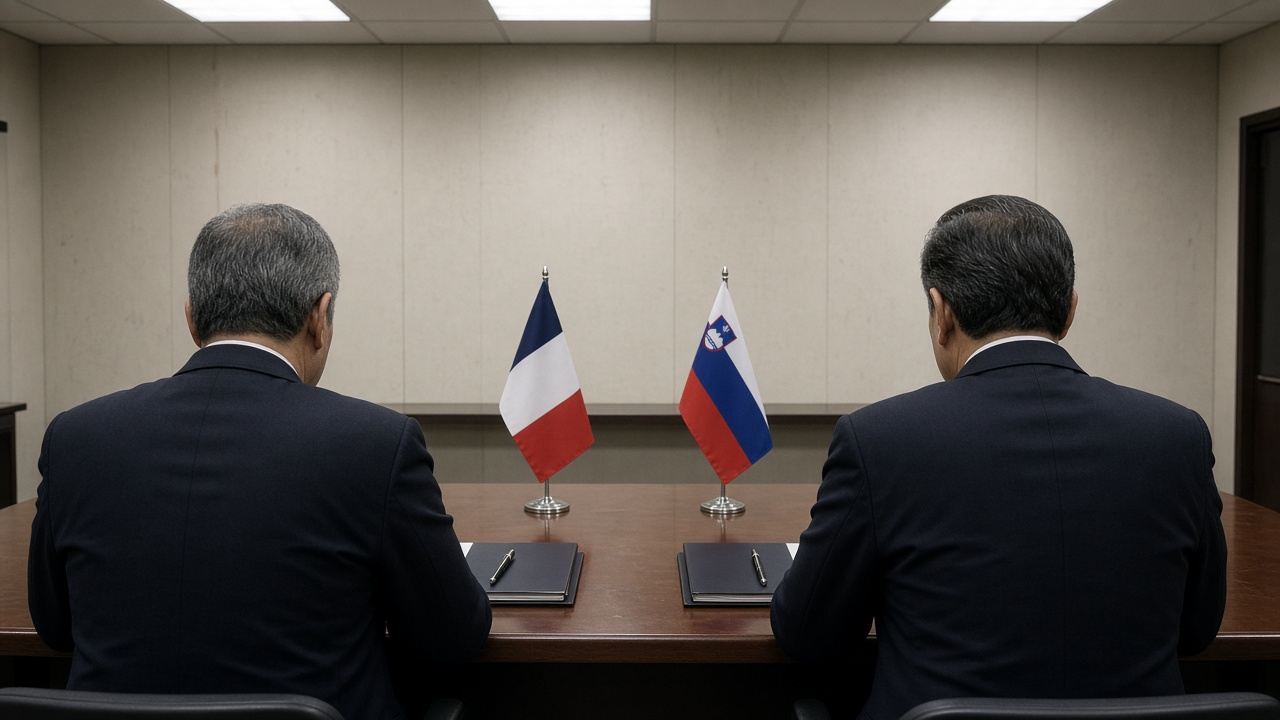
Singapore and Brunei signed a memorandum of understanding on supply-chain resilience on Monday, with Trade Relations Minister Grace Fu and Brunei's economy minister exchanging signed copies at the second Singapore-Brunei Joint Committee Ministerial Meeting.
The pact is not a dramatic tariff cut. Instead, it maps how both countries will keep essential goods moving when ports choke or air routes stall, aligning with upgraded ASEAN trade-in-goods rules on what counts as critical supplies during crises.
What the MOU covers
Brunei's Ministry of Economy, Trade and Industry said the agreement clarifies cooperation on logistics, information sharing and continuity planning for food, medical items and other prioritised goods. For Singapore importers, that matters because Brunei has become a diversification source for proteins and niche commodities when Malaysian lanes congest.
Fu told reporters after the meeting that cooperation now spans food security pilots, including frozen poultry exports from Brunei into Singapore's cold chain. Those shipments are small compared with Malaysia's volume, but they give procurement teams another audited source when border delays spike.
Why businesses should care
GLCs and large distributors have rebuilt playbooks after pandemic-era shortages. This MOU gives legal cover for government agencies to share contingency contacts and for firms to joint-test alternate routes without waiting for a live crisis.
SMEs benefit indirectly. When a major supermarket group secures backup poultry supply, shelf gaps narrow for heartland shops that buy through the same wholesalers. The document also signals to insurers and banks that both governments treat supply shocks as a standing risk, not a one-off headline.
Regional context
Singapore has signed similar resilience statements with other ASEAN partners in recent years, often pairing them with digital trade links and customs pre-clearance trials. Brunei's participation underscores that tiny markets still matter for redundancy: its ports may be quiet, but its food audits and halal certification pipelines are trusted here.
Fu highlighted progress across multiple JCMM workstreams, from energy to skills exchanges. None replaces the main causeway trade with Malaysia, but stacking small bilateral buffers is how Singapore's trade agency manages geographic concentration risk.
What comes next
Officials will translate the MOU into operating procedures: contact lists, simulation exercises and possibly harmonised data fields for essential-goods inventories. Companies that already export to Brunei should watch for technical briefings on customs codes tied to the upgraded ASEAN goods agreement.
For households, the near-term impact is invisible unless a disruption hits. The longer-term bet is that when haze, weather or geopolitical shocks squeeze one corridor, Singapore has another signed pathway to keep refrigerators stocked.
Implementation timeline
Trade officials said working groups will meet quarterly to test customs failover scenarios, starting with poultry and medical consumables. Exporters should expect questionnaire-style audits on cold-chain logs before being listed as preferred Brunei suppliers.
Singapore's strategy is to stack bilateral MOUs without duplicating ASEAN-wide commitments. Fu's signature this week is one more tile in that mosaic, not a replacement for Johor logistics lanes that still carry most fresh food.