
Todd Hall booked two Marriott stays in 2018 through Marriott.com: one night at a San Diego property in May, then two nights in Maui that October. The room rates looked like the price of the stay. At check-in, Marriott added a resort fee of $25 for each night. Hall later told a federal court he had not seen the fee disclosures buried in the booking flow. If he had, he said, he “most likely” would not have paid for the room.
Hall was not alone. Marriott’s own screens, reproduced in the lawsuit, showed a San Diego listing priced “From 420 USD/night” on the first page. Only after clicking “View Rates” did a blue notice say a daily destination amenity fee would be added to the room rate. The subtotal on a later page still split the nightly cash rate from “taxes and fees” that included the mandatory fee. The case, Hall v. Marriott International, became one of the longest-running fights over a line item millions of travelers now treat as normal: the resort, destination, or amenity fee that is not the room rate but is not optional either.
The $25 That Wasn't in the Room Rate
Resort fees are per-room, per-night mandatory charges. The Federal Trade Commission’s Bureau of Economics, in a January 2017 report, described them as fees hotels use to bundle services such as Internet access, parking, and health-club use. You cannot decline the bundle and pay only for the bed. The hotel could fold those services into the nightly rate, or sell them as optional add-ons. Instead, many properties charge one compulsory fee and disclose it on a separate line from the room.
That split is the puzzle. The guest must pay both lines to sleep there. So why does the industry keep the fee out of the headline price travelers use to compare hotels?
The Obvious Answers (and Why They Fail)
The first explanation you hear at checkout is amenities. The pool, the Wi‑Fi, the gym: the fee is how the hotel pays for the resort experience. That is true as a description of what hotels say the money covers. It does not explain the separate line. If the services are mandatory, their cost is part of the price of the room in every economic sense. The American Hotel & Lodging Association argues that only a small slice of U.S. hotels charge these fees at all, and that those properties offer more on-site services than a roadside motel.
AHLA’s public statements put the average mandatory fee at about $26 per night. The share of hotels charging fees has declined over the past decade by the industry’s own count. Rarity, though, does not mean invisibility. In Las Vegas, Hawaii, Orlando, and downtown convention districts, the fee is the rule. The guest who cares about amenities still cannot opt out of paying for them.
Explanation One: You Are Paying for the Pool
Meetings-industry reporting dates mandatory “amenities tariffs” to about 1997, when hotels began folding extras into a compulsory nightly surcharge. The label changed; the structure did not. Hotels defend the practice as a package price for leisure guests who want the gym and the pool included. The FTC’s economists were willing to accept bundling. Their objection was disclosure: separating the fee from the posted room rate without showing the total first.

Consider what bundling would look like if the goal were clarity. The hotel would quote one all-in nightly price. It could still itemize what the guest receives, as long as the total leads. Mandatory resort fees do the opposite on many booking paths: the room rate leads, the fee follows, and the traveler must add the two mentally or click through extra screens.
Explanation Two: A Tax Trick
A second guess is tax avoidance. Room taxes apply to the room; if the fee sits elsewhere, the guest pays less tax. Court filings in the Marriott case show resort fees flowing through “taxes and fees” lines, and destination fees are taxed in many jurisdictions. Partitioned pricing is not a reliable tax dodge. It is a pricing format. The FTC’s 2017 analysis names the format: partitioned pricing divides a price into components without disclosing the total, leaving consumers to compute it themselves.
Drip pricing is the cousin that shows up later in the flow: advertise part of the price, reveal mandatory charges as the buyer clicks forward. The Commission’s 2024 final rule on unfair or deceptive fees describes drip pricing as quoting a low price and adding mandatory charges after the consumer has invested time in the transaction. Hotels are not the only industry the rule covers, but short-term lodging is explicitly in scope.
Explanation Three: A Lower Sticker for Search
The comparison page is where the fee does its work. The FTC’s 2017 report walked through real online travel agent screenshots. On the hotel comparison page, room rates appeared without resort fees, and the listing did not flag which hotels charged a fee. To learn the fee, the shopper had to open each hotel’s page, read a smaller-font disclosure, and only on the booking page see a trip total that combined room, tax, and fee.
That extra clicking matters. About 31 percent of leisure travelers in a 2014 Google-commissioned survey began hotel search on a brand site or app; another 26 percent started on a search engine, often landing on an OTA. When every listing omits the same mandatory charge, the lowest room rate sorts to the top even when another hotel’s total price would be cheaper.
The money at stake grew with the habit. Industry analyst Bjorn Hanson’s fee totals, reported in Lodging Magazine, show U.S. hotel fees and surcharges rising from $1.4 billion in 2005 to $2.45 billion in 2015, with a forecast of $2.55 billion for 2016. The FTC’s separate estimate put mandatory resort fees alone at about $2 billion in 2015, up 35 percent from the prior year. Different definitions, same direction: travelers were paying more in mandatory line items than they did a decade earlier.
The Line Item Booking Sites Ignore
So far the story sounds like deception, and regulators have treated it that way. In November 2012 the FTC staff warned 22 hotel operators that online quotes excluding resort fees might misrepresent the price guests expected to pay. The harder question is why the format persisted after the warnings. One answer sits in the contract between hotels and online travel agents.
Hotels pay commissions to OTAs for bookings. The FTC’s economists noted that hotels publicly claim resort fees allow them to reduce those commissions. Commissions are calculated on the room rate shown in the reservation, not on a separately disclosed mandatory fee the guest pays at the property or on a later checkout line. Lower the room rate, add a fee the OTA does not tax at the same percentage, and the hotel keeps more of the guest’s total payment on rooms sold through third-party sites.
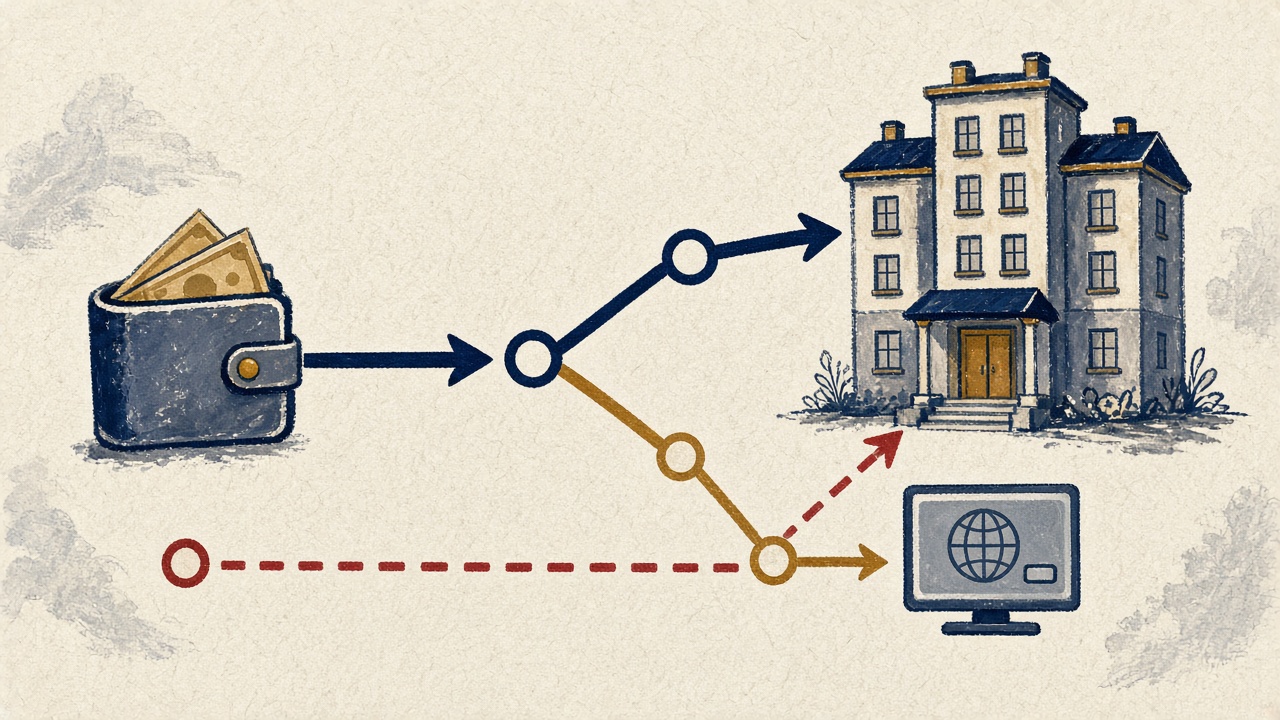
The FTC staff were skeptical that the commission savings last. Their report argued OTAs would renegotiate rates knowing how much fee revenue a hotel collects on their bookings. Hotels still chose the split for years because partitioned pricing also blunts price competition among hotels on the comparison screen. Economic models of drip pricing show consumers searching less and paying more when they cannot see the all-in price immediately. Ellison and Ellison’s study of online markets found shoppers heavily weighting the lowest advertised price rank even when hidden charges waited on the next page.
Marriott’s booking flow in the court record is a concrete example. The headline “From 420 USD/night” anchored attention. The $25 resort fee Hall paid in 2018 was smaller than that example rate, but the structure was the same: a prominent room number and a mandatory fee that did not change the sort order on the first screen.
What Changes When the Total Price Has to Lead
Regulators have moved from warning letters to rules. On December 17, 2024, the Federal Trade Commission announced a final junk-fees rule requiring businesses to clearly disclose the true total price including mandatory fees when they advertise short-term lodging or live-event tickets. The rule does not ban resort fees or cap their amount. It targets the format: total price first, no bait-and-switch.
It does not prohibit any type or amount of fee, nor does it prohibit any specific pricing strategies.
The Federal Register version of the rule estimates large consumer savings from reduced search costs in lodging alone over ten years, ranging from about $4.93 billion to $7.17 billion at a 7 percent discount rate. Those figures measure time spent hunting for the real total, not whether fees disappear.
Hotels and their trade group have pushed Congress for a nationwide display standard rather than a patchwork of state laws. AHLA President Rosanna Maietta said in December 2024 that federal legislation remains “the best way to create a clear set of fee-display rules for consumers, hoteliers, and other industry participants,” after a spending deal dropped lodging-fee transparency provisions. The industry’s public data still emphasize how few hotels charge fees and how modest the average fee looks on paper.

The Hall case ended in a settlement requiring Marriott to show the lowest total room price including resort fees on Marriott.com and to fix misleading “free” amenity language, without cash payments to the class. The fee could remain. The fight was over which number the guest saw first.
Back at the Marriott Marquis
Hall’s San Diego booking sat in the litigation as an ordinary business trip turned into a test of whether “From 420 USD/night” promised the price he would pay. The court certified a California class of Marriott.com bookers who paid resort or destination fees after September 9, 2015. The mechanism that produced Hall’s $25 nights is the same one that still sorts hotels on room rate alone when the mandatory fee stays on the second line: bundled services, split quotes, and a commission math that treats the fee differently from the bed.
On a Marriott screen like the one in the court file, the fountains and the lobby still photograph beautifully. The number that sorts the hotel against its neighbors is still the room rate on page one. The fee waits one click deeper, mandatory either way.