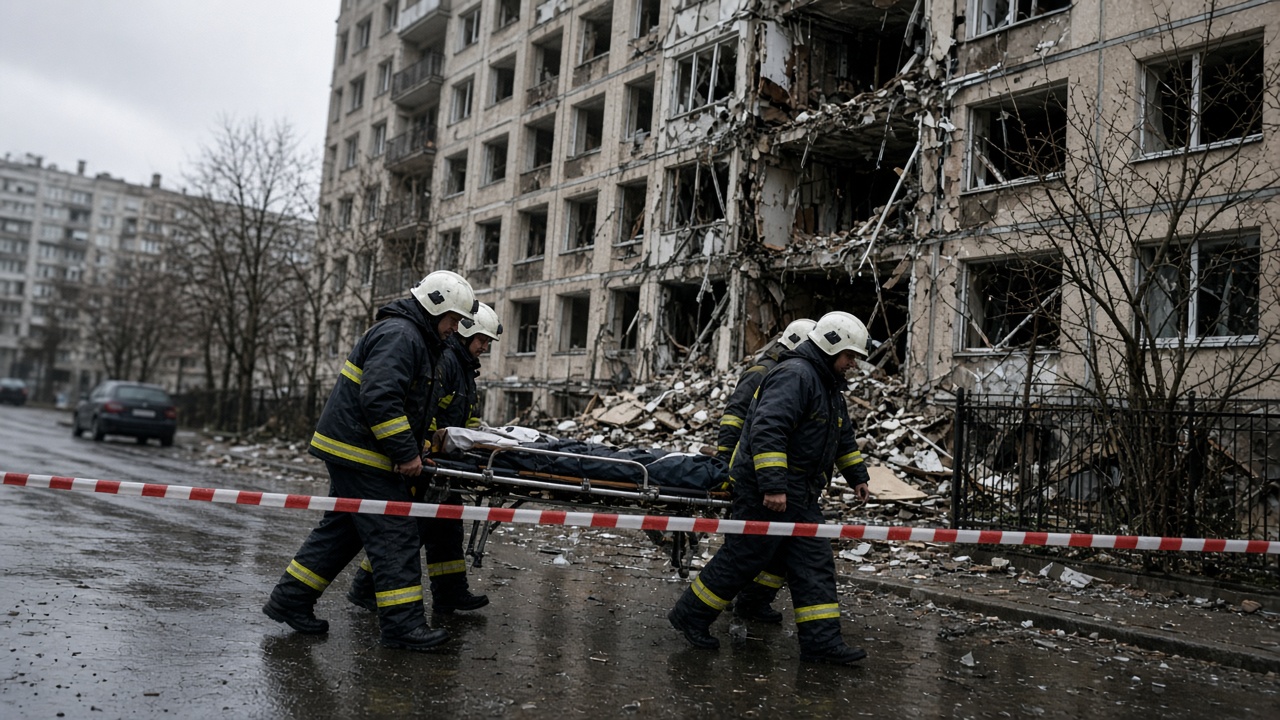
Ukraine received no advance notice from its international partners before five Russian ballistic missiles slammed into civilian infrastructure in Kyiv, President Volodymyr Zelenskyy said Tuesday, putting a rarely discussed intelligence channel back at the center of the war as casualties mounted elsewhere in the country.
Zelenskyy did not name which governments he believed should have warned Kyiv. He described the capital barrage as a “particularly vile” use of ballistic weapons and said timely launch data is “one of the most critical issues” for keeping civilians alive. “This is precisely what helps prevent people from being killed — when there is an early warning about ballistic missiles,” he wrote on social media.
What changed overnight
The complaint landed on a second consecutive night of heavy Russian fire across Ukraine, even as both sides traded claims about an American-backed push to pause strikes on energy infrastructure. French broadcaster France 24 reported that Moscow appeared to spare Ukrainian power plants for the first time since President Donald Trump announced an “energy ceasefire” at the weekend, while still hitting transport links and residential areas. Zelenskyy said Russia had struck six energy sites on Monday; by Tuesday morning Ukrainian officials were assessing damage at 17 locations after another wave of drones and missiles.
In Kharkiv, Ukraine’s second-largest city, officials said four people were killed and at least 11 injured when strikes hit a residential building Tuesday. Zelenskyy put the toll in Kharkiv higher, saying 41 people were wounded in the city in a single evening. The Ukrainian air force said it downed 88 of 108 Russian drones overnight while documenting hits on a cargo terminal in the Mykolaiv region and transport infrastructure in Dnipropetrovsk.
The intelligence gap Zelenskyy flagged
Western partners, and especially the United States, have long had the ability to detect ballistic missile launches quickly. American officials have in the past passed that information to Kyiv so authorities can sound air-raid alerts and cue Patriot batteries. The Associated Press reported that a senior Ukrainian official, speaking on condition of anonymity, described the lack of warning before the Kyiv attack as a “failure,” suggesting weather or technical limits rather than a deliberate cutoff.
The public split is awkward for Kyiv. Foreign Minister Andrii Sybiha told the Warsaw Security Forum on Tuesday that Ukraine continues to receive U.S. intelligence, answering a direct question about whether cooperation persists. He linked a delayed air-raid alert late Monday to the specific weapons Russia used, without repeating Zelenskyy’s claim that no partner warning arrived for the Kyiv strike. The tension with Washington is already visible: Trump has publicly urged Ukraine to change leadership and has questioned how long U.S. support should continue, while Kyiv still depends on American air-defense systems and satellite-derived targeting data.
Russia’s stated targets
Moscow said Tuesday that its forces struck Ukrainian military-industrial sites, logistics hubs, railways, ports and vessels carrying military cargo. It also claimed its air defenses destroyed 604 Ukrainian drones overnight. Independent verification of each target remains limited, but rescue workers in Kyiv and Kharkiv published images of apartment blocks with blown-out facades, the kind of damage Zelenskyy cited when he argued that launch warnings are a humanitarian necessity, not a luxury.
What happens next
Ukrainian officials are likely to press allies privately for a clear explanation of what was known before the Kyiv missiles flew and whether any sensor or policy gap can be closed before the next salvo. With winter approaching and energy infrastructure still in the crosshairs despite Trump’s ceasefire framing, the warning dispute is less about a single night in the capital than about whether Kyiv can count on the same split-second data it has treated as standard since Patriot batteries became a fixture of the city’s skies. Russia, for its part, showed no sign of slowing combined missile and drone campaigns while diplomacy over energy pauses remains unsettled.