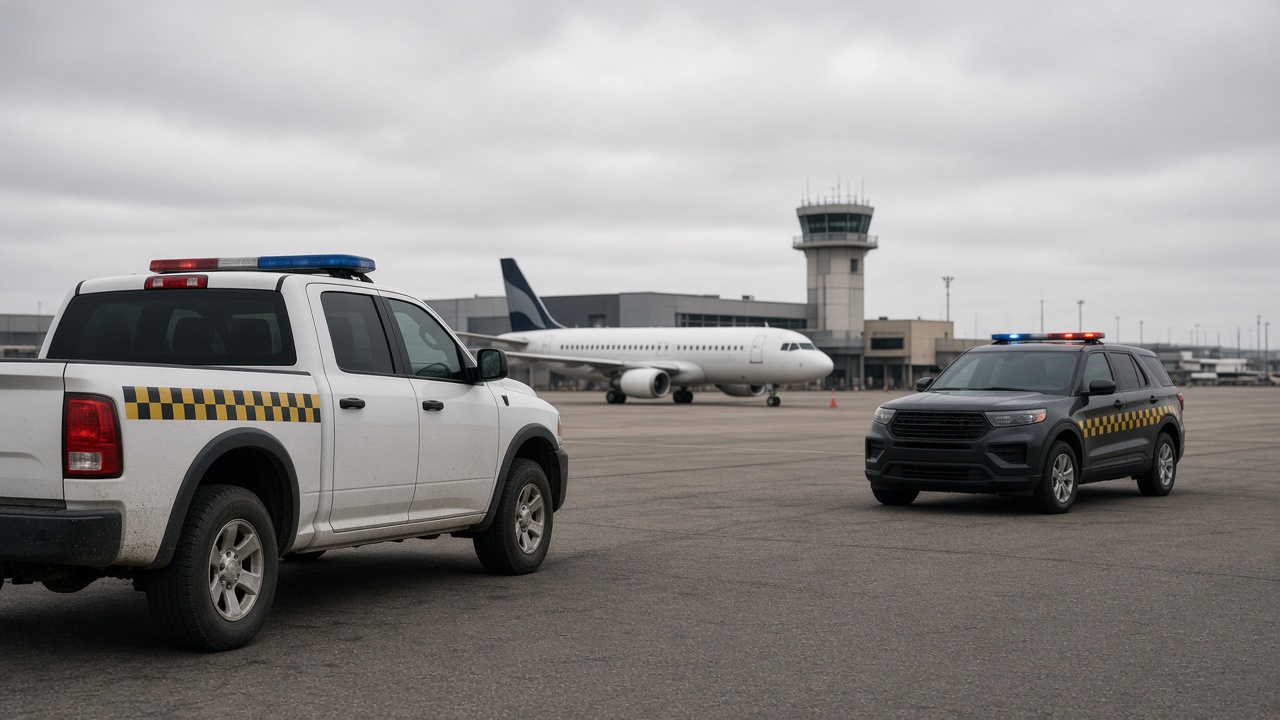
German police gave the all-clear at Nuremberg airport on Tuesday after a Corendon Airlines Boeing 737 from Corfu landed under Eurofighter escort and the terminal was cordoned off over a suspected in-flight emergency. Hours earlier, the same airport had already scrambled a helicopter search when three pilots separately reported a possible drone near the runway.
Morning delays after unconfirmed drone reports
Albrecht Dürer Airport said the first disruption began in the early hours of 13 October, when flight crews reported an object that might have been an unmanned aircraft during take-off or landing approaches. Border police at Nuremberg launched search and detection measures with air-traffic control, including a police helicopter, but found no drone.
Six flights were delayed—two arrivals and four departures—and two inbound aircraft diverted to Cologne and Prague before continuing to Nuremberg once operations stabilized. Airport officials said flying drones without permission remains illegal in the area.
Afternoon escort and temporary lockdown
Later in the day, police said they were responding to a suspected air emergency involving the Corendon flight from Corfu. Germany’s air-traffic service said Eurofighters from Tactical Air Wing 74 at Neuburg an der Donau escorted the aircraft in German airspace before it landed at about 12:16 local time, according to flight-tracking data cited by aviation media.
Authorities temporarily sealed the airport while ground teams checked the jet. Police said onsite inspections showed no danger, without immediately explaining what triggered the alert. DW reported that the crew had transmitted an emergency code before landing, though the specific nature of the signal was not confirmed publicly.
Why German hubs are on edge
Tuesday’s tandem alerts landed amid wider anxiety about drone activity around German aviation infrastructure. In August, police investigated an explosives-laden drone found near a runway at Leipzig/Halle airport. Munich airport halted traffic for about an hour in May after a possible sighting that also could not be verified.
Investigators have not said whether the morning and afternoon incidents at Nuremberg were linked. Deutsche Flugsicherung, Germany’s air-navigation provider, coordinated both the morning search pattern and the afternoon scramble, underscoring how quickly civilian controllers must decide whether to halt traffic when multiple crews report the same hazard.
Travellers stuck in the terminal described a stop-start day: some morning departures sat on the apron for more than an hour, while the afternoon lockdown forced inbound passengers to remain seated after landing until police finished their sweep. Freight forwarders said the delays were short enough to avoid major supply-chain knock-ons, but tour operators warned that tight turnarounds on Mediterranean holiday routes could ripple into evening connections.
For passengers and freight operators, the practical effect was the same: a full day of disruption at a Bavarian hub that handles holiday traffic from Corfu and other leisure markets as well as domestic business routes.