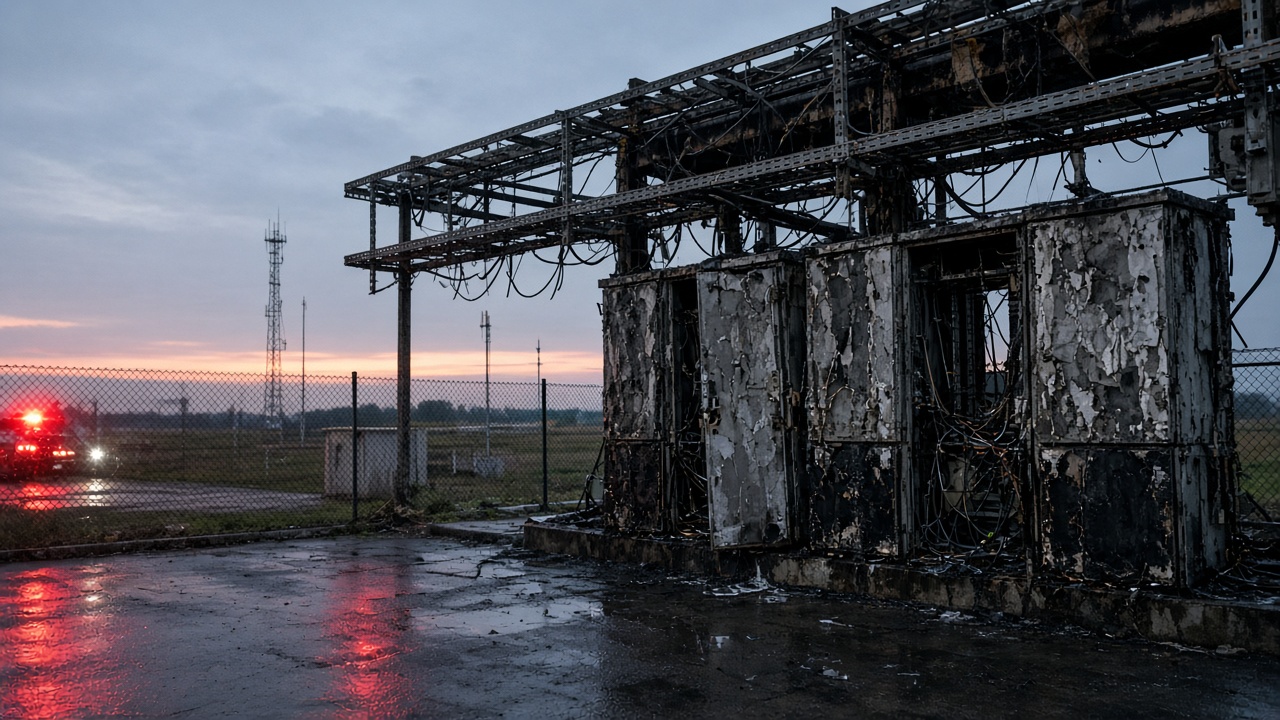
Polish authorities said Monday that German police had detained two Turkish citizens suspected of torching a Starlink ground station south of Warsaw on 23 September, and Prime Minister Donald Tusk framed the blaze as the latest Russian-backed strike on infrastructure NATO allies rely on during the war in Ukraine.
Interior Minister Marcin Kierwiński told reporters in Warsaw that the arrests followed work by Poland’s Internal Security Agency, national police and prosecutors. European arrest warrants issued last week formed the legal basis for the detentions, he said, and both men are awaiting transfer to Poland to face sabotage charges tied to a foreign intelligence service.
What burned and why it matters
The fire broke out at a Starlink gateway in Wola Krobowska, roughly 40 kilometres south of the capital in the Mazowieckie region. The site is operated by Polish state telecom Exatel and connects SpaceX’s satellite constellation to terrestrial networks. Polish officials said flames damaged a power unit and a generator; firefighters extinguished the blaze before it could knock the gateway offline.
Starlink terminals have become a backbone for Ukrainian military and civilian communications since Russia’s 2022 invasion. Warsaw has repeatedly warned that Moscow and its proxies would try to disrupt those links, and several NATO states have reported suspicious fires and cable cuts near communications sites over the past year.
Hybrid war, not a random fire
Tusk wrote on social media that the incident was “another act of hybrid warfare” and that the suspects “will face justice in Poland.” Special Services Minister Tomasz Siemoniak went further at a briefing, saying Warsaw had “no doubt” Russian security services orchestrated the attack while increasingly recruiting people tied to organised crime to carry out sabotage.
Polish Radio reported that prosecutors opened a probe within days of the fire into sabotage and a terrorism-related offence committed on behalf of a foreign intelligence agency. Officials did not name the suspects, citing privacy rules, but said one man lived in Germany while the other had been ordered to leave the country before the arrest.
Cross-border enforcement test
The case lands as European capitals tighten coordination on sabotage investigations. Germany’s Federal Criminal Police Office executed the arrests using evidence Polish agencies shared under mutual legal assistance rules. Kierwiński said Poland would charge the pair with “sabotage and subversion on behalf of a foreign intelligence service” once they arrive.
Moscow has not commented on the Polish allegations in available statements Monday. Russia routinely denies involvement in infrastructure attacks across Europe, even as the European Union expands sanctions on individuals and firms accused of supporting hybrid operations.
What happens next
Polish justice officials must complete extradition paperwork before any trial can start. Security analysts said a conviction would likely hinge on digital and travel records tying the suspects to reconnaissance at the Exatel site, not merely presence in Germany after the fire.
For NATO’s eastern flank, the episode is a reminder that satellite ground stations—civilian-owned but militarily relevant—now sit on the same target list as pipelines and rail lines. Poland is expected to brief allies on the investigation at upcoming security forums, with Warsaw already pushing for faster intelligence sharing when suspects flee across Schengen borders.