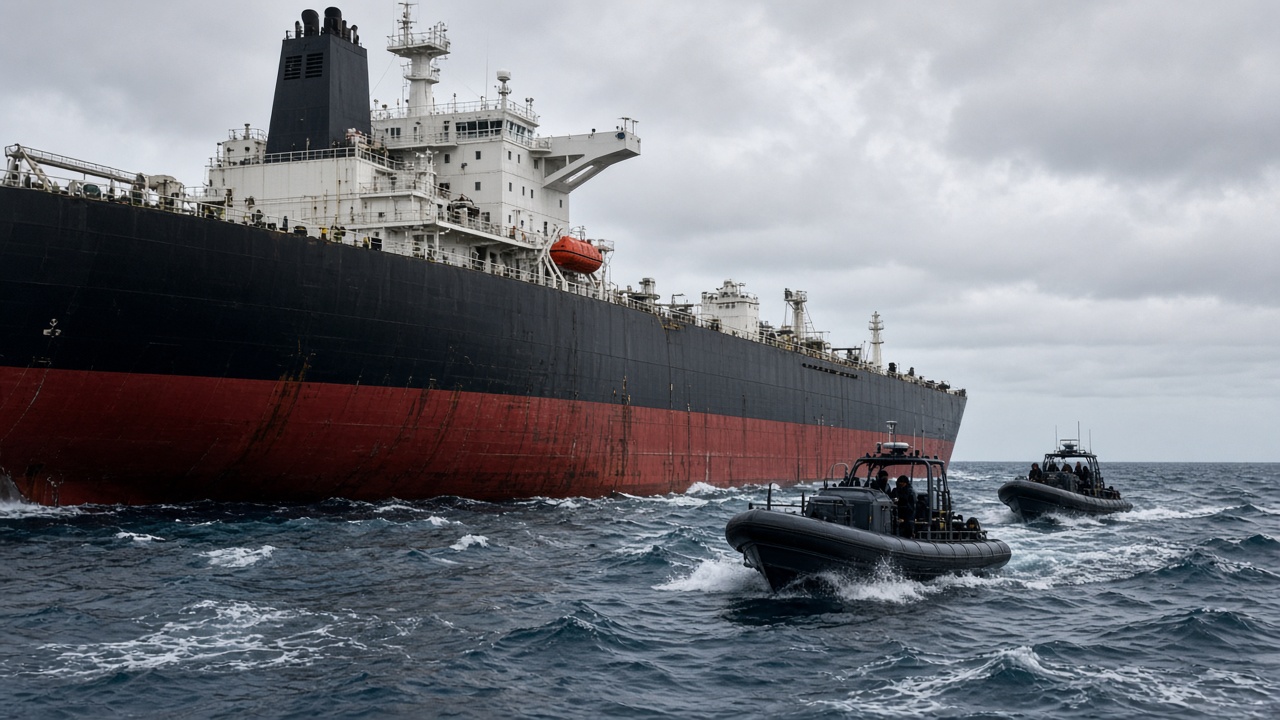
Russia’s embassy in Paris on Tuesday branded France’s seizure of the oil tanker DF Peak a “blatant violation of international law,” escalating a diplomatic fight over Europe’s campaign against Moscow’s so-called shadow fleet just as Washington moves to ease sanctions on Russian fuel.
French President Emmanuel Macron said Monday that naval commandos boarded the vessel roughly 450 nautical miles south of Réunion in the Indian Ocean. Video he shared showed troops descending onto the deck by rope. Armed Forces Minister Catherine Vautrin said the ship was being escorted for further checks under the authority of Réunion’s prefect.
What France says it found
Prosecutors in Saint-Denis opened a judicial investigation Tuesday against the captain on suspicion of failing to justify the ship’s nationality during the at-sea inspection — an offense that can carry up to two years in prison, a €300,000 fine and confiscation of the vessel, according to statements from the Réunion prosecutor’s office reported by French media.
The tanker, previously named Kaliningrad until a June 2024 rename, flies a Benin flag that investigators said was irregular. The ship appears on European Union sanctions lists tied to illicit oil movements. Ukraine’s military intelligence directorate has publicly linked the vessel to Russian crude transport and to the Sovcomflot shipping group, though those claims are separate from the French criminal case now underway.
Moscow’s response and the crew
State news agency RIA Novosti quoted the Russian embassy as calling the operation “piracy” and saying diplomats were still establishing whether any Russian citizens were among the crew. The embassy also said France had not notified Russia before the interception, a detail that could shape any formal protest at the United Nations or through bilateral channels.
Macron cast the boarding as part of a wider French commitment to pursue shadow-fleet tankers “wherever they may be in the world.” Shadow-fleet vessels are used to move Russian oil and refined products outside Western insurance and price-cap rules, helping the Kremlin keep export revenue flowing despite sanctions imposed after the 2022 full-scale invasion of Ukraine.
Timing amid a U.S. diesel dispute
The seizure lands at an awkward moment for transatlantic unity on energy sanctions. U.S. President Donald Trump’s administration has promoted imports of Russian diesel to ease domestic pump prices before November’s congressional elections, drawing criticism from Kyiv and several European capitals. French officials have not linked the DF Peak operation directly to that debate, but analysts note that any visible enforcement against sanctioned shipping undercuts narratives that Russian fuel can re-enter Western markets without consequence.
France intercepted another suspected shadow-fleet tanker, the Deliver, near Sicily in June. Tuesday’s case suggests Paris is willing to repeat high-profile boardings far from European waters. What remains unclear is how long the DF Peak will be held, whether cargo will be sampled or seized, and whether other NATO navies will mirror the tactic in busy shipping lanes.
For insurers, charterers and ports, the immediate question is procedural: a criminal probe on nationality paperwork can still immobilize a laden tanker for weeks. For Russia, the diplomatic cost is reputational — but so is the risk that more captains will treat false-flag sailings as increasingly dangerous work.