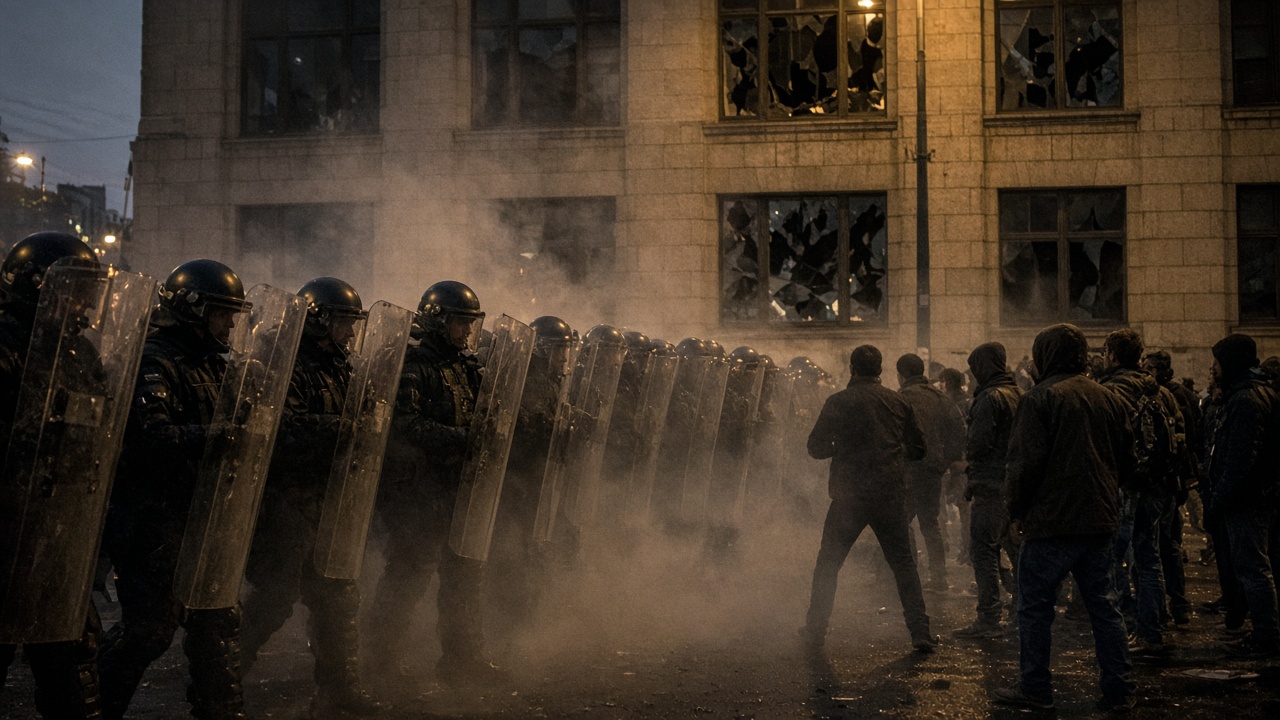
Hundreds of university students marched on Albania’s Education Ministry in Tirana on Tuesday and forced their way into the building’s fenced compound, shattering windows and hurling bricks as riot police answered with tear gas and water cannons. The confrontation marked the sharpest turn yet in months of street pressure on Prime Minister Edi Rama’s government, with organisers demanding his resignation alongside cheaper tuition and better campus conditions.
Police said at least six officers and one journalist were injured and that 23 people were arrested in the first official tally, while Albanian media later reported higher detention counts after clashes spread toward city hall and commercial streets. Deputy Prime Minister Albana Koçiu condemned attacks on state institutions, but student leaders told local outlets the rally was timed for the week before the academic year opens and was meant to highlight fees, financial aid and bleak job prospects for graduates.
From campus grievances to Molotov cocktails
What began as a student-led procession along Durrës Street escalated when masked participants threw stones, firecrackers and Molotov cocktails at the ministry façade, according to police statements reviewed by international news agencies. Footage aired by broadcasters showed damaged railings, burned barricades and smoke inside the ground floor of Tirana’s city hall after some protesters breached an entrance door.
Organisers said their demands were distinct from, but aligned with, broader anti-corruption protests that have shaken the capital since May. Those earlier rallies were fueled by anger over a luxury Adriatic resort linked to the Trump family, which critics say symbolises opaque deals and weak accountability. Students echoed calls for Rama to step down while insisting their immediate fight is over lecture halls, dormitories and state support for young workers.
What Rama’s government can do next
Rama has not announced a cabinet reshuffle or emergency education package in response to Tuesday’s violence. The education minister, who oversees a system strained by emigration of young Albanians to the European Union, faces parliamentary questions once the autumn session resumes. Opposition parties are likely to frame the ministry damage as proof that the government has lost control of public order, while Rama’s Socialist majority still holds a comfortable seat margin.
European Union diplomats in Tirana have urged restraint on all sides without endorsing the resignation demand. For Rama, the tactical choice is whether to negotiate targeted fee relief and campus investment — potentially costing budget lines he had earmarked for infrastructure — or to rely on prosecutions of arrested protesters to deter the next march. Either path carries political risk weeks before local elections in several municipalities.
Why the unrest matters beyond Albania
Albania is a NATO member negotiating closer ties with Brussels, and instability in Tirana feeds concerns about democratic backsliding and organised crime networks that European capitals have long monitored. Student unrest also lands as France and other EU states wrestle with their own campus protests, giving Rama’s allies reason to argue that youth frustration is regional rather than uniquely Albanian.
Yet the combination of Molotov cocktails, injured police and a breached ministry is unusual even in a country accustomed to boisterous politics. If demonstrations repeat without a policy response, investors watching Balkan tourism and energy projects may price in higher political risk, regardless of Rama’s parliamentary numbers.