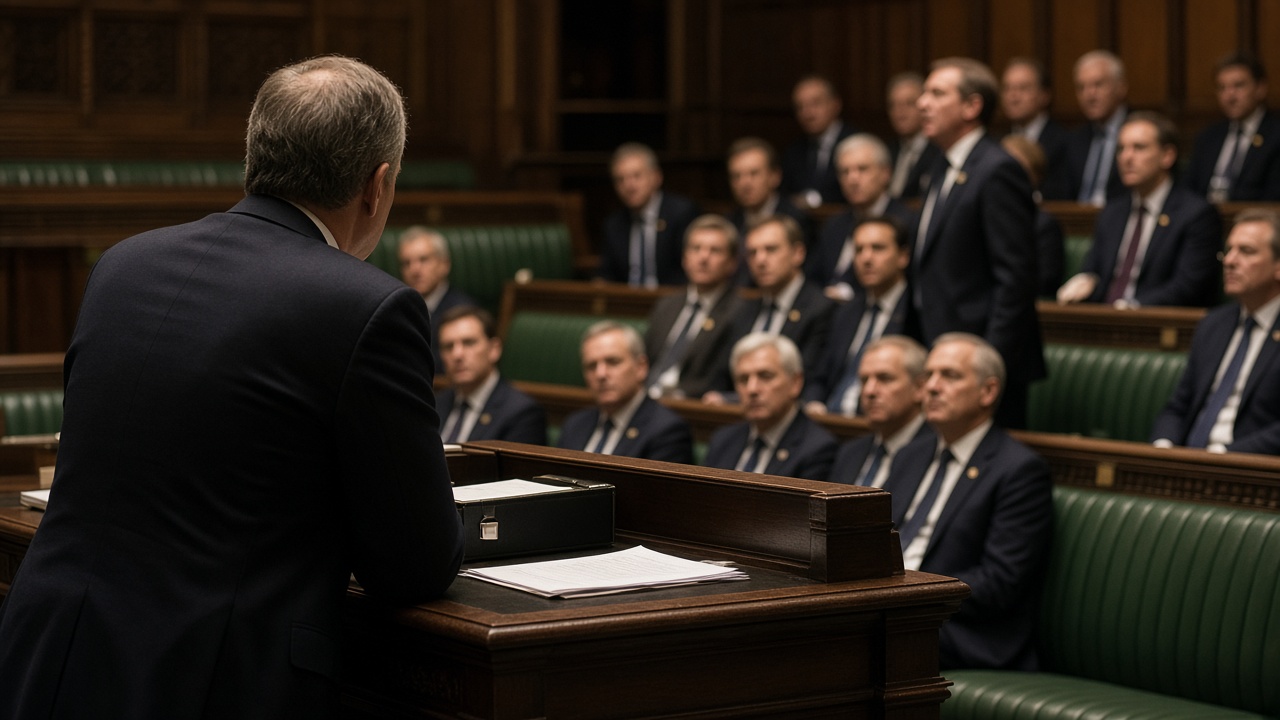
Prime Minister Andy Burnham used Prime Minister’s Questions on Wednesday to rule out a national-level partnership with the Green Party of England and Wales, saying Labour would have “nothing to do with” a conference motion that defines Zionism as a form of racism.
What the Greens adopted
Party members backed the motion 1,022 votes to 813 at their autumn conference earlier this month. The text describes Zionism as an ideology supporting “an ethnonationalist Jewish state in historic Palestine to the exclusion and/or domination of the non-Jewish population.”
Jewish communal groups criticised the wording, as did four Green MPs and two former leaders. Party leader Zack Polanski called the motion “imperfect” and said he had wanted amendments, but defended the section arguing that “the displacement and genocide of the Palestinian people is clearly underpinned by racist ideology” as “obvious.” Israel has repeatedly denied its actions in Gaza amount to genocide.
Because members approved the motion, it is now party policy, though it is not automatically guaranteed a place in the next general election manifesto.
Burnham’s response at PMQs
Conservative MP Dame Harriett Baldwin asked Burnham to rule out cooperating with the Greens while the policy stands. Burnham replied that he condemned the motion “unequivocally,” adding: “It is wrong, it is antisemitic, and this side of the House will have nothing to do with it.”
He pledged that Labour would “always take the right response when it comes to any partnerships we have with other parties” and said the party “cannot support a partnership with a party that holds the position that has recently been adopted.”
The exchange landed on the first PMQs after a month-long recess that followed party conference season, in which Burnham used his own speech to signal adjustments to the state pension triple lock from 2030 to help fund a national care service.
Local coalitions in the balance
Labour already governs alongside Greens on several councils, including Sheffield. A Downing Street spokesman declined to say whether Burnham’s position extended to those local arrangements or applied only to national government.
Green MP Ellie Chowns told the BBC last week that if “significant and damaging policy” could be made by “a vote of just 0.4% of our members, something isn’t working in our structures.” Backers of the motion, including Lubna Speitan, argue it targets “racist systems of oppression” and that the party “stand united against all forms of racism and discrimination—no exemptions.”
Opposition leader Kemi Badenoch used her own conference speech to promise scrapping inheritance tax on family homes, setting up a contrasting offer ahead of Chancellor John Healey’s first budget in two weeks. Burnham, meanwhile, told the Commons on Monday that he would press for deeper post-Brexit cooperation with the European Union at a summit next month, a line Badenoch attacked as “unpicking” the UK’s existing deal.
For Burnham, the immediate political task is to keep his parliamentary majority focused on the October budget and Ukraine talks with President Volodymyr Zelenskyy—while drawing a bright line that his opponents will test in every future confidence-and-supply negotiation.