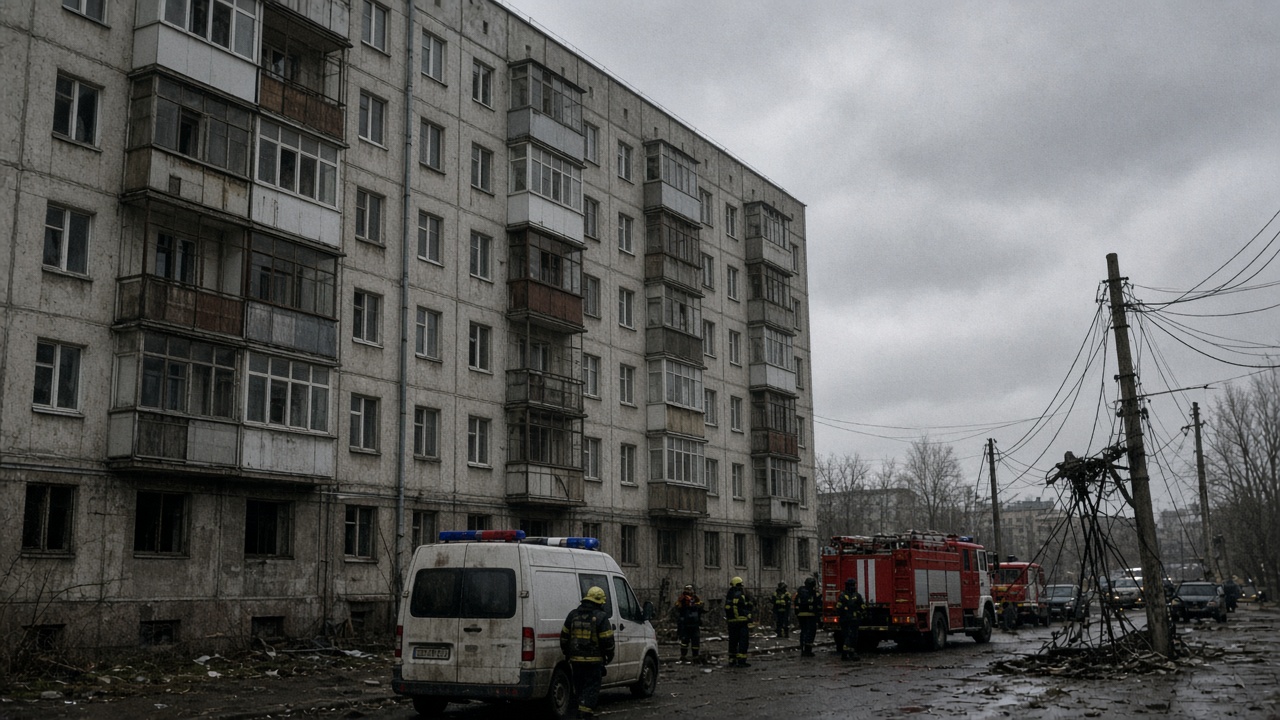
Multiple sources familiar with allied intelligence sharing told CBS News that the United States may have intentionally withheld an early warning before Russia’s overnight ballistic and drone barrage on Ukrainian energy sites, then blamed a weather-related failure in the launch-detection chain when Ukrainian officials pressed for an explanation.
President Volodymyr Zelenskyy said Ukraine received no advance notice from partners as missiles and drones hit Kyiv and Kharkiv early Tuesday, killing six people and leaving about 600,000 without electricity despite President Donald Trump’s public insistence that an energy ceasefire was in place. The new reporting does not allege a full cutoff of U.S. intelligence cooperation, but it sharpens questions about a single missed alert at the moment Kyiv’s grid was under its heaviest pressure in weeks.
What CBS says happened overnight
According to CBS, American officials told Ukrainian counterparts that the system used to spot Russian ballistic launches had failed because of “bad weather.” Ukrainian officials speaking on condition of anonymity told the network they did not accept that explanation and accused Washington of “playing” with the warning pipeline rather than admitting a deliberate pause.
When Russia fired another wave of ballistic missiles around 3 a.m. local time Wednesday, the same sources said the U.S. early-warning pathway appeared to function again. Ukrainian Air Force spokesperson Yurii Ihnat later told reporters that partners supplied alerts for three subsequent waves even though no warning arrived before the first, a partial account that leaves the opening salvo unexplained in public.
Why the gap matters on the ground
Ukraine’s military leans on U.S. satellite and airborne sensor data to cue civil defence sirens and interceptor deployments. When those cues arrive late or not at all, officials say ballistic weapons can reach Kyiv before residents reach shelters—a pattern Zelenskyy highlighted as Russian forces struck the capital for a second consecutive night.
CBS cited one earlier instance this year when Washington did not pass launch intelligence, attributing the lapse to resource shifts toward the Middle East. The network’s sources stressed that broader sharing had not ended, framing this week’s miss as an incident rather than a policy break, even as Zelenskyy travelled to London to press for faster air-defence deliveries and a sharper allied response.
Washington and Moscow’s competing narratives
Trump told reporters Tuesday that the U.S. was still helping Ukraine with intelligence on incoming missiles, without explaining the missing pre-strike alert Zelenskyy described on Telegram. Foreign Minister Andrii Sybiha has publicly said cooperation continues, while AFP quoted senior Kyiv officials saying Washington had recently threatened to curb launch warnings unless Ukraine halted strikes on Russian refineries—a linkage U.S. officials have not confirmed in detail.
Russia’s defence ministry said its “massive” strikes hit military-linked communications and energy nodes. Independent monitoring groups and Ukrainian grid operators reported widespread civilian outages in Kyiv and Kharkiv, undercutting Moscow’s narrow military framing and renewing debate over whether Trump’s ceasefire rhetoric has any operational effect on Russian targeting.
What allies are watching next
Defence planners in Warsaw and London have treated timely launch data as part of the package that keeps Patriot and NASAMS batteries useful against ballistic trajectories. A pattern of withheld warnings—if confirmed—would force Kyiv to duplicate sensors or accept slower public alerts, even as European capitals expand ammunition pledges during Zelenskyy’s visit.
Ukrainian officials have not published technical logs that would prove deliberate U.S. interference versus a genuine sensor gap. For now, the dispute turns on attribution and trust between wartime partners at the exact moment Russia is testing whether American rhetoric translates into constraints on Ukrainian defences or Russian strike planners.