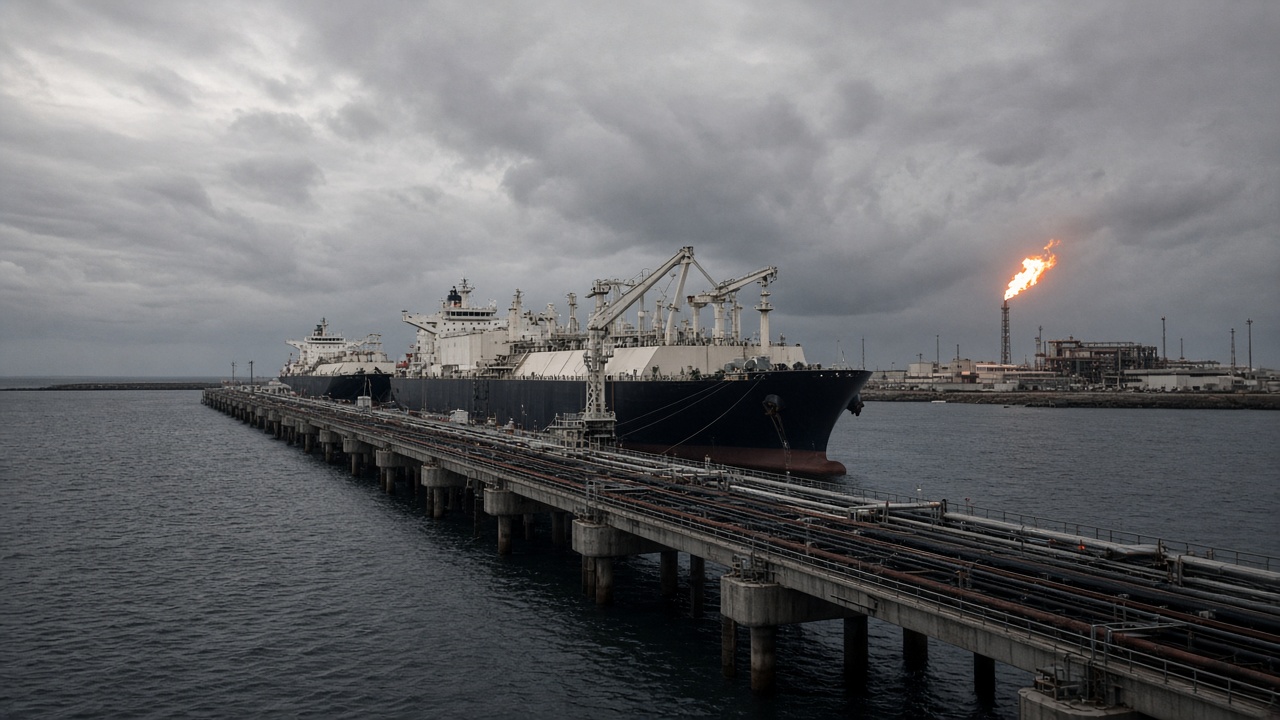
The Albanese government will press ahead with a mandatory gas-reservation scheme for Australia’s east-coast liquefied natural gas exporters, requiring them to set aside up to 20 percent of export volumes for domestic customers from January 2028, Resources Minister Madeleine King is expected to tell Parliament on Wednesday.
The bill, debated for months with major producers, manufacturers and Asian LNG buyers, aims to deliberately oversupply the domestic market by roughly 10 percent each year so household and industrial gas prices face downward pressure as Bass Strait fields decline. King has framed the policy as a bridge for Victoria and New South Wales, where regulators warn southern states could run short of pipeline gas toward the end of the decade without new supply or forced redirection of export molecules.
How the scheme would work
Under the proposed law, companies that continue shipping LNG from Queensland and other eastern export hubs would have to reserve a slice of their annual production for the domestic market only. The government has not treated the measure as a voluntary industry code; failure to comply would carry contractual and regulatory consequences tied to export licences. The 20 percent ceiling is a maximum, not a flat requirement for every producer, but even the upper bound has alarmed LNG partners who sell long-term cargoes to Japan, South Korea and China.
The Age reported that King spent Tuesday finalising briefings with gas corporations and energy-intensive manufacturers before the parliamentary introduction. Labor argues the reservation model copies Western Australia’s long-standing domestic gas set-aside while adapting it to a market that has, until now, allowed most east-coast molecules to follow export prices linked to international oil benchmarks.
Industry pushback
The Australian Petroleum Production and Exploration Association has warned that forcing a 110 percent effective supply level on the east coast could “destroy investment signals” and crowd out smaller domestic-focused producers. Major LNG ventures have said blunt reservation without new exploration could strand capital already committed to export trains and chill spending on upstream fields that feed both tanks and pipelines.
Manufacturers on the east coast, by contrast, have lobbied for binding reservation after years of price spikes that they say made fertilizer, glass and paper plants uncompetitive. King’s office has pointed to confidential modelling suggesting extra domestic molecules would trim wholesale prices, though the government has released limited public detail on how costs would be shared between exporters and local buyers.
Political timing
Wednesday’s introduction lands as the Coalition pressures Labor on cost-of-living measures ahead of a federal election cycle and as Woodside Energy and activists clash again over whether Western Australia’s Browse fields are needed to backfill domestic demand. The east-coast bill is separate from Browse politics but feeds the same voter anxiety about gas bills and manufacturing jobs.
Opposition Leader Peter Dutton has not yet said whether the Coalition would block the bill in the Senate, where crossbenchers often hold the balance of power on resources legislation. The Greens have historically supported stronger domestic set-asides but may seek tighter emissions conditions in exchange for support.
What happens after tabling
Once introduced, the bill will go to a Senate inquiry unless the government guillotines debate, a move unlikely for a sector this sensitive. Producers will watch whether the 2028 start date slips and whether the minister retains discretion to lower reservation percentages if new fields such as Santos’s Narrabri development come online. For households, any price relief would arrive years after the law passes, meaning Wednesday’s filing is as much about signalling supply security to voters and industrial buyers as it is about immediate bill changes.