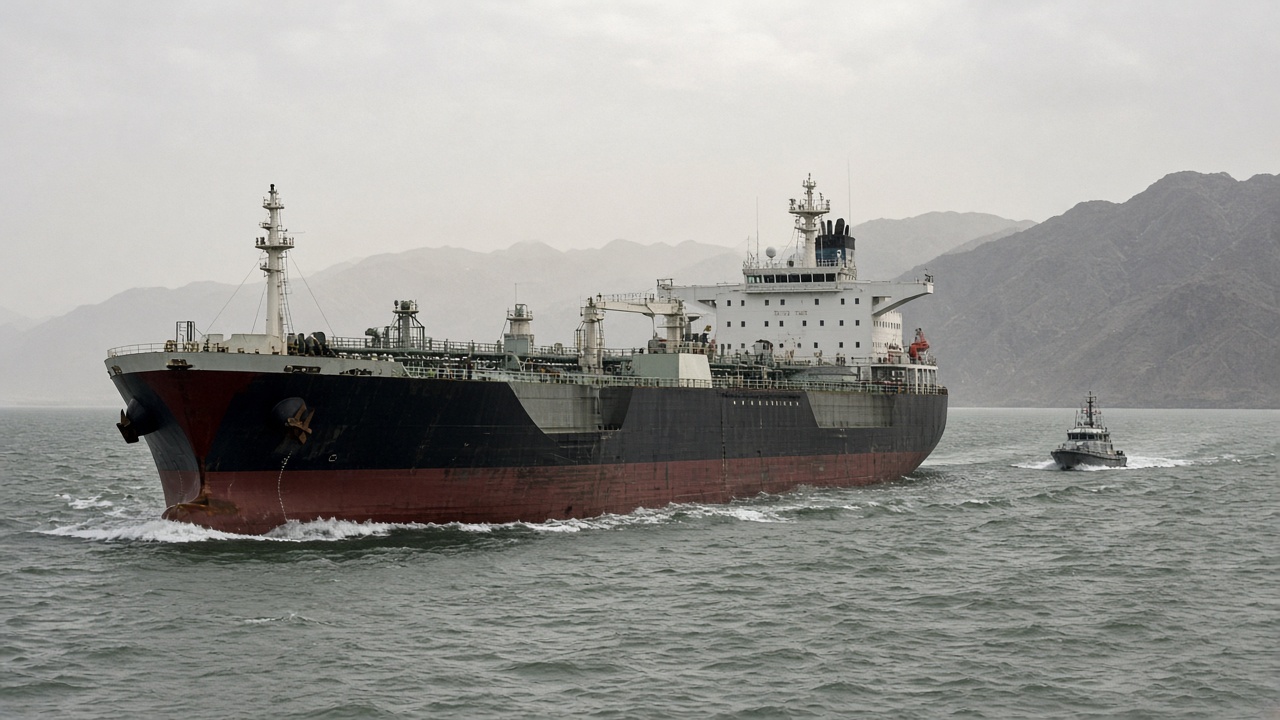
Only 2.9 million barrels of oil moved through the Strait of Hormuz on October 11, according to maritime analytics firm Kpler — the weakest daily tally this month and a fraction of the 20.8 million barrels that transited on October 8. The plunge followed the worst week of vessel attacks in the waterway since the U.S.–Israel war on Iran began in late February, with the United Kingdom Maritime Trade Operations centre recording eleven strikes in the four days through Tuesday.
UKMTO said the recent incidents included a container ship and a tanker hit by unknown projectiles in the strait on Tuesday. Kpler had separately counted ten tanker strikes between September 28 and October 4, plus another on October 5. The U.S. Navy-led Joint Maritime Information Center rated the threat to merchant shipping in Hormuz as “severe” in its Sunday report, citing continued Islamic Revolutionary Guard Corps harassment, drone overflights and radio hailing of commercial crews.
Iran widens surveillance as tactics shift
Iran’s navy said Tuesday it deployed new operational units east of the strait and across the Sea of Oman after identifying a damaged, burning tanker, promising real-time surveillance of traffic. Press TV carried the announcement as Tehran pressed vessels to keep transponders on and coordinate with Iranian forces. A senior Iranian official told Reuters that offensive tactics against ships deemed in violation of Iranian restrictions changed about ten days ago, increasing the pace and variety of attacks.
A U.S. military official told Reuters that after American strikes degraded Iranian radar, IRGC spotters began operating from small dhows to identify targets, including U.S. naval vessels. CENTCOM said forces confronted one such boat, ordered its crew off, and destroyed the vessel. The command reiterated on social media that U.S. and regional partners — not Iran’s navy commander — control the chokepoint, and said allied escorts helped move more than 19 million barrels through on Monday.
From recovery to renewed choke
Before the February war, Hormuz typically saw about 125 large commercial vessels a day and roughly 17.1 million barrels of oil on an average day, carrying a fifth of global crude and liquefied natural gas supply. Iran’s retaliation closed the route for practical purposes, while Washington maintained a blockade on Iranian ports. In September, Kpler reported Gulf flows excluding Iran had recovered to more than 81 percent of pre-war levels, with Middle East crude exports topping pre-war volumes on fourteen days that month as U.S. Navy shepherding expanded.
Analysts noted crews were still earning hazard pay and insurers charging wartime premiums even during the September rebound. The latest strike wave has undone that progress in the data: October 11’s 2.9 million barrel count compares with a pre-war daily average of 17.1 million. Brent crude futures rose 89 cents to $106.58 a barrel in early Wednesday trading after settling at $105.69 on Tuesday, according to market data cited by Al Jazeera.
What shippers and governments watch next
Iranian security chief Mohsen Rezaei claimed Sunday that a U.S. shuttle system moving oil between smaller and larger tankers — which he said involved the United Arab Emirates military — was an explicit target, asserting Tehran strikes five or six participating vessels nightly. Tehran maintains the attacks are self-defense; Gulf exporters and Washington frame them as coercion aimed at energy markets and, according to the Iranian official who spoke to Reuters, at influencing November’s U.S. midterm elections.
Chris Featherstone, a political scientist at the University of York, told Al Jazeera the renewed violence shows how fragile Hormuz remains: neither Washington nor Tehran fully controls perceptions on the waterway, and U.S. allies are likely to press for a clearer path to stability. For now, insurers, charterers and naval escorts are again betting on whether October’s partial reopening was a pause or the exception.