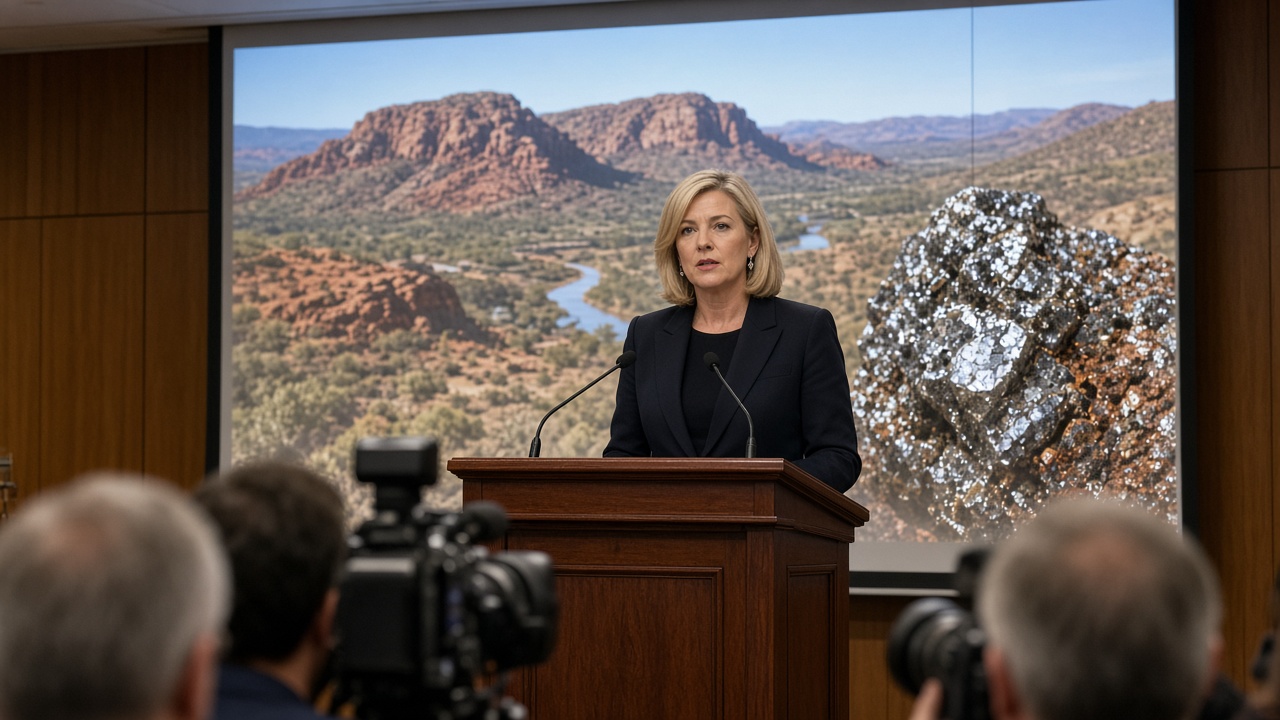
Resources Minister Madeleine King said nationalising Northern Minerals Ltd. is one option for the federal government as Beijing-linked investors continue to ignore orders to sell stakes in the Perth-based miner. King told the National Press Club on Wednesday that the standoff is delaying the Browns Range heavy rare earths project in Western Australia's east Kimberley, which Canberra views as strategic for supplies of dysprosium and terbium used in electric vehicles and defence systems.
Treasurer Jim Chalmers used foreign investment powers in May to direct six shareholders holding roughly 17 per cent of Northern Minerals to divest by 2 July. The Foreign Investment Review Board later wrote to the company about additional blocked investors, yet several have not complied, forcing ministers into increasingly blunt language about sovereign control over critical minerals.
Why Browns Range matters to Canberra
Northern Minerals is developing one of Australia's few deposits rich in heavy rare earths outside Chinese-dominated supply chains. Dysprosium and terbium strengthen magnets that operate at high temperatures, making them essential for wind turbines and precision-guided weapons. When China tightened export controls on processing technology, Australian policymakers accelerated support for downstream projects that could feed U.S. and Japanese customers.
King argued on Wednesday that investor defiance holds up construction decisions Northern Minerals needs to make this year. The company told shareholders in August that work on an alternative tailings facility was well advanced as it navigates regulatory and funding hurdles. Any government takeover would aim to unblock those decisions, but would also shift political risk onto taxpayers if commodity prices slide.
Legal tools short of full nationalisation
Before seizing shares, Canberra could extend divestment deadlines, appoint special receivers, or use the Critical Minerals Strategy funds to buy out recalcitrant holders at fair value. Nationalisation would require cabinet approval, parliamentary scrutiny and compensation talks that could run for years if investors challenge valuations in court.
King stressed that no decision has been made, but her willingness to utter the word on live television signals frustration after months of quiet diplomacy. She also linked the saga to a broader review of foreign investment laws due to conclude next year, hinting that future critical mineral deals may face mandatory Australian-majority ownership thresholds.
Market and alliance reactions
Northern Minerals shares are thinly traded on the Australian Securities Exchange, so ministerial comments can move the price sharply on low volume. Larger rivals such as Lynas Rare Earths will watch whether Canberra's rhetoric translates into subsidies or punitive action against Chinese-linked funds still holding Australian assets.
Washington and Tokyo have courted Australian miners as part of mineral security partnerships. A nationalised Browns Range could reassure allies that ore will flow regardless of private shareholder disputes, yet it could also chill private capital if investors fear expropriation when geopolitics turn tense.
What investors are waiting to hear
Chalmers' office has not published a fresh enforcement timeline, and Northern Minerals has said it is cooperating with FIRB while continuing technical work on site. King's Wednesday remarks put the ball back in the shareholders' court: sell voluntarily, or face escalation that could include public ownership.
For communities near Halls Creek, the fight is also about jobs and Indigenous land-use agreements tied to the mine. Delays mean fewer construction roles this dry season, even as the government touts Australia as a reliable supplier in a world scrambling to de-risk from Chinese processing. The next signal will come if FIRB names new compulsory disposal orders or if cabinet papers leak discussing a taxpayer-funded buyout.