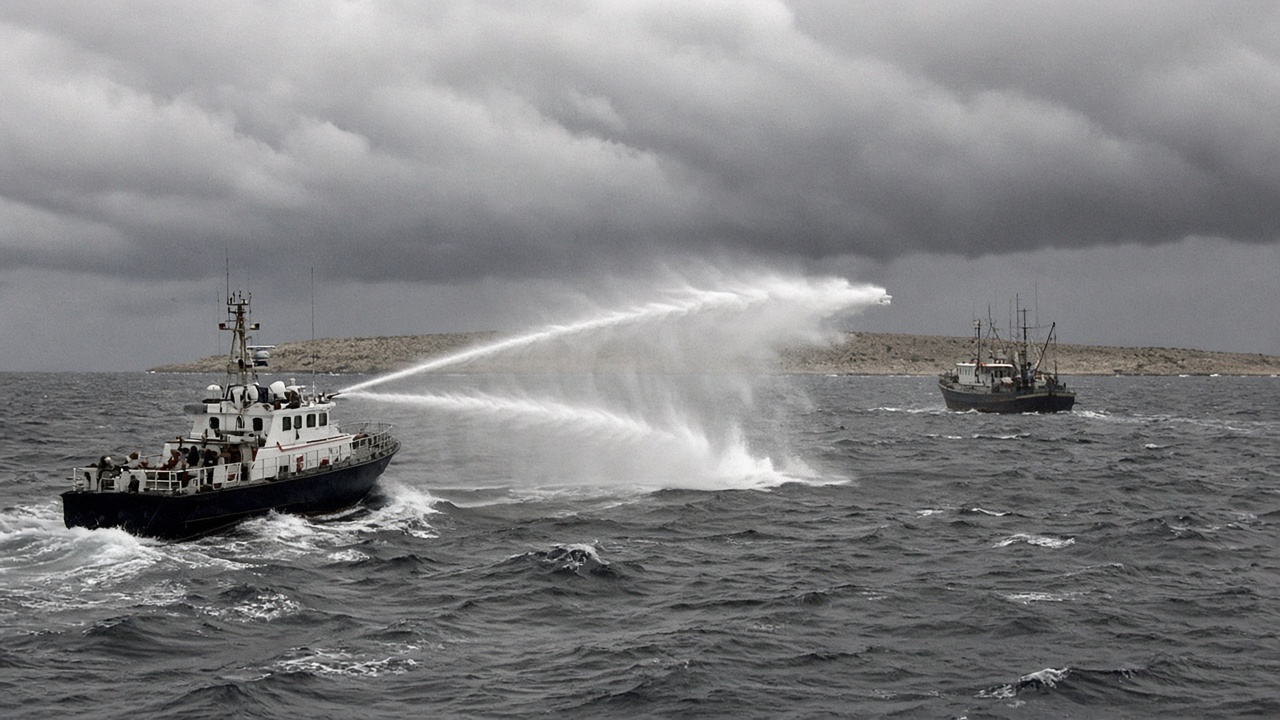
Beijing warned Taiwan on Tuesday that it must “bear the consequences” after the Coast Guard used a water cannon against a mainland Chinese fishing boat operating near the Pratas Islands, escalating rhetoric over one of the most exposed outposts in the cross-strait dispute.
What Beijing said
Chen Binhua, a spokesperson for the Taiwan Affairs Office, said China holds “indisputable sovereignty” over the Pratas—known as Dongsha in Mandarin—and surrounding waters. He said Taiwanese authorities treated mainland vessels in a “rough and dangerous manner” that endangered lives and property, calling the incident malicious provocation.
Chen did not spell out specific retaliation, but the language mirrors previous warnings that Taipei would be held responsible for enforcement actions Beijing deems illegitimate. China does not recognise Taiwan’s claims over the atoll, and Chinese coast guard patrols in nearby waters have increased in recent years.
Taipei’s response
A Taiwan official with direct knowledge of Pratas operations told Reuters the Coast Guard carried out “normal law enforcement” and acted in a “very careful and proportionate way.” The service has not publicly released video of the encounter, but island security planners treat the atoll—more than 400 kilometres from Taiwan’s main ports—as difficult to reinforce quickly in a crisis.
The Pratas sit between southern Taiwan and Hong Kong, making them a monitoring point for air and maritime traffic as well as a symbolic sovereignty marker. Analysts have long warned that any sustained clash there could draw in both coast guard and naval assets from multiple jurisdictions.
Why the incident matters now
The water cannon exchange comes as China’s Liaoning carrier group conducts training in the western Pacific, activity Japan’s Defence Ministry is tracking closely. While the Pratas incident involves law-enforcement ships rather than warships, it feeds a pattern of near-daily friction between Taipei and Beijing over who may operate in contested waters.
Taiwan’s government has stepped up Coast Guard budgets and drone surveillance around remote islands, yet the Pratas garrison remains small. Any injury to mainland fishermen—or to Taiwanese personnel—could trigger a diplomatic cycle that outpaces the facts on the water.
What to watch
Legislators in Taipei may demand a classified briefing on rules of engagement near the Pratas, especially if Beijing follows through with additional coast guard sorties. Washington, which supplies Taiwan with maritime domain-awareness tools, typically urges restraint but has not commented on this specific encounter.
For now, the dispute is words plus a single enforcement action, not an exchange of fire. But Chen’s demand that Taiwan “bear all consequences” leaves room for Beijing to justify sharper patrols, fishery bans or military exercises closer to the atoll—moves that would test whether Taipei’s proportionate-enforcement narrative still holds under pressure.
Taiwan’s Coast Guard Administration previously said patrol vessel Yunlin towed the disabled Jin Sha beyond restricted waters and transferred it to a Chinese support ship after delivering meals to the crew—details Taipei may cite if Beijing presses for a formal apology.