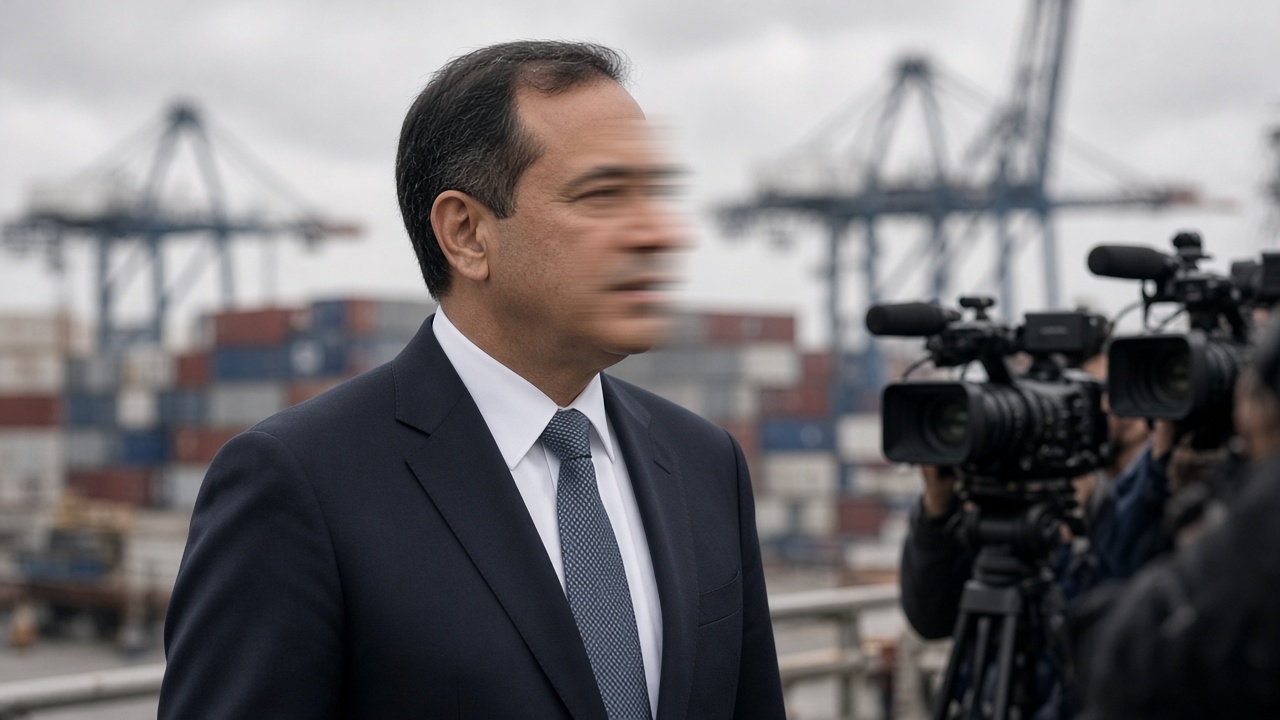
Business Secretary Jonathan Reynolds said the United Kingdom will not impose tariffs on Chinese electric vehicles because European capitals want alignment, insisting that any trade-defence measure must serve Britain’s export-heavy car industry rather than Brussels’ industrial agenda.
What Reynolds told reporters
Speaking during a trade mission to India, Reynolds said the government had examined Chinese vehicle imports in 2024 and keeps the issue under review, but he rejected the idea that the UK should levy duties simply because the EU has done so.
“When we make any trade decision in terms of trade defence tariffs in relation to the EU, that’s based on the UK interest—it’s not based on any other country asking for that,” he told the Guardian in an interview published Wednesday.
His remarks follow the EU’s decision last week to cap Chinese hybrid imports at 350,000 vehicles a year, building on 2024 tariffs of up to 45 percent on Chinese battery-electric cars. European officials argue subsidised Chinese production is accelerating deindustrialisation; British ministers worry reciprocal Chinese sanctions could hit Jaguar Land Rover and other exporters.
The ‘back door’ debate
Some EU diplomats have suggested Britain could become a conduit for Chinese brands to reach the single market, especially as European “Made in Europe” rules tighten supply-chain access. Reynolds pushed back, noting that no major Chinese manufacturer currently builds vehicles in the UK for export into the EU.
Nissan has agreed to explore assembling Chery models in northern England, but Reynolds framed that as prospective investment rather than an existing re-export channel. He argued excluding the UK from future EU industrial schemes would hurt integrated supply chains on both sides of the Channel.
Timing before Brussels
Prime Minister Andy Burnham confirmed this week that a UK–EU summit will take place in Brussels on 20 November, with Downing Street casting the meeting as a possible first step toward closer European ties. Reynolds acknowledged that deeper alignment could eventually subsume bespoke trade deals—including last year’s UK–India agreement—but he said London would keep pursuing near-term market access with Delhi.
During the India trip officials announced UK–India investments they valued at more than £1 billion over 15 years, including steps that have already cut Scotch whisky tariffs in Indian shops. Reynolds said services liberalisation, such as mutual recognition of legal qualifications, remains on the table even as EU negotiations intensify.
What industry watches
UK manufacturers fear new EU origin rules could lock them out of European components networks regardless of tariffs on China. Reynolds said the November summit will not formally decide Chinese vehicle duties, but his public line signals Burnham’s government is unwilling to trade Beijing-facing sanctions for summit concessions.
Labour backbenchers in auto constituencies will press for evidence that refusing EU-style tariffs does not leave British plants exposed to a flood of imported EVs. For now, Reynolds’s message to Brussels is blunt: the UK will set its own trade-defence calendar, and the automotive sector’s export model—not diplomatic pressure—gets the final vote.