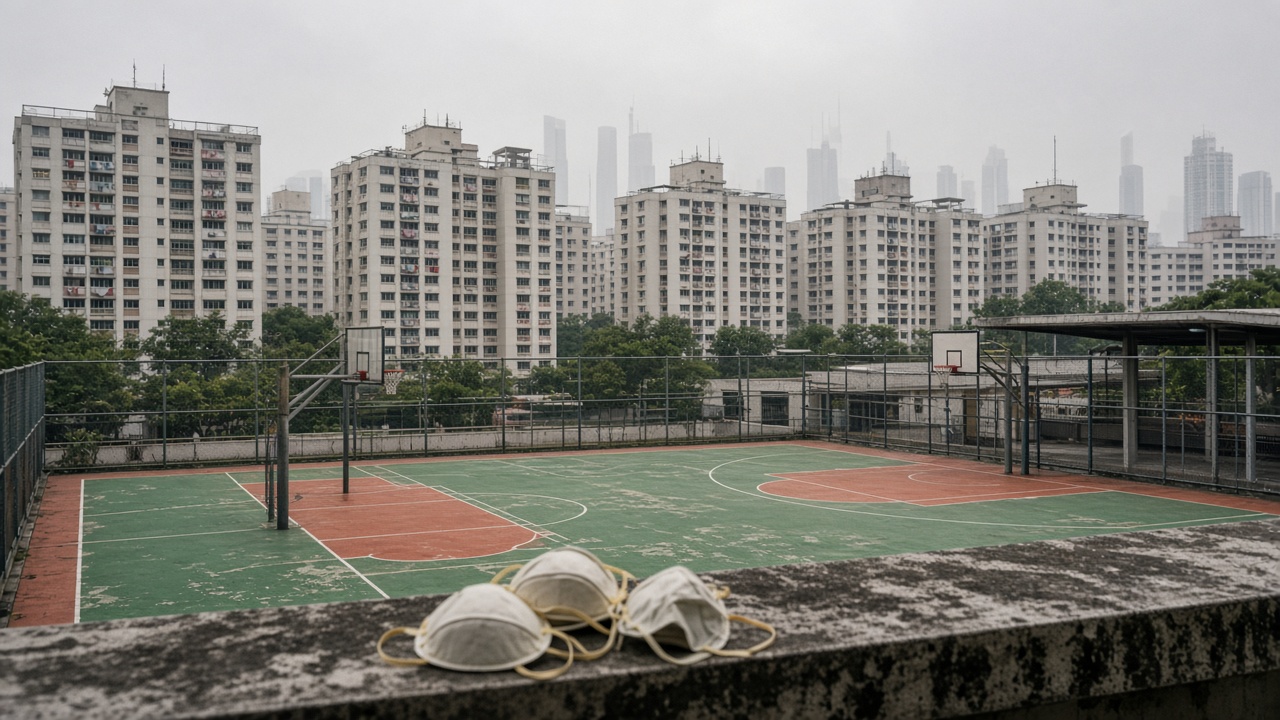
Sport Singapore closed outdoor and non-air-conditioned facilities across western Singapore on Wednesday after hourly PM2.5 concentrations surged to 288 micrograms per cubic metre, the highest western reading since 2015 and a level the National Environment Agency classifies as “very high.”
Where the air turned worst
NEA’s three-hour banded readings showed the west climbing from 195 at 1 p.m. to 284 at 2 p.m. and 288 at 3 p.m. Other regions were also in the high band: 177 in the south, 208 in the east, 218 in the central area and 140 in the north, which NEA labels “elevated.”
The 24-hour Pollutant Standards Index sat in the unhealthy range nationwide, spanning 114 to 160 depending on the monitoring region. NEA attributed the deterioration to dense smoke from fires in Kalimantan drifting toward Singapore on southeasterly winds, with additional haze visible over Sumatra.
The agency forecast that the 24-hour PSI would remain between unhealthy and very unhealthy over the next day as the smoke plume continues to move in.
SportSG closures and public guidance
In response, SportSG temporarily shut all outdoor and non-air-conditioned facilities at ActiveSG sport centres in the west, including Jurong East, Jurong West, Bukit Batok, Bukit Gombak, Choa Chu Kang, Clementi, Senja-Cashew, Boon Lay’s hockey village and sites at Jurong Lake Gardens and the Sport Village@Jurong Town. Indoor air-conditioned venues remained open where operators could maintain filtration.
NEA urged the general population to reduce prolonged or strenuous outdoor activity. Elderly residents, pregnant women and children were advised to minimise outdoor time altogether, while people with chronic lung or heart disease were told to avoid outdoor exertion and seek medical attention if they feel unwell.
Employers with outdoor work were asked to conduct risk assessments and provide appropriate protection, including N95 masks where needed.
What residents are weighing
Wednesday’s spike extends a hazy week that has already disrupted school activities, weekend events and commutes. With the western PM2.5 peak matching readings not seen in a decade, households in the densest towns are recalculating everything from evening jogs to whether to keep windows shut through another hot night.
Private clinics and polyclinics reported steadier foot traffic for cough and eye irritation this week, though NEA has not yet published a formal surge tally. Schools have kept physical education lessons indoors where possible, and several condominium managements sent residents text alerts reminding them to shut windows and run air purifiers on higher settings overnight.
Indonesia’s environment ministry said it is coordinating water-bombing over hotspots in Kalimantan, and Singapore’s Ministry of Sustainability and the Environment said it has filed updated haze data with Jakarta as part of the ASEAN reporting framework. Those diplomatic channels matter for the medium term; on Wednesday the practical calculus for families in Jurong and Clementi was whether evening tuition runs and outdoor dinners could proceed at all.
Officials in Jakarta have named additional people linked to illegal burning, but the immediate question in Singapore is simpler: whether wind patterns will finally shift before the unhealthy band becomes a multi-day fixture on the calendar.