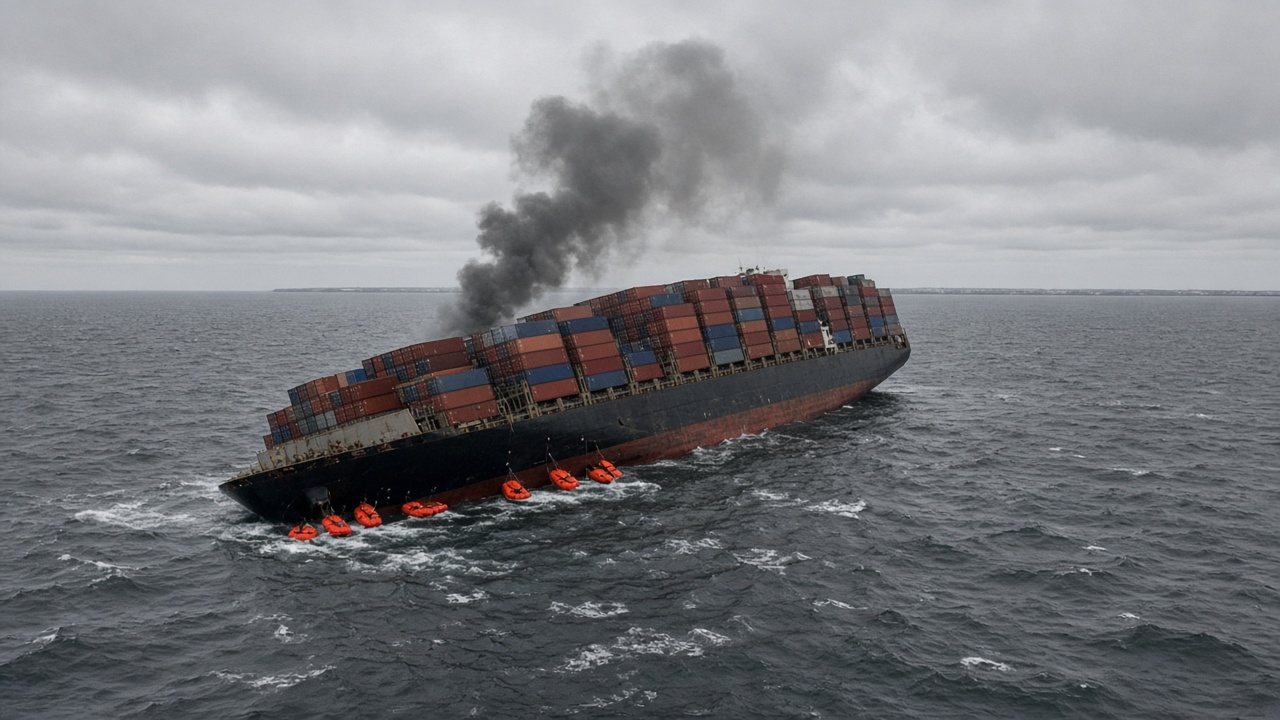
Singapore’s Maritime and Port Authority said on Wednesday that the container ship GFS Pride sank after it was struck by an unknown projectile in the Strait of Hormuz, while a second Singapore-registered vessel, GFS Giselle, was hit a day later and reached safe anchorage under its own power with no injuries reported among either crew.
The twin incidents, on 13 and 14 October Singapore time, put the city-state’s flag directly into the centre of the Gulf shipping crisis that has already pushed Brent crude above US$105 and forced carriers to reroute around the world’s most important oil chokepoint. MPA said it was in contact with the ships’ management company and was monitoring developments closely.
What MPA confirmed
According to the authority’s media statement, GFS Pride sustained damage and a fire on board before sinking. All 21 crew members were safely evacuated, and MPA reported no injuries. GFS Giselle suffered hull damage when it was hit on the following transit but was able to sail to a safe anchorage with all 22 crew safe. No Singaporeans were on board either vessel.
MPA did not identify the attacker. Regional reporting has described a pattern of projectiles and mines affecting commercial traffic as fighting between Iran, the United States and their respective allies intensifies around Hormuz. Pakistan’s hydrographic office warned mariners that GFS Pride went down northwest of Ras al-Sheikh Masud on Oman’s Musandam coast, giving a fixed point for salvage planners and insurers now scrambling to trace cargo interests.
Why the flag matters here
Singapore is the world’s largest hub port, and its registry is a bellwether for Asian trade flows. A total loss under the red-and-white ensign is rare enough that insurers, charterers and listed shipowners with Singapore operations will read MPA’s language carefully. The authority called the attacks “unprovoked, unjustifiable, and a breach of international law,” and reminded operators that actions affecting shipping must comply with the United Nations Convention on the Law of the Sea.
For households already coping with haze and higher pump prices, the Hormuz link is not abstract. Sinopec raised posted petrol prices on Thursday morning, matching earlier hikes by Shell, Esso and Caltex as crude rallied after strikes on Saudi energy infrastructure. AsiaOne noted that 95-octane petrol at major brands now sits just under $3.57 a litre before discounts, roughly twenty cents above early-September levels.
Operations and diplomacy
MPA’s role at this stage is coordination rather than investigation. The authority does not command naval escorts, but its statements shape how foreign ministries and P&I clubs treat incidents involving the flag. Crew welfare agencies will focus on repatriation and debriefs now that Pride is lost, while Giselle’s managers must survey hull steel before insurers allow a return to service.
Singapore has not announced retaliatory measures. The statement’s emphasis on international law points toward diplomatic channels at the International Maritime Organization and bilateral talks with Gulf partners that host Singaporean naval logistics. What changes on the ground will depend on whether insurers declare additional war-risk premiums for Hormuz transits and whether container lines pause sailings through the strait altogether.
For now, MPA’s bulletin is the authoritative local record: one Singapore-flagged ship is on the bottom, another is damaged but afloat, and every seafarer involved survived. The next questions are who struck them, what cargo was lost with Pride, and how long owners will keep sending boxships through a lane that has turned lethal for merchant crews.